Quick Answer
Use reflective paracord to mark tent lines, flag gear, and create visible trip hazards around camp, improving safety and organization after dark.
Why Reflective Paracord Improves Camp Safety
Reflective paracord stands out in low light, making it ideal for marking tent guy lines, zipper pulls, and gear handles. Unlike regular cord, the reflective strands catch headlamp beams, so you and your hunting partners can spot hazards and equipment without fumbling in the dark.
A practical trade-off: reflective paracord is slightly thicker than standard 550 cord, which can make tight knots harder to untie. Plan your knots accordingly, and avoid using it where you need a perfectly smooth, low-profile line.
Choosing the Right Paracord for Marking
For camp marking, a 2.5mm paracord rated to 275 lbs is plenty strong for guy lines and accessory uses. The 50 ft pack gives you enough length to mark multiple tent lines or create a perimeter around your camp.
Remember that reflective cord is not a substitute for proper tent stakes or load-bearing lines; it's best for visibility and organization, not for critical structural support.
Step-by-Step: Marking Your Camp with Reflective Paracord
- Assess your camp layout: Walk around your tent and identify all guy lines, stakes, and potential trip hazards. Note where you need visible markers or where you might hang gear. Check that your tent is fully set up before marking lines, so you don't miss any guy points.
- Cut and prepare cord lengths: Cut reflective paracord into 2-3 ft sections for marking individual lines, or longer lengths (10-15 ft) for a perimeter rope. Seal the cut ends with a lighter to prevent fraying. Always carry a small lighter or multi-tool to seal cut ends; this prevents the cord from unraveling during use.
- Attach markers to tent lines: Tie a simple overhand knot or a clove hitch around each tent guy line, leaving a small loop or tail that reflects light. Position the marker at chest height so it catches headlamp beams. Avoid placing markers too close to the stake—they may get buried in dirt or grass, reducing visibility.
- Create a perimeter warning line: String reflective paracord between two stakes or trees around your camp at knee height. Use a taut-line hitch to keep it secure, and add a small bell or whistle for extra audio warning. Test the perimeter line after setup to ensure it's not too tight, which could snap, or too loose, which could sag and become a hazard itself.
- Label gear and zipper pulls: Tie short reflective cords to zipper pulls, backpack straps, or tool handles. Use a simple knot like a cow hitch or a small loop so you can easily grab them in the dark. Use different knot types or cord colors (if available) to distinguish between items, but keep it consistent to avoid confusion.
Product Spotlight
-
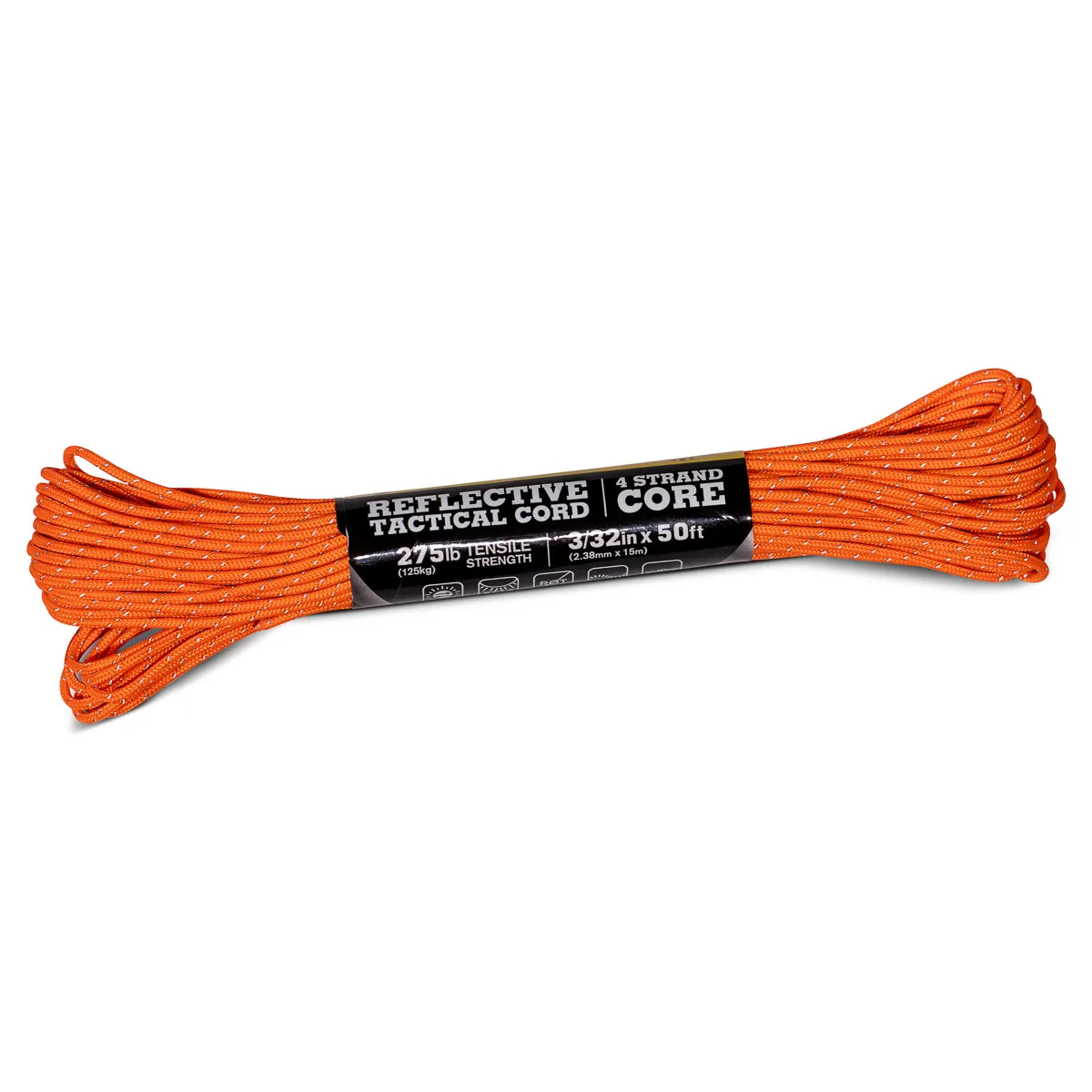
Reflective 2.5mm paracord: Our 2.5mm reflective orange paracord comes in a 50 ft pack and is rated to hold 275 lbs of force. This strength is sufficient for marking tent lines and hanging gear, while the reflective orange color enhances visibility in low-light conditions.
Reflective 2.5mm paracord