Quick answer
Start by placing the metal tips on your fingers—all five on one hand or split between both—then use light strokes for teasing or firm presses for pressure play. Vary speed and intensity to discover what your partner responds to.
Why sensory fingertips work for sensation play
Sensory fingertips let you deliver pinpoint sensations that a flat palm or paddle cannot. The small metal tips concentrate pressure into a tiny area, making even a light touch feel deliberate. This precision works equally well for gentle teasing and sharper torment, depending on how much force you apply.
Because the tips are metal, they also conduct temperature. You can warm them under running water or cool them briefly in the fridge to add another layer of sensation without changing your technique. Just remember to test the temperature on your own skin first.
How to use sensory fingertips step by step
- 1. Fit the tips securely: Slide each metal tip onto your finger so it sits snugly behind the fingertip pad. If the fit feels loose, adjust the position until it stays put without pinching. A common mistake is placing them too far forward, which dulls the sensation and risks the tip slipping off during use. Check the fit by curling your finger—the tip should stay in place without shifting.
- 2. Start with light, slow strokes: Begin by dragging the tips gently across your partner's skin—arms, back, or thighs work well. Keep the pressure feather-light and the speed slow to build anticipation. The most common mistake here is moving too fast, which turns precise sensation into vague tickling. If your partner flinches or laughs, slow down further rather than stopping.
- 3. Introduce pressure play gradually: Once your partner is comfortable with light touches, increase pressure using the flat side of a tip or the pointed end for sharper sensation. Alternate between soft strokes and firm presses to keep the experience unpredictable. A checkpoint: never press hard enough to break skin or cause sharp pain—sensation play should stay within your partner's comfort zone. Ask for feedback after each pressure change to stay aligned with their limits.
- 4. Add temperature variation: Warm the tips under warm (not hot) tap water for 30 seconds, or cool them in the fridge for 10 minutes. Pat them dry before use. Apply the warm tips slowly, then switch to cool tips on the same area. The common mistake is making them too hot or too cold—always test on your own wrist first. Temperature play works best when you alternate between warm and cool, not extreme heat or cold.
- 5. Experiment with placement and rhythm: Try using two fingertips on one hand and three on the other, or focus all five on a single sensitive spot like the inner wrist or behind the knee. Vary your rhythm: trace circles, tap quickly, or drag in long lines. The mistake to avoid is sticking to one pattern—sensation play thrives on surprise. Watch your partner's body language to see which rhythms make them lean in or pull away.
Product used in this guide
-
Black Sensory Fingertips: The Black Sensory Fingertips feature five metal tips that can be placed on one hand or split between both hands. This flexibility lets you adapt your setup—use all five for concentrated pressure on one spot, or spread them across two hands for broader, alternating touches.
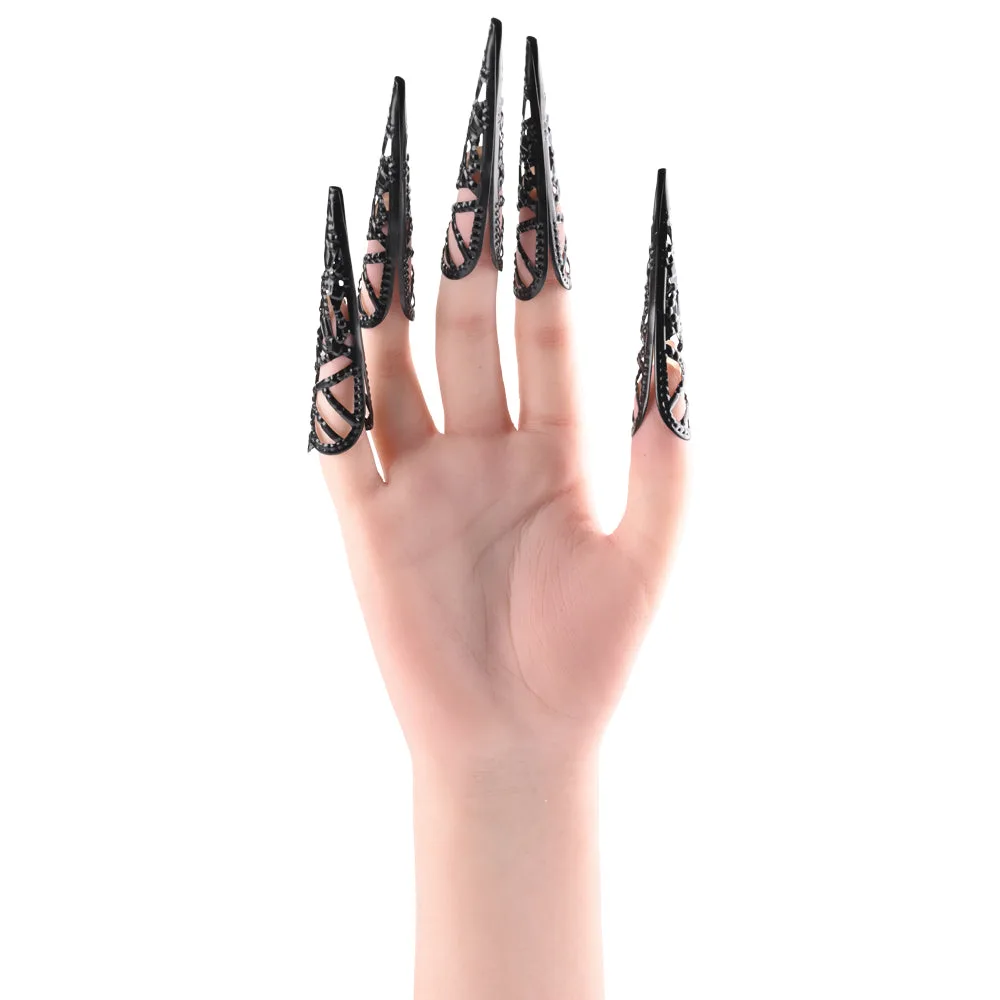
Black Sensory Fingertips