Quick answer
Use serrated plastic forceps to grip, place, and hold small model parts without scratching or denting them. Their textured tips provide a secure hold, and the guided release lets you let go gently.
Why serrated plastic forceps work for model building
Metal tweezers can leave marks on soft plastic, resin, or painted surfaces. Serrated plastic forceps are non-marring and provide a firm grip without damaging delicate parts. The serrated tips also prevent small parts from slipping during assembly or painting.
The tapered ends allow you to reach into tight spaces, like inside a model cockpit or behind a small engine component. The 4.5-inch length gives you good control without being unwieldy.
When not to use plastic forceps
Plastic forceps are not ideal for heavy clamping or for gripping very tiny parts that require extreme precision, such as 1/350 scale ship railings. For those tasks, fine-tipped metal tweezers are a better choice. Plastic forceps also cannot withstand high heat, so keep them away from soldering irons or hot glue.
Step-by-step guide to using serrated plastic forceps for model building
- 1. Choose the right grip for the part: Hold the forceps like a pencil, with your thumb and index finger near the pivot point. For larger parts, grip closer to the tips for more leverage. For tiny parts, grip closer to the pivot for finer control. Common mistake: gripping too hard can cause the part to pop out. Use gentle, steady pressure.
- 2. Pick up the part securely: Open the forceps slightly wider than the part, then close them gently so the serrations contact the part. The serrated tips will grip the part without slipping. If the part is very small, use the very tips of the forceps. Checkpoint: if the part spins or shifts in the grip, adjust your grip angle or use a slightly different part of the serrations.
- 3. Position the part using the guided release: Bring the part to its intended location. Use the guided release feature by slowly relaxing your grip so the forceps open gradually. This lets you set the part down without dropping it or disturbing nearby pieces. Common mistake: releasing too quickly can cause the part to spring away. Practice slow, controlled release.
- 4. Hold parts steady during gluing or painting: Use the forceps to hold a part steady while applying glue or paint. The plastic material won't react with most model glues or paints. For painting, hold the part by an edge that won't be visible after assembly. Checkpoint: clean the forceps tips with a dry cloth if glue or paint builds up, as residue can reduce grip.
- 5. Store forceps properly: After use, wipe the forceps clean and store them in a dry place. Avoid leaving them in direct sunlight or near heat sources, as plastic can warp over time. Common mistake: storing forceps with tips touching other tools can bend the tips. Use a dedicated tool stand or case.
Product facts
-
Heathrow Scientific® Serrated Plastic Forceps: These lab-quality serrated plastic forceps have serrated tips and tapered ends for precision grasping with a guided release feature. They are 4.5 inches long. The serrated tips give you a non-slip grip on small model parts, and the guided release helps you place parts exactly where you want them without snapping them into place.
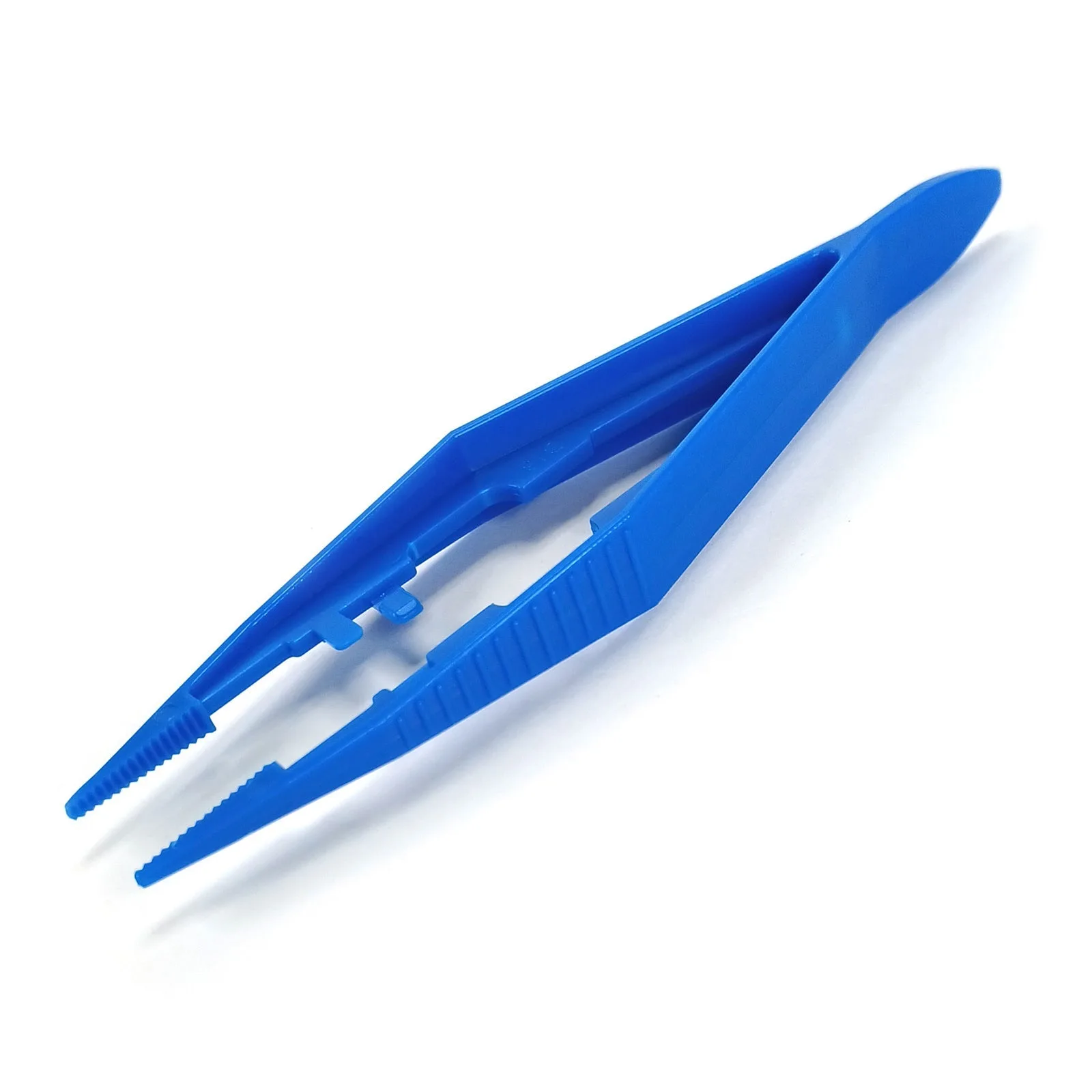
Heathrow Scientific® Serrated Plastic Forceps