Quick answer
To use a serum foundation for sensitive skin, start with a clean, moisturized face, then apply a small amount with your fingertips or a damp sponge, building coverage gradually from the center outward.
Why a serum foundation works for sensitive skin
A serum foundation combines skincare and makeup, making it ideal for sensitive skin. It typically contains hydrating and soothing ingredients that help calm redness while providing light to buildable coverage. Unlike traditional foundations, it layers gently without caking or irritating.
Choosing the right shade and formula
For sensitive skin, look for a foundation labeled as fragrance-free and non-comedogenic. Shade matching is crucial: test a small swipe on your jawline in natural light to ensure it blends seamlessly. A formula like Neutrogena Healthy Skin Sensitive Skin Serum Foundation offers buildable coverage and is designed to minimize the look of pores and fine lines.
Step-by-step application guide
- Prep your skin: Wash your face with a gentle cleanser and apply a lightweight moisturizer. Wait 2 minutes for it to absorb. This creates a smooth base and prevents the foundation from clinging to dry patches. Skipping moisturizer can cause the foundation to look patchy on sensitive skin.
- Shake and dispense: Shake the bottle gently, then dispense one pump or a pea-sized amount onto the back of your hand. Start with less—you can always add more for buildable coverage. Too much product at once can lead to a heavy, unnatural finish.
- Apply from the center outward: Using clean fingertips or a damp makeup sponge, dot the foundation onto your forehead, cheeks, nose, and chin. Blend outward toward your hairline and jaw in gentle tapping motions. Avoid rubbing, which can irritate sensitive skin. Rubbing instead of tapping can disturb your skincare layers and cause redness.
- Build coverage where needed: For areas with redness or uneven tone, apply a second thin layer after the first dries (about 30 seconds). Focus on the center of the face and blend outward. This color correcting foundation technique gives a natural finish without caking. Wait between layers to avoid disturbing the first application.
- Set lightly (optional): If you have oily areas, dust a translucent powder only on the T-zone using a fluffy brush. For dry or normal sensitive skin, skip powder to keep the dewy, skin-like look. Heavy powder can make the foundation look dry and emphasize texture.
Product facts
-
Neutrogena Healthy Skin Sensitive Skin Serum Foundation with Pro-Vitamin B5, Color Correcting & Pore Minimizing Liquid Foundation & Face Serum, Buildable Coverage, Deep 02, 1 oz: This serum foundation is formulated with Pro-Vitamin B5, a dermatologist-recognized ingredient known to help soothe and hydrate sensitive skin. It means you get skincare benefits while evening out your skin tone, reducing the need for multiple products that might cause irritation.
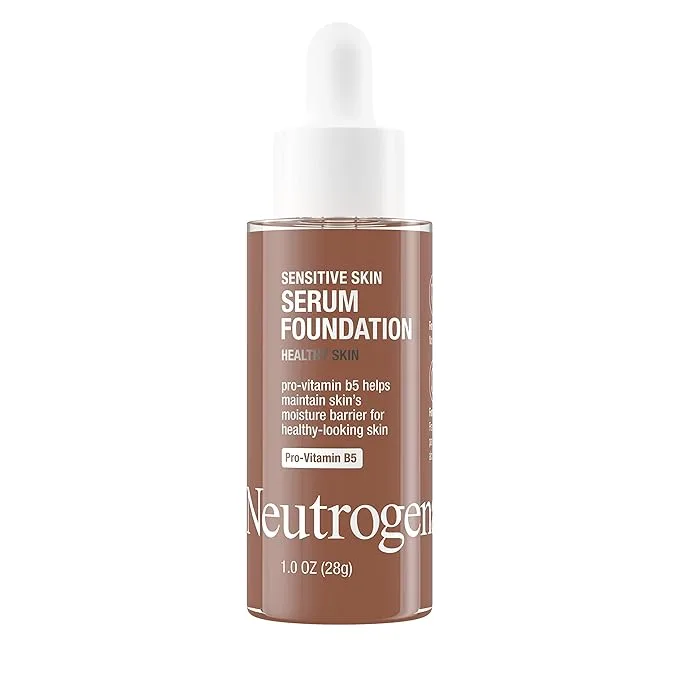
Neutrogena Healthy Skin Sensitive Skin Serum Foundation with Pro-Vitamin B5, Color Correcting & Pore Minimizing Liquid Foundation & Face Serum, Buildable Coverage, Deep 02, 1 oz