Quick answer
Start with a tiny amount of water in one silicone cup, guide your baby's hands to the handles, and let them practice lifting and drinking. The soft, unbreakable material makes this safer than glass or hard plastic.
Why start with a silicone cup
Silicone cups are soft, lightweight, and unbreakable—ideal for a toddler who is still learning grip and coordination. Unlike hard cups, they won't hurt if dropped or thrown, and they can go straight into the dishwasher or microwave for easy cleaning and reheating.
A 2-pack gives you a backup cup during messy practice sessions or lets you prep two drinks at once (e.g., water and milk) so your child learns to switch between them.
When to introduce an open cup
Most babies are ready to try an open cup around 6–9 months, once they can sit upright with support and bring objects to their mouth. The Mr. Dino cup's size and handles make it easier for small hands to hold. Still, every child develops at their own pace—look for signs of interest rather than following a strict age.
Step-by-step self-feeding training
- 1. Start with a tiny sip: Pour only 1–2 tablespoons of water into one cup. A small amount reduces spillage and makes the cup light enough for your baby to lift. Too much liquid encourages gulping and choking. Keep it minimal until they master tipping.
- 2. Model the motion: Hold the cup to your own lips and take a slow sip. Then place your hand over your baby's hand on the cup and guide it to their mouth. Let them feel the tilt needed to drink. Babies learn by watching. Skip this step if they grab the cup eagerly—follow their lead.
- 3. Let them hold the handles: The Mr. Dino cup has two small handles. Encourage your baby to grip both handles while you support the base. Over time, reduce your support until they hold it alone. If they struggle with two hands, let them use one hand on the body. Handles are a guide, not a requirement.
- 4. Expect spills and stay calm: Place a waterproof bib or towel under the cup. When liquid spills, say "Oops!" and wipe it together. Avoid scolding—negative reactions can make them fearful of the cup. Spills are part of learning. A silicone cup won't break, so the only mess is a puddle.
- 5. Increase liquid gradually: Once your baby can lift the cup and drink without choking, add more water—up to half full. Watch for tilting too fast (gulping) or not tilting enough (sipping air). If they still tilt too fast, go back to a smaller amount. Mastery takes weeks, not days.
Product facts
-
Silicone cup 2-pack - Mr. Dino: Each cup features an animal friend and is the perfect size for little hands to hold. The cups are stackable for easy storage and safe in the microwave, dishwasher, freezer, and oven. The stackable design saves cupboard space, and the all-temperature safety means you can prep, store, and reheat drinks without switching containers.
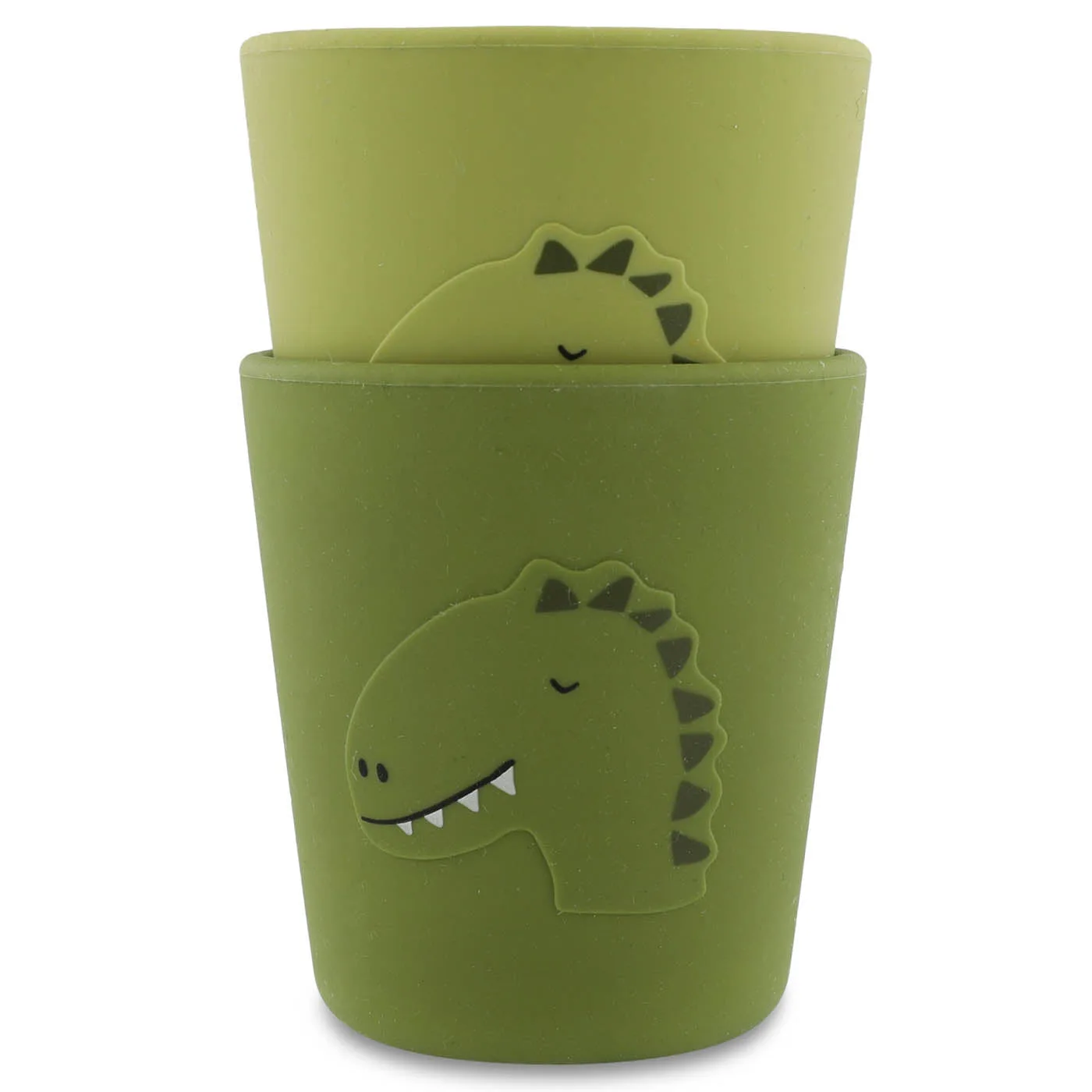
Silicone cup 2-pack - Mr. Dino