What a Silicone Oral Feeding Syringe Does
A silicone oral feeding syringe is designed to make feeding easier for babies who are premature, fussy, or need a little extra help taking milk, liquid diets, or medicine. Instead of a hard plastic syringe tip, it uses a soft silicone pacifier that babies can suck on naturally. The liquid flows through dual-angled ports on the sides of the nipple, directing it toward the cheeks rather than the back of the throat. This design helps reduce the risk of choking and makes the experience more comfortable for your baby.
Step-by-Step: Using the Haakaa Oral Feeding Syringe
The Haakaa Oral Feeding Syringe comes with a food-grade silicone pacifier head, a PP syringe and measuring cup, and a silicone-and-PP plunger. Follow these steps to prepare and use it safely.
- Clean and sterilize before first use: Disassemble all parts: the pacifier head, syringe barrel, plunger, and measuring cup. Wash them in warm soapy water, then sterilize by boiling in water for 1–2 minutes. Let them air dry completely on a clean surface.
- Measure the liquid: Use the measuring cup to pour the desired amount of milk, formula, or medicine. The syringe has clear markings for 5 mL and 10 mL, and the measuring cup has markings for 5, 10, 15, and 20 mL. Draw the liquid into the syringe by pulling back the plunger to the correct volume.
- Attach the silicone pacifier: Fit the soft silicone pacifier head onto the tip of the syringe. Ensure it is securely attached so no liquid leaks during feeding.
- Position your baby: Hold your baby in a semi-upright position, similar to breastfeeding or bottle-feeding. Never feed a baby lying flat on their back, as this increases the risk of choking.
- Offer the pacifier to your baby: Gently place the silicone nipple into your baby's mouth. Let them suckle naturally. Slowly push the plunger to release liquid only when your baby is actively sucking. The dual-angled ports will direct the liquid to the sides of the mouth, not the throat.
- Pace the feeding: Stop pushing the plunger every few seconds to allow your baby to swallow. Watch for cues like turning away or slowing sucking—these mean your baby is full or needs a break.
Cleaning and Maintenance Tips
After each use, disassemble the syringe completely and rinse all parts with warm water. Wash with mild dish soap and a bottle brush, paying attention to the small ports on the pacifier. Boil the parts for 1–2 minutes to sterilize. Check the product regularly for any signs of wear, cracks, or damage. Replace it immediately if you notice any damage.
Key Product Details
-
Haakaa Oral Feeding Syringe: The Haakaa Oral Feeding Syringe includes a 5 mL/10 mL syringe scale and a measuring cup with 5, 10, 15, and 20 mL markings. Accurate measurement helps ensure your baby gets the right amount of milk or medicine, especially for premature or small infants.
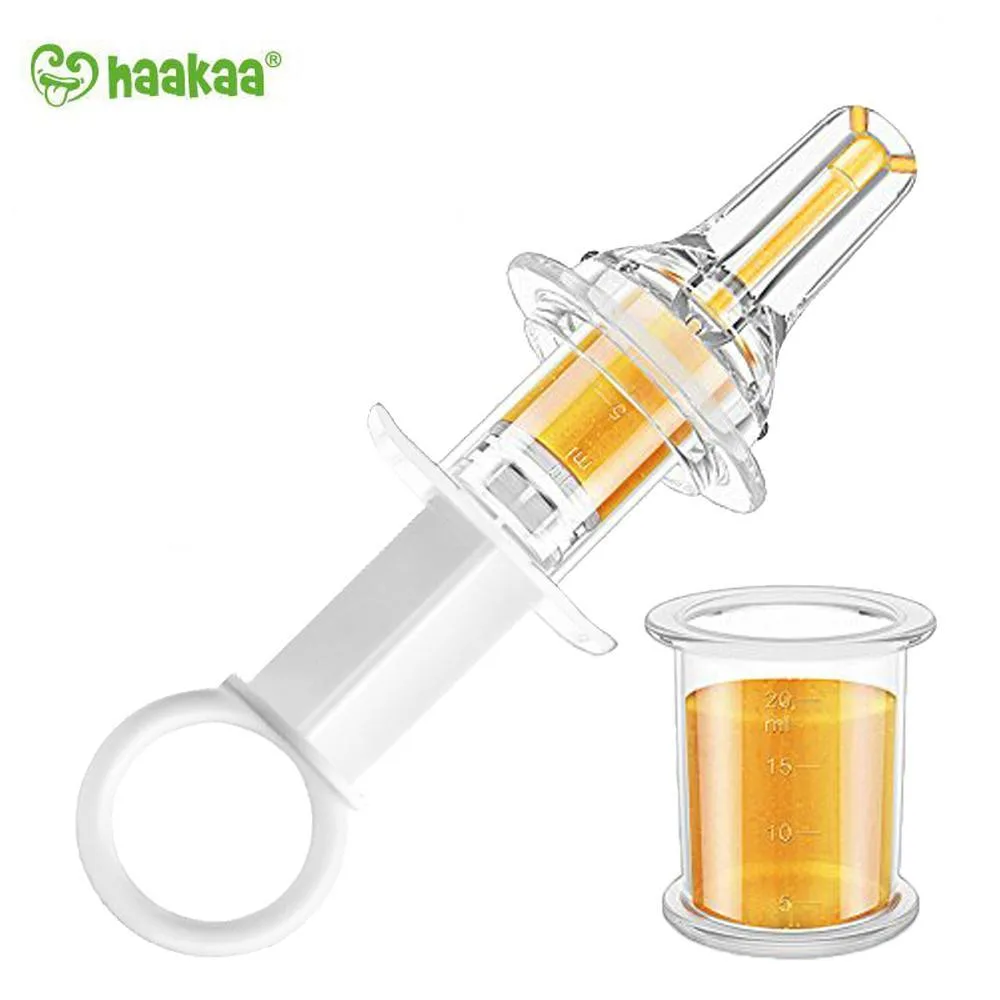
Haakaa Oral Feeding Syringe
-
Haakaa Oral Feeding Syringe: The pacifier head is made of food-grade silicone; the syringe and measuring cup are made of food-grade PP; the plunger is silicone and PP. Food-grade materials mean no harmful chemicals leach into the liquid, making it safe for daily feeding.
-
Haakaa Oral Feeding Syringe: Dual-angled ports on either side of the nipple shoot liquid into the sides of the mouth instead of the back of the throat to reduce the risk of choking. This design is especially important for newborns with a weak or uncoordinated suck-swallow reflex.
When to Use an Oral Feeding Syringe
An oral feeding syringe is a helpful tool for supplement feeding—adding extra milk after breastfeeding or bottle-feeding—or giving liquid medicine to a baby who refuses a spoon or dropper. It is also useful for premature babies who need smaller, controlled amounts of milk. The soft silicone nipple mimics the feel of a breast or bottle nipple, making the transition easier for fussy eaters.
Safety Checkpoints
Always inspect the product before each use. Replace it if you see any cracks, tears, or stiffness in the silicone. Never leave your baby unattended during feeding. Do not force the plunger—let your baby control the pace. If your baby coughs or sputters, pause and reposition them upright. The syringe is designed for oral feeding only; do not use it for nasal or ear medication.