Quick Answer
To use a slip lead for training walks, fit it high on the dog's neck behind the ears, keep the loop loose when not correcting, and apply a quick upward pop rather than a sustained pull.
Why a Slip Lead Works for Training
A slip lead combines a collar and leash into one piece, giving you quick control without extra hardware. When fitted correctly, it applies gentle pressure around the neck, which can help redirect attention during walks.
Compared to a standard collar, a slip lead offers faster communication because the loop tightens and releases with your hand position. However, it requires proper technique to avoid discomfort or injury.
If your dog pulls persistently or has respiratory issues, a slip lead may not be the best choice. Consider a harness or head halter for those cases, and always consult a professional trainer if you're unsure.
Step-by-Step: Using a Slip Lead for Training Walks
- Fit the loop correctly: Form a loop with the lead and slip it over your dog's head. Position the loop high on the neck, just behind the ears, with the loose ring under the chin. The loop should be snug but allow two fingers to slide underneath. A high, snug fit prevents the lead from slipping off and gives you better control.
- Hold the lead properly: Grip the lead near the loop with your dominant hand, keeping the excess coiled or folded in your other hand. Keep your hand close to your body to maintain a relaxed but ready posture. Avoid wrapping the lead around your hand or wrist to prevent injury if your dog lunges.
- Apply pressure and release: When your dog pulls or loses focus, give a quick upward pop on the lead and immediately release. The pressure should be brief and gentle, not a constant pull. Reward your dog when they look back to you. Timing is key: the correction must happen at the moment of the unwanted behavior, followed by a release and reward.
- Practice loose-leash walking: Start in a low-distraction area and walk at a steady pace. When your dog walks beside you with a loose lead, offer treats or praise. If they pull, stop and wait until the lead slackens before continuing. Consistency teaches your dog that pulling stops the walk; a loose lead keeps it moving.
- End the session properly: After the walk, remove the slip lead by loosening the loop and lifting it over your dog's head. Never leave the lead on when unsupervised, as it can catch on objects and cause choking. Always store the slip lead out of reach when not in use.
Product Spotlight
-
Ancol Heritage Cotton Slip Lead - Natural (150x1.5cm): The Ancol Heritage Cotton Slip Lead functions as both a head halter and a slip lead, is weatherproof, easy to clean, and suitable for dogs up to 50kg. This versatility means you can use the same lead for training walks and everyday outings, with a comfortable cotton grip for your hand.
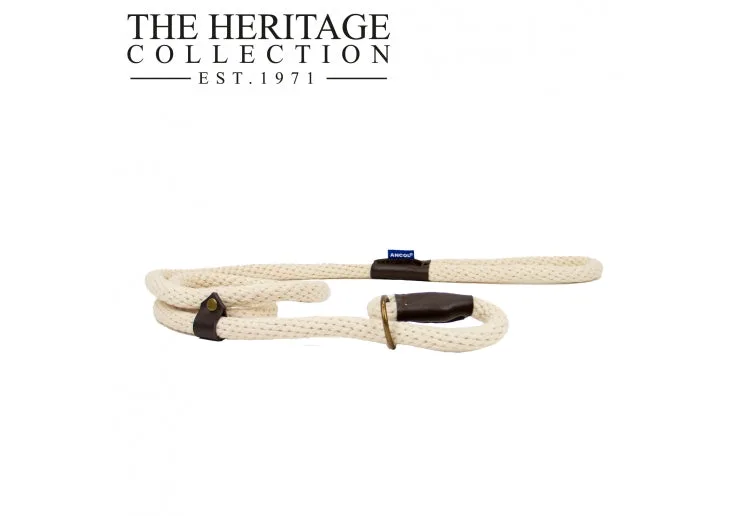
Ancol Heritage Cotton Slip Lead - Natural (150x1.5cm)