Quick Answer
Use Learning Resources Soft Foam Emoji Cubes to turn abstract emotions into a tangible, hands-on game that helps children name, recognize, and talk about feelings.
Why Emoji Cubes Work for Emotional Learning
Young children often struggle to put feelings into words. The familiar emoji imagery on these cubes gives them a visual shortcut. Because the cubes are soft and easy to clean, they work well in group settings where spills and drops happen.
What You Get in the Set
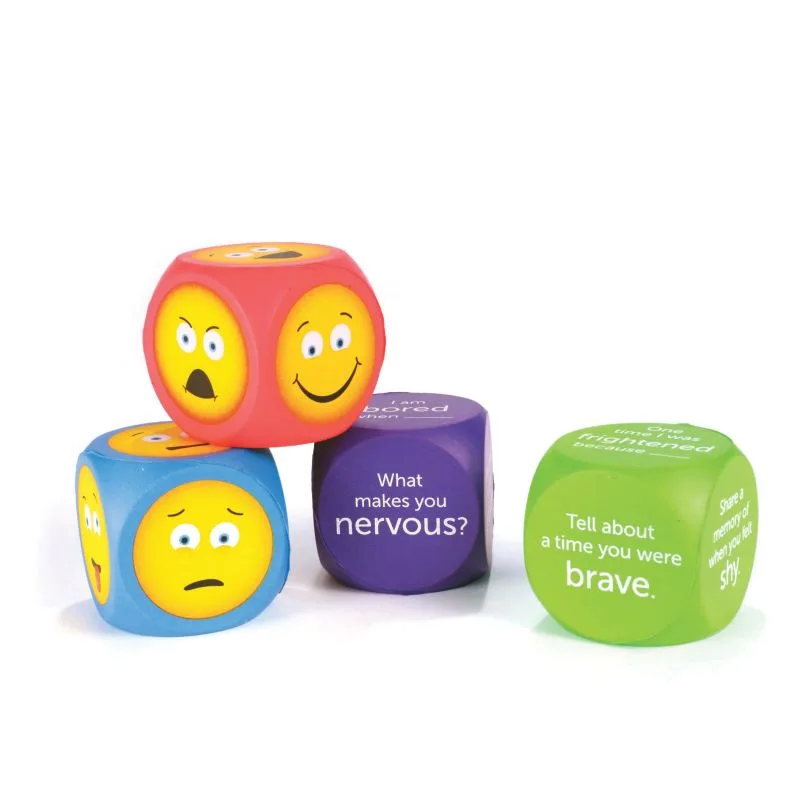
The set includes question cubes that prompt discussion and emoji cubes that display expressions. This two-part design lets you separate the prompt from the emotion, making the activity flexible for different ages.
Step-by-Step Activities with Emoji Cubes
- Roll and Name the Emotion: Have a child roll an emoji cube. Ask them to name the feeling shown (e.g., happy, surprised, sad). If they struggle, show your own face making that expression as a clue. Common mistake: skipping the naming step. Always ask for the word before discussing the feeling.
- Roll and Share a Story: Roll a question cube first, then an emoji cube. The child answers the question using the emotion shown. For example: 'Tell about a time you felt…' then show the emoji face. Checkpoint: If the child can't think of a story, offer a simple example from your day first.
- Match the Emoji to a Situation: Describe a short scenario (e.g., 'Your friend shares a toy with you') and ask the child to find the emoji cube that matches how they would feel. Discuss why. Common mistake: assuming one right answer. Validate different emotional responses to the same situation.
Product Used in This Guide
-
Soft Foam Emoji Cubes: Soft Foam Emoji Cubes by Learning Resources – soft, easy-to-clean cubes with emoji faces and question prompts. The soft foam material makes them safe for young children and quiet for classroom use, while the emoji imagery connects to familiar digital communication.
Soft Foam Emoji Cubes