Quick Answer
To use the Solar System Kaleidoscope for learning, let your child look through the eyepiece, turn the tube to discover colorful jewel patterns, and pair the experience with simple space-themed questions and activities.
Why a Kaleidoscope Works for Space Learning
A kaleidoscope turns abstract space concepts into a hands-on visual experience. When your child turns the tube, the colorful jewels shift and rearrange, mimicking the way planets and stars appear to move in the night sky. This makes it easier for young kids to grasp ideas like rotation and patterns.
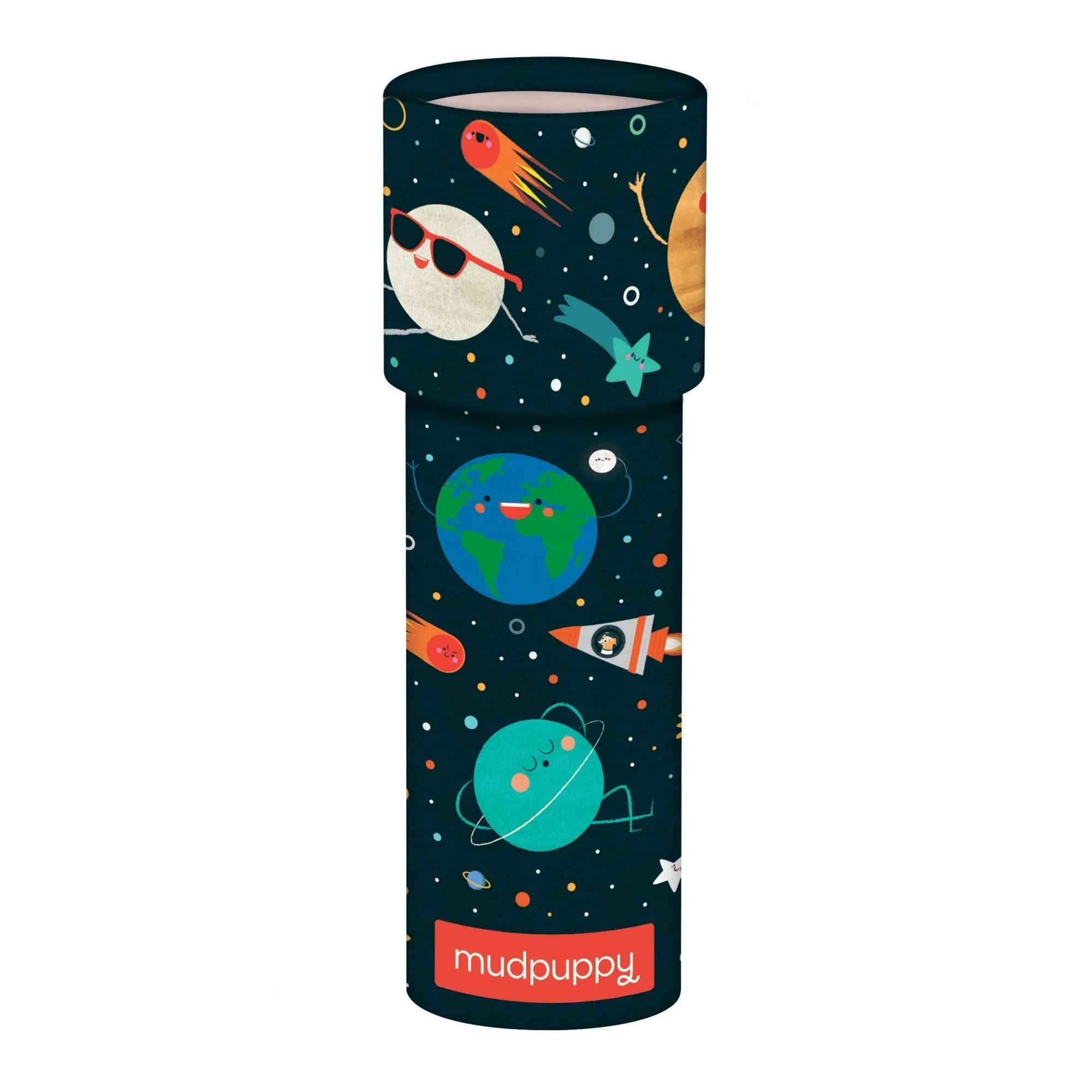
The Solar System Kaleidoscope features artwork with planets, comets, and spaceships, so the imagery reinforces the space theme while your child plays. Because it’s made from sturdy matte-finish board material, it’s safe for ages 3 and up and can handle enthusiastic handling.
Turning Play into a Learning Moment
The key is to ask open-ended questions while your child explores. Instead of just saying 'look at the colors,' prompt them to describe what they see. For example, 'Which colors remind you of Mars?' or 'Can you find a pattern that looks like a comet's tail?' This encourages observation and vocabulary building.
You can also connect the kaleidoscope to other space activities, like reading a book about the solar system or drawing what they saw. The more you link the visual experience to real space facts, the more meaningful the learning becomes.
Step-by-Step Learning Activities
- Introduce the Kaleidoscope: Show your child how to hold the kaleidoscope with one hand on the tube and the other near the eyepiece. Encourage them to look through the eyepiece and slowly turn the tube to see the jewels shift. Checkpoint: Make sure they’re looking through the correct end—the eyepiece is the smaller opening.
- Name the Space Objects: Point out the planets, comets, and spaceships on the artwork. Ask your child to find each one and describe its colors. Checkpoint: If they struggle to identify an object, help by describing its shape or color before moving on. This builds vocabulary and visual recognition.
- Create a Pattern Hunt: Challenge your child to turn the tube and find a pattern that looks like a planet, a star, or a comet. Have them say what they see and why it reminds them of that object. Checkpoint: Encourage them to try different speeds of turning—fast turns create different patterns than slow turns. This encourages creative thinking and observation.
- Connect to Real Space Facts: After play, ask simple questions like 'Which planet is red?' or 'What do comets look like?' Use the kaleidoscope images as a starting point for a conversation about the solar system. Checkpoint: Keep facts simple and age-appropriate—avoid overwhelming with too much detail. This reinforces learning beyond the toy.
Product Spotlight
-
Solar System Kaleidoscope: The Solar System Kaleidoscope reveals colorful jewels when you turn the viewing tube, and features artwork with planets, comets, and spaceships. This combination of moving patterns and space imagery helps kids connect visual play with basic astronomy concepts.
Solar System Kaleidoscope