Quick answer
Match the strainer to the job: use a fine mesh for sifting flour, rinsing quinoa, and straining tea, and a wider mesh or larger size for pasta and vegetables. Always check that the strainer rests securely over your pot or bowl before pouring, and rinse or wash it immediately after use to prevent clogging.
Match the mesh and size to the task
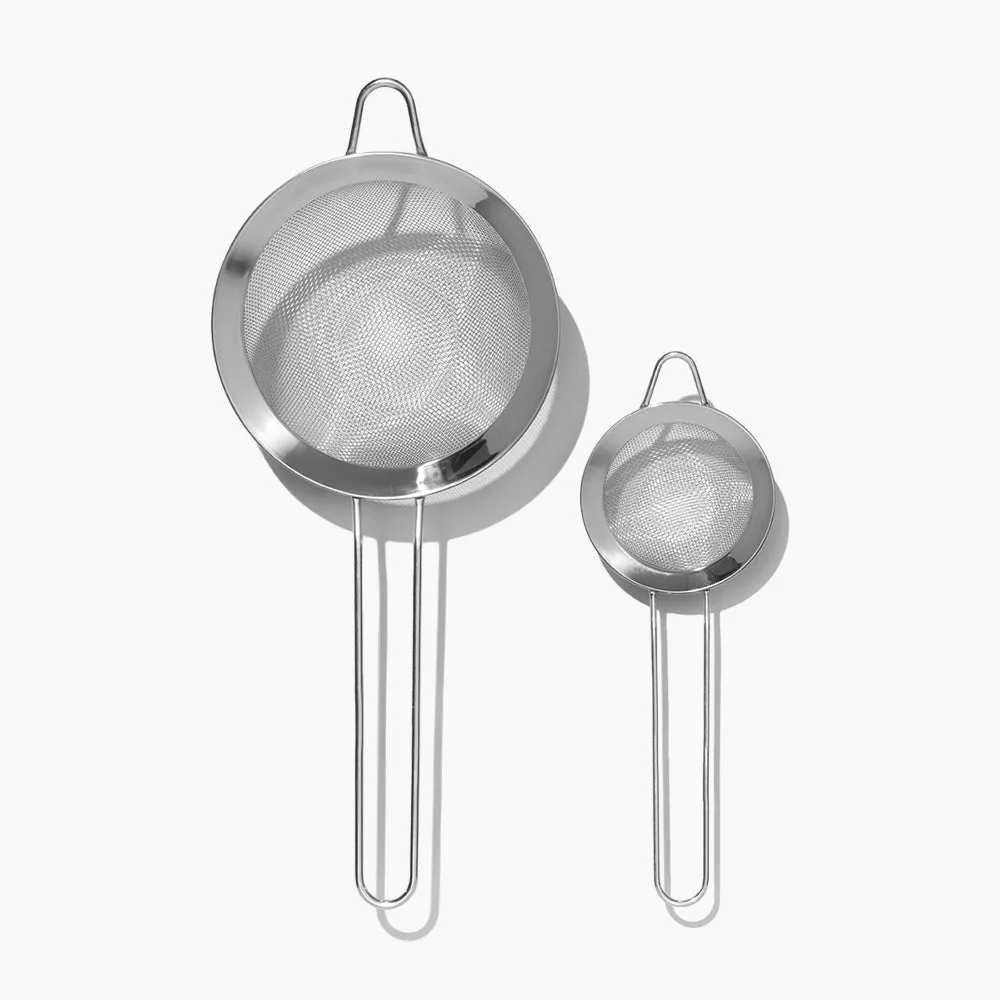
Stainless steel mesh strainers come in two main mesh types: fine and coarse. Fine mesh has tightly woven openings that catch small particles, making it ideal for sifting flour, rinsing quinoa, straining yogurt, or brewing loose-leaf tea. Coarse mesh has larger openings and drains faster, which works better for pasta, canned beans, or bulky vegetables. Size matters too: a large strainer (often 7–8 inches across) fits over most pots and handles big batches, while a small one (3–4 inches) is easier for single servings or delicate tasks like dusting powdered sugar.
Set up for stability before you pour
A common mistake is holding the strainer in one hand while pouring with the other, which can lead to spills or burns. Instead, rest the strainer over a pot, bowl, or sink. Look for long loops or balanced grips that sit securely on the rim. If your strainer has a handle, you can also hook it over the edge of a pot. For fine mesh, make sure the mesh isn’t touching the bottom of the sink or bowl, as that can block drainage.
Rinse grains and small items without losing them
When rinsing quinoa, rice, or lentils, use a fine mesh strainer and run cool water over them while gently swirling with your hand. The mesh should be fine enough to catch the smallest grains. If the holes are too large, grains will slip through. After rinsing, let the strainer drain completely before cooking. For leafy greens, a larger strainer works well, but you can also use a salad spinner if you have one.
Sift dry ingredients for smoother baking
To sift flour, cocoa, or powdered sugar, place the fine mesh strainer over a bowl and add a few tablespoons at a time. Tap the side gently or use a spoon to push the powder through. Don’t press hard—you want to break up clumps, not force the flour through. Sifting aerates the flour and removes lumps, which helps create lighter cakes and pastries. If you don’t have a fine mesh strainer, a coarse one will work but may not catch smaller clumps.
Step-by-step: using your mesh strainer
- Choose the right strainer: Pick a fine mesh for sifting, rinsing quinoa, or straining tea; a coarse mesh for pasta or vegetables. Use a large size for big batches and a small one for single servings. Checkpoint: If you’re unsure, finer mesh is more versatile for small particles.
- Position it securely: Rest the strainer over a pot, bowl, or sink. Make sure the loops or handle sit stable on the rim and the mesh isn’t blocked by the bottom of the sink. Mistake to avoid: Holding it by hand while pouring hot liquids.
- Add food and drain: Pour or scoop food into the strainer. For rinsing, run water over it gently. For sifting, tap the side to shake flour through. Checkpoint: Don’t overfill—leave room for liquid to flow.
- Clean immediately: Rinse with warm water and a soft brush to remove stuck particles. For sticky foods, soak in warm soapy water for a few minutes, then wash by hand or in the dishwasher if safe. Mistake to avoid: Letting food dry on the mesh, which clogs holes.
Product facts
- Stainless Steel Mesh Strainers: A pair of mesh strainers crafted from 18/10 corrosion-resistant stainless steel. The larger strainer is suited for draining pasta or rinsing grains, while the smaller size works well for loose-leaf tea, matcha, or finer tasks. Designed with long loops and balanced grips, they rest securely over pots or in the hand. The two sizes cover both large and small tasks, and the corrosion-resistant steel means they won’t rust with frequent washing. The secure loops prevent slipping when you pour.