Quick answer
Use stepping stones in a simple obstacle course to help your toddler practice balance, coordination, and gross motor skills. Start with a straight path on a non-slip surface, then add gentle turns and spacing challenges as they gain confidence.
Why stepping stones work for toddler balance
Stepping stones encourage toddlers to lift their feet, shift weight, and plan each step — all key movements for developing balance and gross motor skills. Unlike flat floor play, the raised, textured surface provides sensory feedback that helps little ones understand where their body is in space.
Because you can arrange the stones in different patterns, they grow with your child. A simple straight line works for beginners; a zigzag or spaced-out path challenges more confident steppers.
Setting up for safety and success
Place the stones on a carpet or play mat to prevent them from sliding. Keep the first few setups close together — about one toddler step apart — so your child doesn't have to stretch or jump. Always supervise closely, especially when your child is still figuring out their footing.
Step-by-step guide to balance play with stepping stones
- Set up a straight path on a safe surface: Lay 3–5 stepping stones in a straight line on a carpet or play mat. Space them about one toddler step apart. Place a favorite toy at the end as a reward. Common mistake: spacing stones too far apart. Keep them close for first-timers so they don't have to stretch and lose balance.
- Guide your toddler through the course: Hold your child's hand for the first few rounds. Let them step onto each stone with one foot at a time. Say 'step up' as they move to the next stone to build verbal cues. Checkpoint: If your toddler hesitates or steps off, reduce the number of stones or bring them closer together.
- Add gentle variations as they improve: Once your child walks the straight path confidently, rearrange the stones into a slight curve or zigzag. Increase spacing by a few inches to encourage bigger steps and more weight shifting. Common mistake: making the course too complex too soon. Only add one new challenge — either a turn or wider spacing — at a time.
- Turn it into a sensory or pretend-play game: Call the stones 'lily pads' and pretend the floor is water. Or scatter a few soft toys between stones and ask your toddler to 'rescue' them by stepping across. This keeps the activity engaging and encourages repeated practice. Checkpoint: If your child loses interest, change the theme or let them help rearrange the stones. Ownership boosts participation.
Product spotlight
-
Tiny Land® Stepping Stones - Sunset Hues: Designed with a non-slip rubber base and textured surface, each step is a safe journey through your child's imagination. The non-slip base keeps the stone stable on most floors, and the textured top gives tiny feet extra grip — so your toddler can focus on balancing, not slipping.
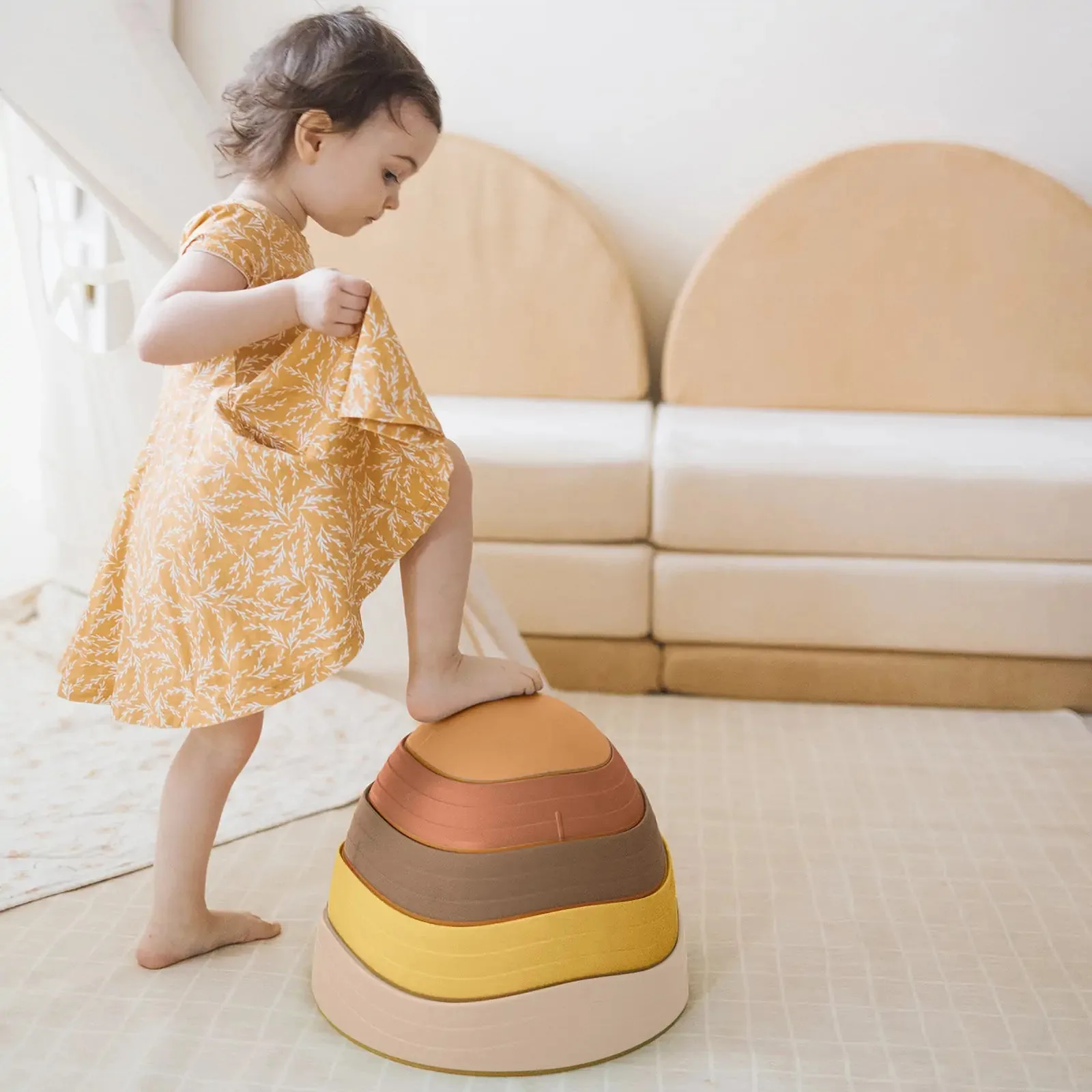
Tiny Land® Stepping Stones - Sunset Hues