Quick answer
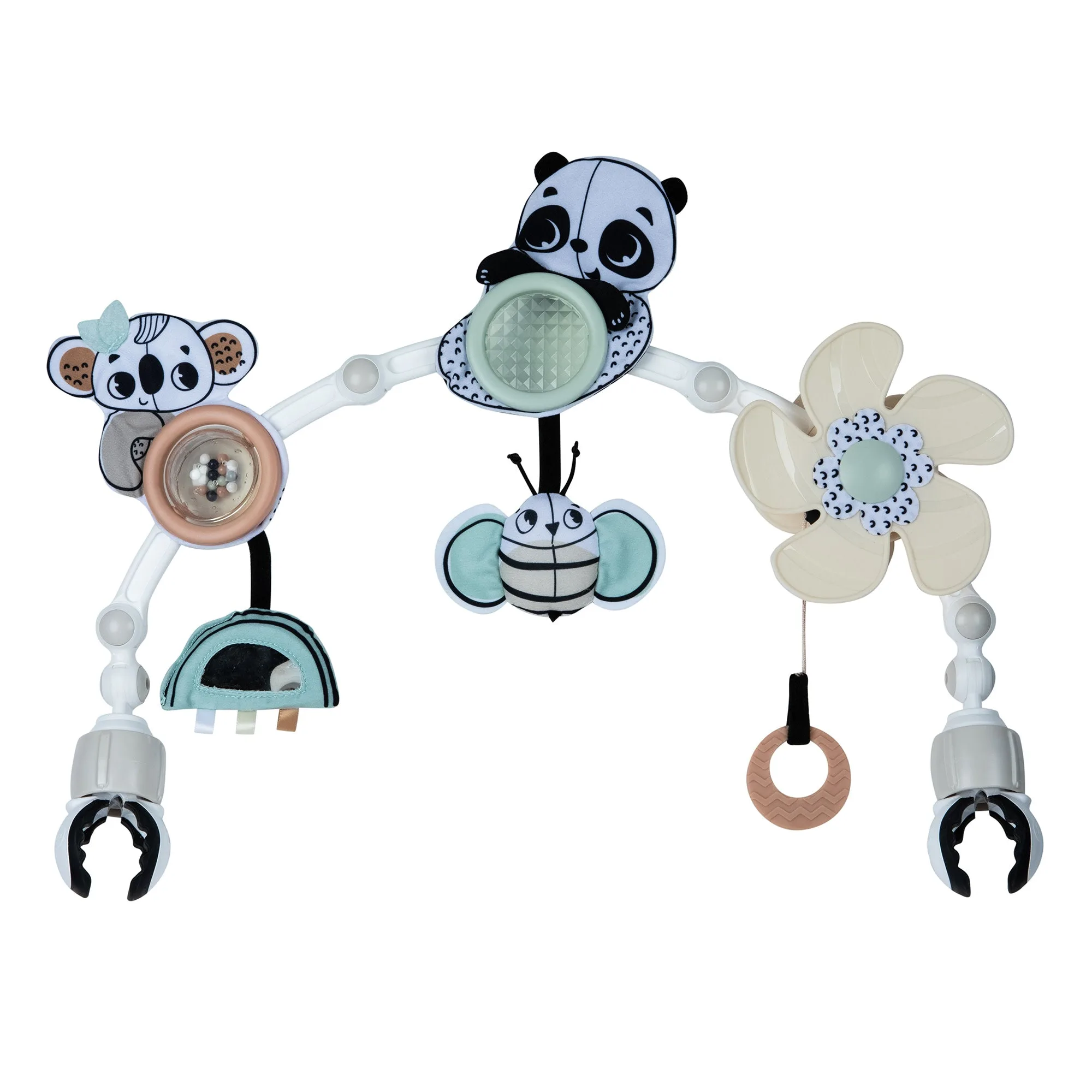
Clip a black-and-white stroller arch to the canopy or handle at roughly 8–12 inches from your baby's eyes, angled slightly forward, and walk at a steady pace so the toy moves slowly across their field of view. Give your baby one or two quiet minutes to lock on before you expect tracking, and stop the walk if they turn away or fuss. The goal is short, calm repetitions, not constant stimulation.
Why walking is the best time for visual tracking practice
A stroller ride creates a slow, predictable version of the same motion you'd use during a floor play session. Because you control the pace, you can slow down to let your baby's eyes catch up, or pause entirely when they lose interest. That control is hard to replicate with a mobile or a handheld toy, which is why walks are one of the easiest places to build visual tracking.
Contrast matters more than color in the early months. High-contrast patterns give your baby's developing visual system a clear edge to follow, which is why black-and-white stroller toys tend to hold attention longer than pastel ones at this stage.
Set up the arch before you leave the house
Attach the arch to the stroller canopy, handle, or side rail so the toy hangs at roughly 8–12 inches from your baby's face. That distance keeps the toy in focus without crowding them. Angle it slightly forward so the toy sits just ahead of their gaze rather than directly overhead, which is harder to track while reclined.
Test the position with your baby already seated. If they have to strain or tilt their head back, the arch is too high or too far behind them. Adjust before you start walking so you're not fiddling with clips at a crosswalk.
Run the walk in short tracking rounds
Start with a steady, slow pace for about 60 seconds. Watch your baby's eyes rather than the toy: tracking looks like a smooth follow, a brief pause, then a re-fix. If their gaze drifts to trees, people, or the stroller fabric, that's normal — they're still practicing visual shifts.
After a minute or two, pause the stroller and let the toy settle. A short break resets attention and gives you a clean read on whether they re-engage when you start moving again. Two or three rounds per walk is plenty for most babies.
Adjust for age and mood, not a schedule
Younger babies often track best when the toy moves slowly and stays in one part of their view. Older babies may want the arch repositioned so they can reach for it, which shifts the activity from visual tracking toward grasping. Both are useful — just don't expect the same response from a sleepy baby as from a well-rested one.
If your baby is teething, overtired, or working on a new motor skill, tracking may take a back seat for a few days. That's not a setback. Keep the arch attached and let them re-engage when they're ready.
Your step-by-step stroller arch routine
- Clip the arch at 8–12 inches: Attach the arch to the canopy or side rail so the toy hangs roughly 8–12 inches from your baby's eyes, angled slightly forward rather than straight overhead. Checkpoint: your baby should be able to look at the toy without tilting their head back.
- Do a 30-second still test: Before walking, let your baby look at the stationary toy for about 30 seconds. Watch whether their eyes fix on it and hold. Common mistake: starting to walk immediately, which skips the fixation step that tracking is built on.
- Walk slowly for one minute: Push at a steady, slow pace so the toy drifts across your baby's view. Keep your eyes on your baby's face, not the toy. Checkpoint: smooth eye movement that pauses and re-fixes is tracking; a blank stare or turning away means it's time to pause.
- Pause and reset: Stop the stroller for 20–30 seconds and let the toy settle. Then start again for a second round. Common mistake: pushing through fussiness. Two or three short rounds beat one long, overstimulating walk.
- Swap the toy position weekly: Move the arch to the other side of the stroller every week or so, or reposition the clip slightly higher or lower. Next step: once your baby starts reaching, lower the arch so they can bat at the toy — that shifts the practice from tracking to hand-eye coordination.
Products that fit this routine
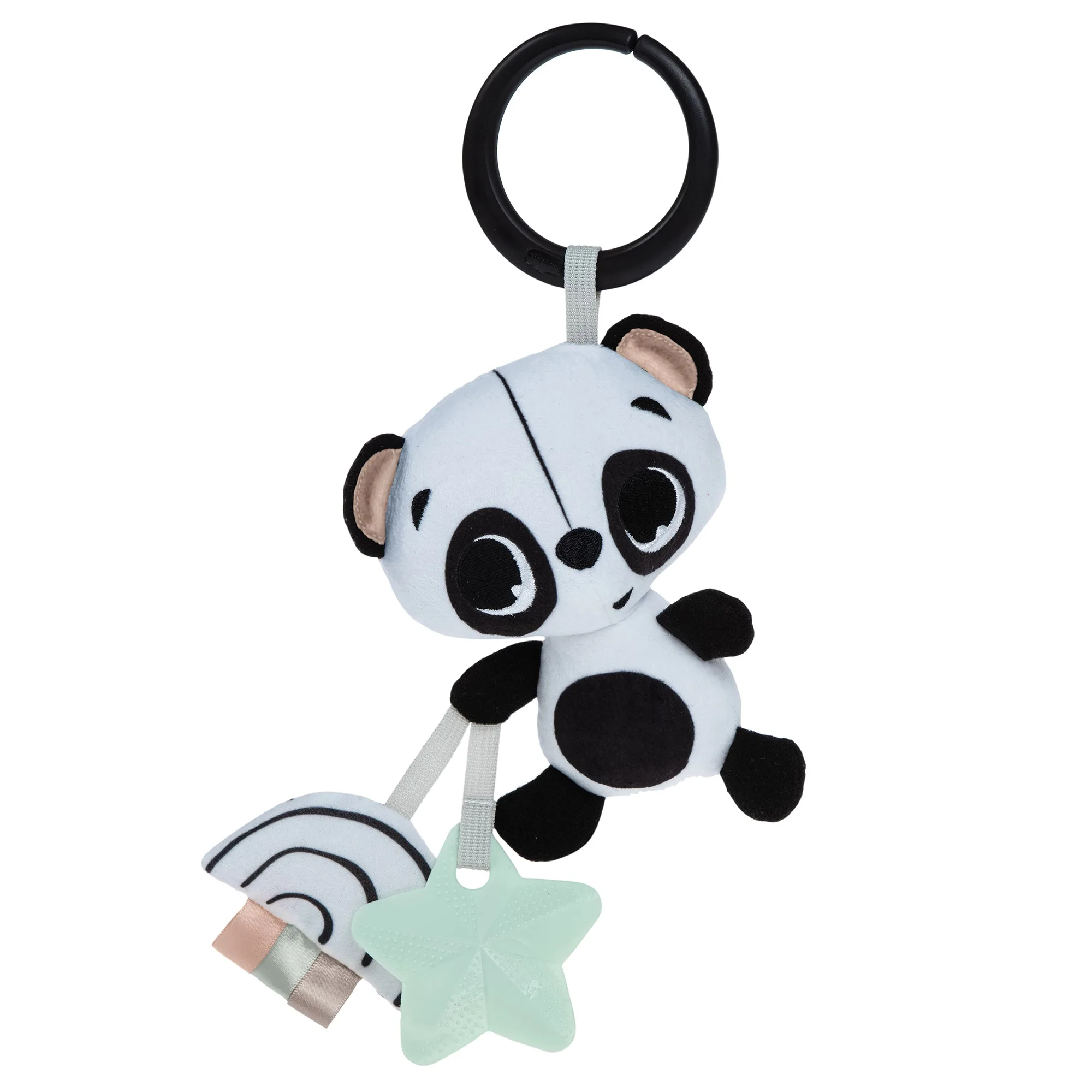
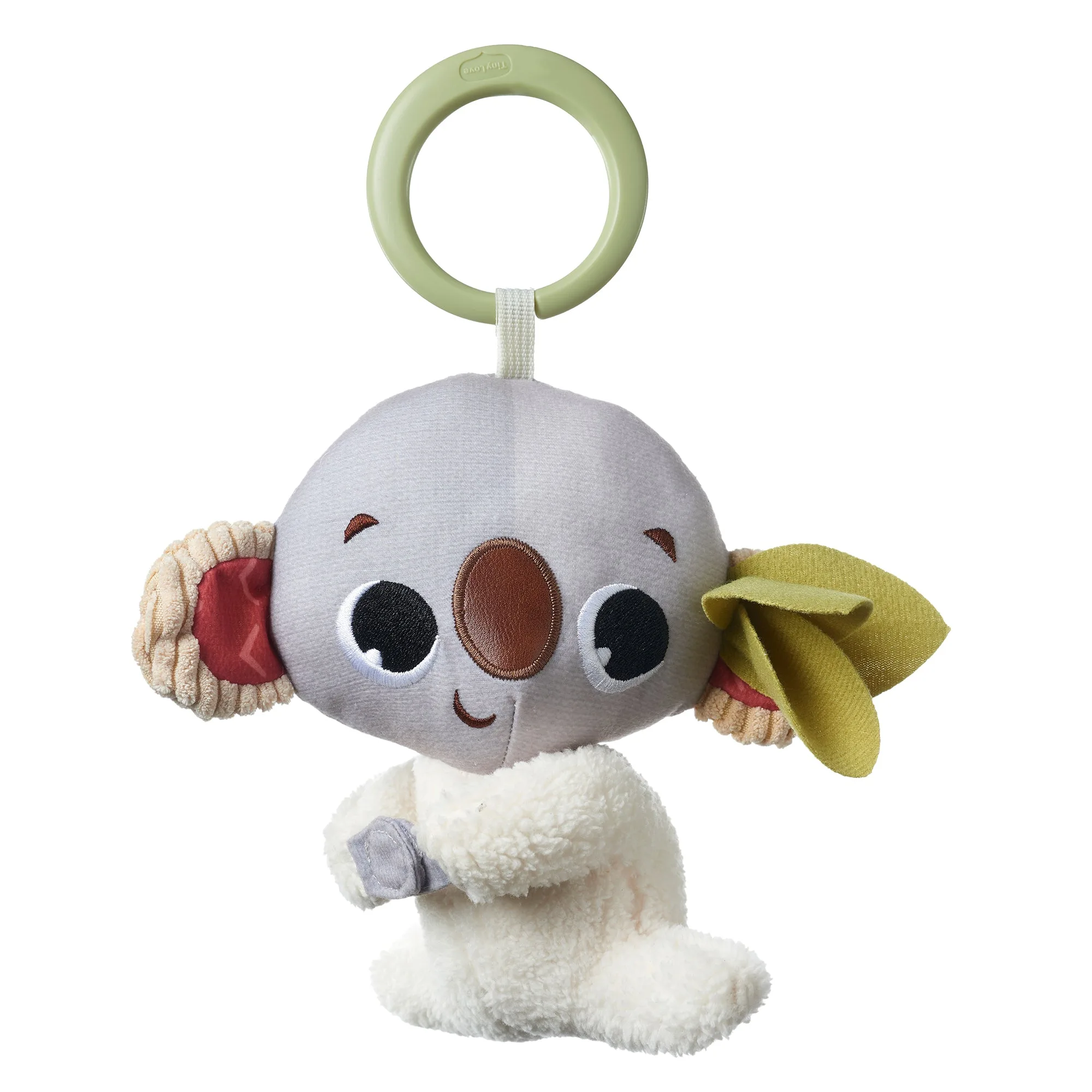
- Tiny Love Black & White Décor Panda Take Along Rattle Toy: Tiny Love Black & White Décor Panda Take Along Rattle Toy provides tactile, audio, and visual stimulation and attaches to almost any piece of baby gear with its universal ring clip. The ring clip lets you move the same high-contrast toy between stroller, car seat, and diaper bag, so you can keep the tracking routine consistent without buying a separate stroller-only toy.
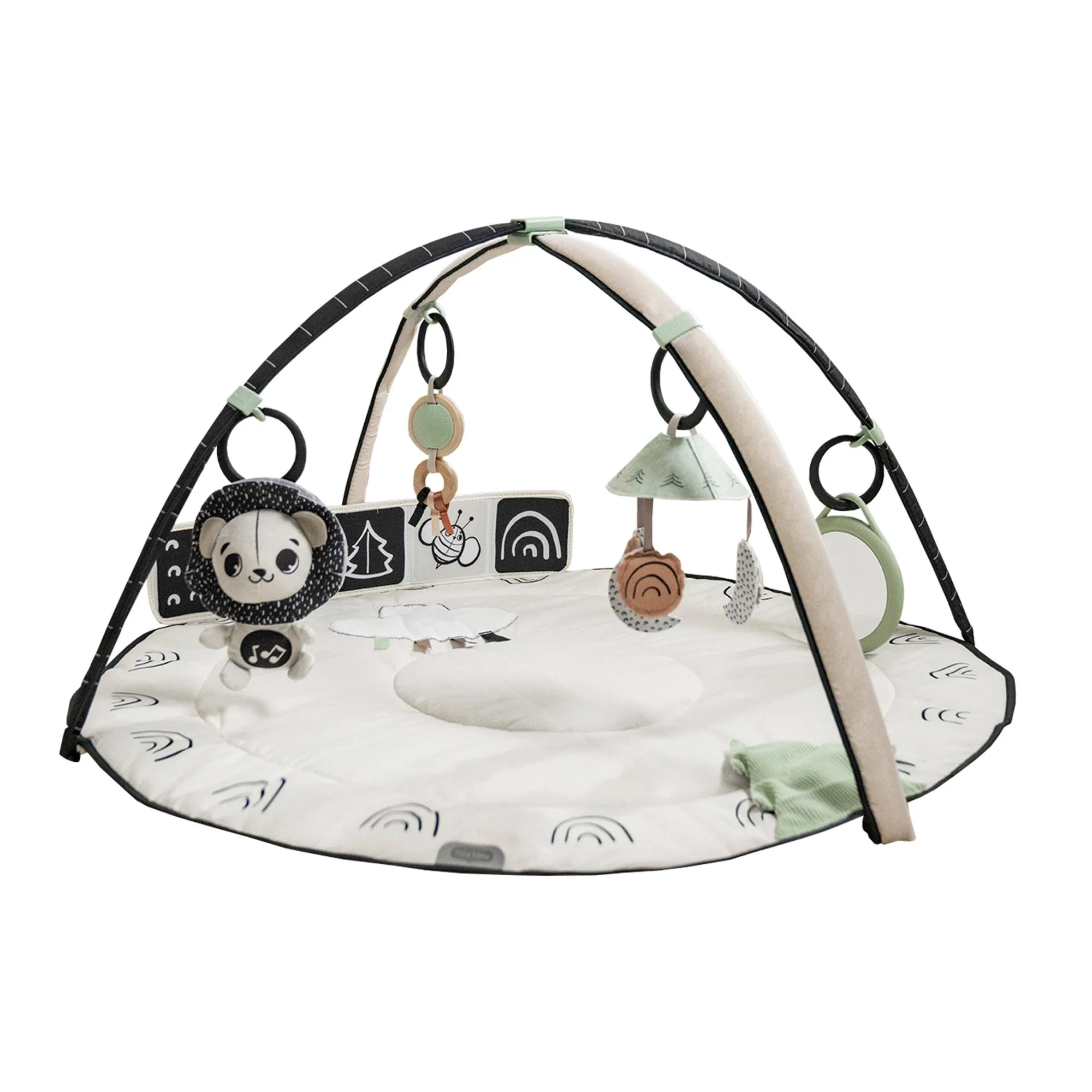
- Black & White Décor Developmental Gymini: Black & White Décor Developmental Gymini engages babies with visual, audio and tactile stimulation and includes a soft black and white take along book and tummy time mirror. The take-along book and mirror let you practice the same visual tracking skills on the floor at home, which is useful on rainy days when walks aren't an option.