Quick answer
Offer suet rolls in a dedicated feeder, on a bird table, or on the ground, and keep them dry and accessible. Start with one flavour, place it where birds already feed, and replace it if it gets wet or soiled.
Why suet rolls suit cold-weather feeding
Suet is a high-energy food, and that matters most when birds need extra calories to stay warm through long, cold nights. Unlike loose seed that scatters, a suet roll stays in one place, so you can offer it from a feeder, a table, or the ground without waste. That flexibility is useful if your garden has different visitors: some birds prefer to perch, while others feed lower down.
The trade-off is that suet softens in mild weather and can turn messy. In a typical British winter this is rarely a problem, but during a mild spell, check the roll more often and move it to a shaded spot if it starts to slump.
Choosing a flavour without overbuying
Flavour can influence which birds show interest, but it is not a guarantee. Walter Harrisons Suet Rolls come in Wild Berry, Seed & Insect, and Mealworm flavours, and each is designed to attract a range of garden birds. If you are new to suet, buy one flavour first and see what visits your garden before adding another. This avoids ending up with several open rolls that go stale before they are used.
There is no single best flavour for every garden. Birds learn what is available, so a flavour that is ignored in week one may be taken readily once the local birds have found it. Give one roll a fair trial before deciding it does not work.
How to offer suet rolls step by step
- Pick a dry, visible spot: Choose a feeder, bird table, or ground area that stays dry and is visible from a window but safe from cats. Avoid spots where rain runs off a roof or where the roll sits in a puddle. If the spot gets soaked after rain, move it before the roll softens.
- Unwrap and place the roll securely: Remove all packaging and set the roll in a feeder, on the table, or on bare ground. Make sure it cannot roll away or be dragged off easily. A roll that wobbles or falls apart is a sign the holder is too loose.
- Start with one flavour: Put out a single flavour and note which birds visit over several days. Only add a second flavour once the first is being eaten, so you can tell what is working. Do not mix flavours in the same holder at first; you will not know which one attracted the birds.
- Check and replace regularly: Inspect the roll every day or two. Replace it if it is wet, mouldy, or soiled, and clean the feeder or table before adding a fresh one. A roll that has gone soft and greasy in mild weather should be removed, not left out.
- Adjust as the weather changes: In freezing weather, suet stays firm and can be offered more freely. In mild spells, offer smaller pieces or move the roll to a shaded, airy spot to slow softening. Winter feeding is not a set-and-forget job; a quick daily check prevents waste and keeps birds safe.
Product facts
-
Walter Harrisons Suet Rolls 500g 3 Flavours: Harrisons Suet Rolls 500g come in three flavours and can be fed all year round from feeders, a table, or the ground. You can offer them in the way that suits your garden setup, and the flavour choice lets you test what your local birds prefer.
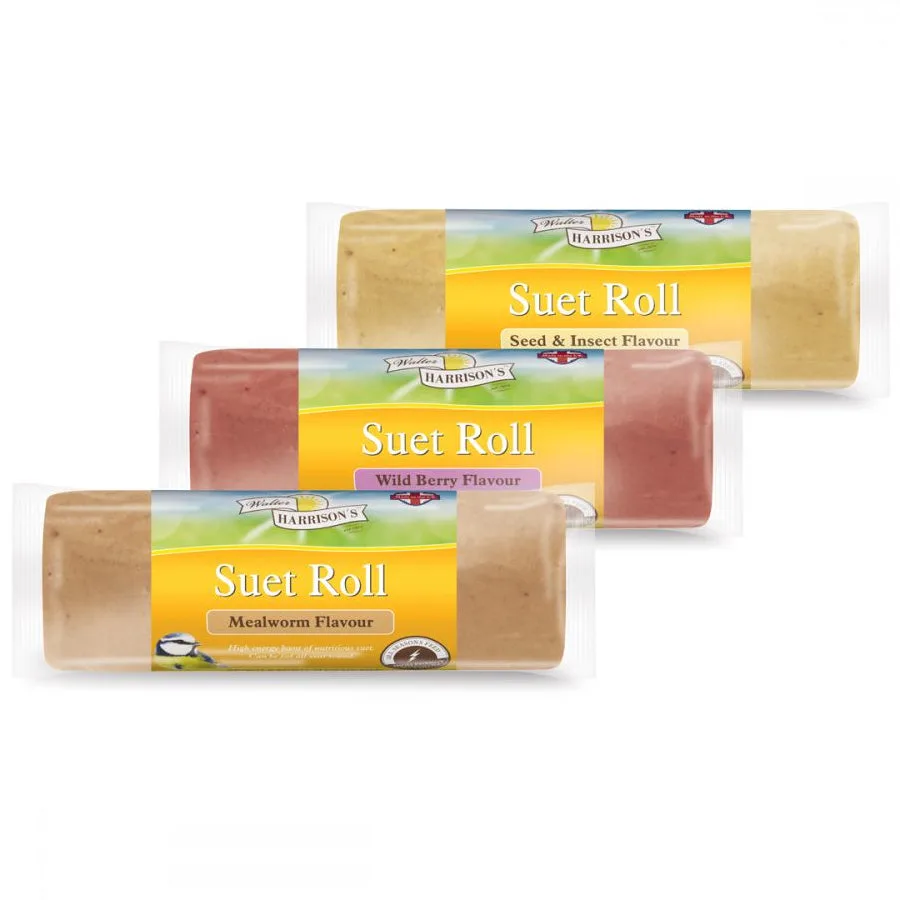
Walter Harrisons Suet Rolls 500g 3 Flavours