Quick Answer
To get the most out of Tabletop Notch Blocks, start with simple flat builds, then introduce the ladders and bridge pieces to create elevated structures that encourage problem-solving and fine motor control.
Why Notch Blocks Stand Out
Unlike standard unit blocks that rely on stacking, notch blocks have cut-out notches that let pieces lock together. This makes builds sturdier and allows for more complex structures, even on a small tabletop. The included ladders and bridge pieces add another layer of challenge, letting kids span gaps and create multi-level designs.
Indoor and Outdoor Play
The solid plastic construction means these blocks can be used indoors on a table or outdoors on a patio. The neutral colors blend with natural surroundings, making them a great choice for outdoor building projects that incorporate leaves, stones, or twigs as part of the scene.
Step-by-Step Play Guide
- Start with Flat Patterns: Lay blocks flat on the table and connect them edge-to-edge using the notches. This helps kids understand how the pieces fit together before they attempt vertical builds. Common mistake: skipping this step and trying to build tall towers right away, which can lead to frustration. Ensure the blocks click together firmly before moving to vertical builds.
- Introduce Vertical Stacking: Once your child is comfortable with flat connections, show them how to stack blocks vertically, aligning the notches to create stable columns. A common mistake is placing blocks unevenly, causing the tower to lean—check that each layer is level. Check each layer is level before adding the next to prevent toppling.
- Add Ladders and Bridges: Use the included ladders and bridge pieces to connect two towers or create elevated platforms. This is where creative play really takes off. A common mistake is forcing the bridge pieces into place—make sure the notches align perfectly and the span is supported on both ends. Ensure bridge pieces have support on both ends to avoid collapse.
- Build with a Theme: Challenge your child to build a specific structure, like a castle, a bridge over a 'river' (a blue scarf), or a house for a toy figure. Use the inspiration cards for ideas. A common mistake is sticking to the card exactly—encourage modifications to boost creativity. Encourage deviations from the card to foster original thinking.
- Incorporate Outdoor Elements: Take the blocks outside and incorporate natural items like leaves, sticks, or small stones into the build. The neutral colors blend well with nature. A common mistake is using wet or dirty items that could stain the plastic—wipe them first or use dry materials. Keep natural add-ons dry to maintain the blocks' appearance.
Product Spotlight
-
Tabletop Notch Blocks - Eastern: The Tabletop Notch Blocks - Eastern set includes solid plastic, neutral-colored blocks with notched parts, plus ladders and bridge pieces, and 10 double-sided inspiration cards. The notched design lets pieces connect securely, so kids can build detailed structures that stay together during play, and the inspiration cards offer starting points for new creations.
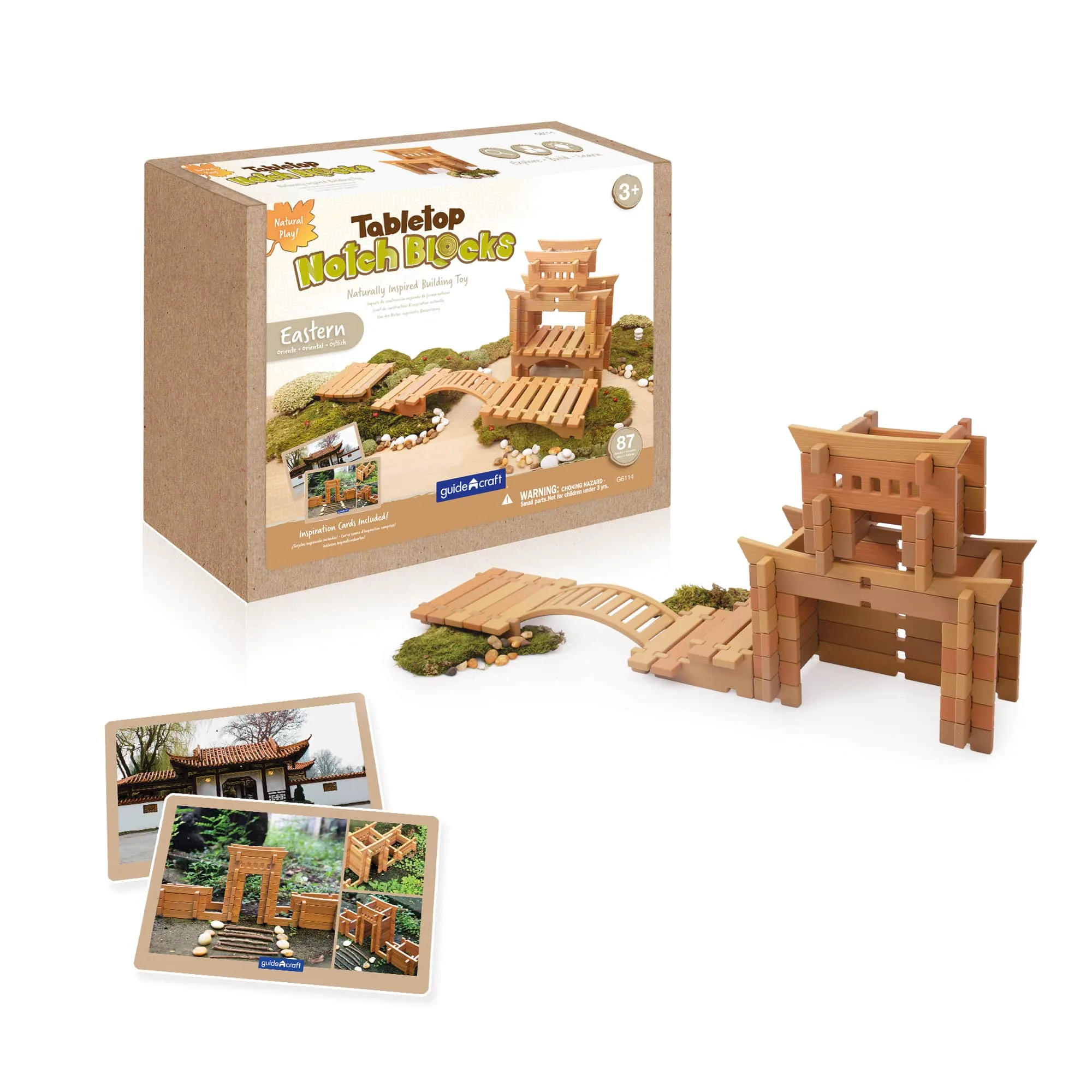
Tabletop Notch Blocks - Eastern