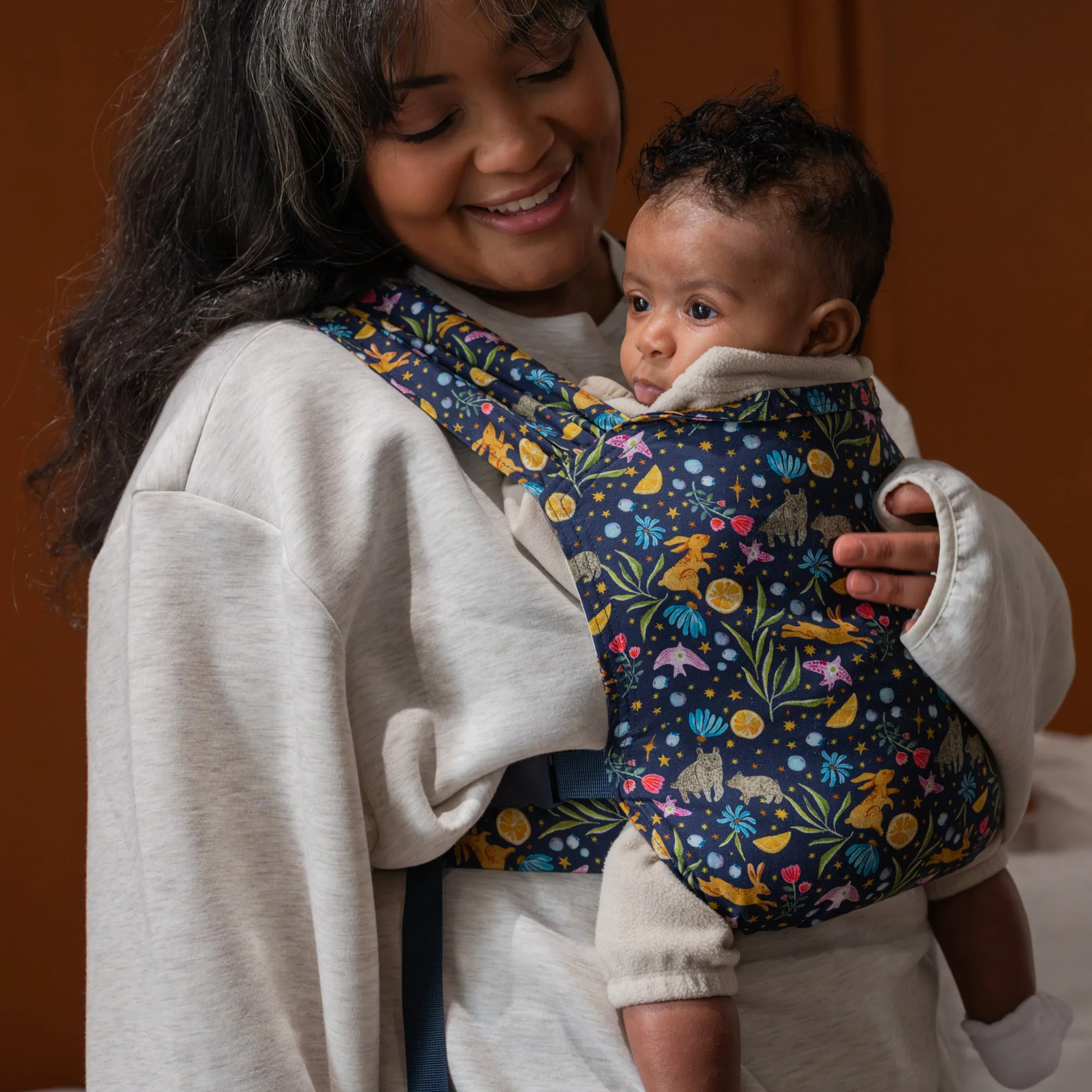
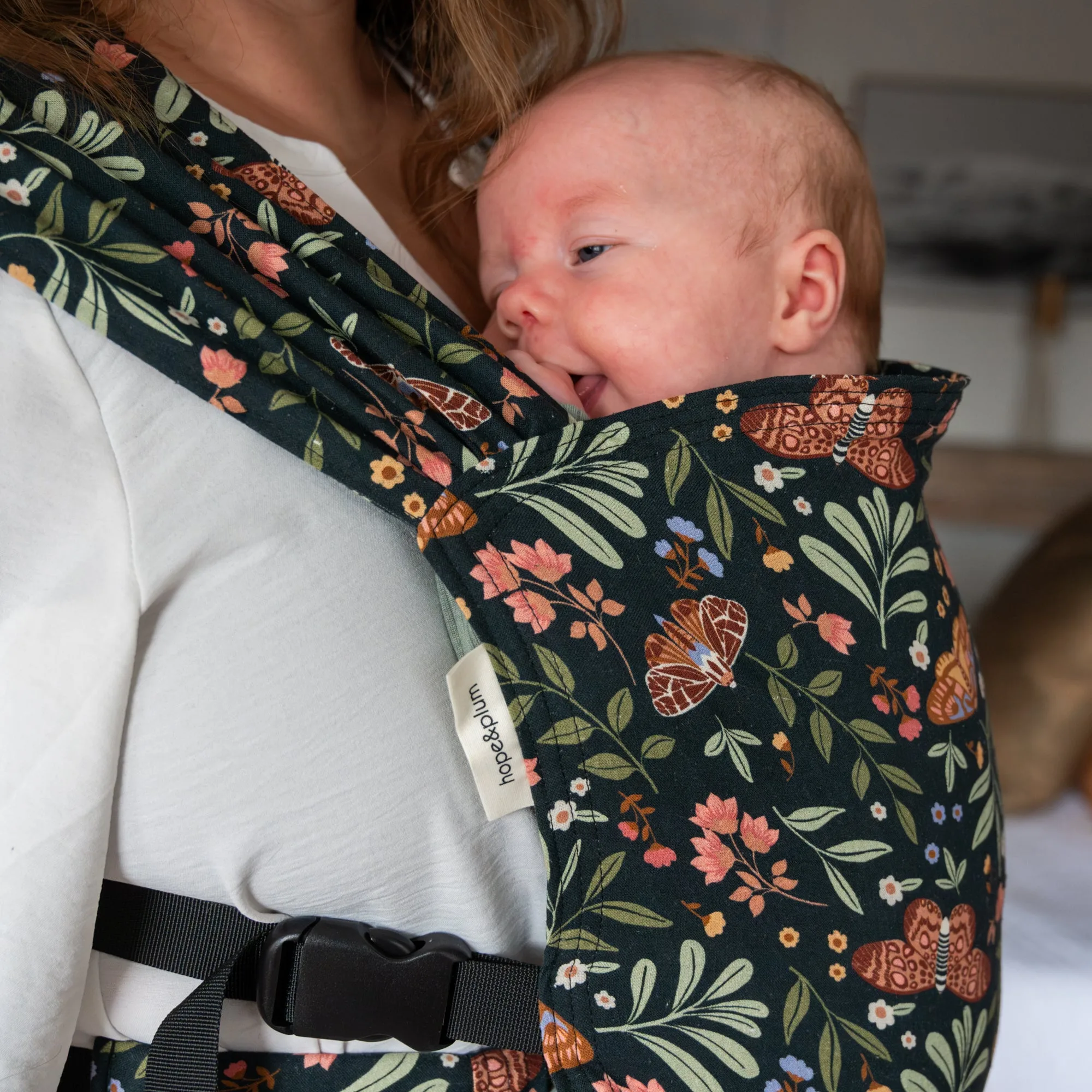
Getting Started with the Ginger Sprout Newborn Carrier
The Ginger Sprout Newborn Carrier from hope&plum is designed for carrying your newborn close during the earliest months. Before you begin, it's important to choose the correct length option for your body size to ensure a comfortable, supportive fit for both you and your baby.
Ginger Sprout Newborn Carrier Evidence
-
Ginger Sprout Newborn Carrier: Available in two length options to suit different body sizes: Short (XXS–L) and Long (XL–6X). Choosing the right length is the first step to a secure fit. The Short option fits sizes XXS to L, while the Long fits XL to 6X. Measure your own torso and refer to the size guide to select the appropriate length.

Ginger Sprout Newborn Carrier
-
Ginger Sprout Newborn Carrier: The Ginger Sprout Newborn Carrier from hope&plum is thoughtfully designed for carrying your little one close during the earliest months. This carrier is purpose-built for newborns, so you can feel confident using it from the start. Its design prioritizes closeness and support for both parent and baby.
-
Ginger Sprout Newborn Carrier: This carrier offers a comfortable, supportive fit for both parent and baby, making it a practical choice for everyday use and newborn snuggles. The carrier's design focuses on comfort and support, which is essential for extended wear. Adjust the straps and seat width to achieve a snug, ergonomic position for your newborn.
Step-by-Step Setup for a Secure Fit
Follow these steps to set up the Ginger Sprout Newborn Carrier. Always refer to the manufacturer's instructions for detailed safety information.
- 1. Choose Your Length: Select the Short (XXS–L) or Long (XL–6X) length based on your body size. The carrier is designed to fit a range of body types, so choose the option that aligns with your usual clothing size.
- 2. Position the Carrier: Place the carrier around your waist, with the waistband centered and snug. The carrier should sit at your natural waist, not too high or too low, to provide a stable base for your baby.
- 3. Secure Your Baby: With the carrier in place, gently place your newborn into the carrier, ensuring their legs are in a natural 'M' position (knees higher than bottom) and their head is supported. The carrier's design supports a close, upright position.
- 4. Adjust the Straps: Tighten the shoulder straps evenly so the carrier feels snug but not restrictive. The carrier should support your baby's weight without sagging. Check that your baby's airway is clear and their face is visible at all times.
Fit Checks for Newborns
After setting up the carrier, perform a quick fit check: ensure your baby's back is supported in a natural curve, their hips are in the 'M' position, and the carrier fabric does not cover their face. The carrier should feel secure without being too tight. As your baby grows, you may need to adjust the seat width and strap tension to maintain a proper fit.