What Is a Planisphere and Why Use One?
A planisphere, also called a star chart or star wheel, is a flat multi-part chart that shows the stars visible from a particular latitude for any time and date. The Night Sky Planisphere Star Finder uses a two-sided map projection to produce a low-distortion guide to the night sky. Even a newcomer can start finding constellations within a few minutes.
The Night Sky Planisphere Star Finder Key Details
-
The Night Sky Planisphere Star Finder - Small: The Night Sky Planisphere Star Finder is manufactured in the USA from durable materials to retain accuracy and usability. It comes with a protective plastic pouch. Durability is important for an outdoor tool that may face dew, dust, or light rain. The pouch helps keep the chart clean and readable during night sessions.
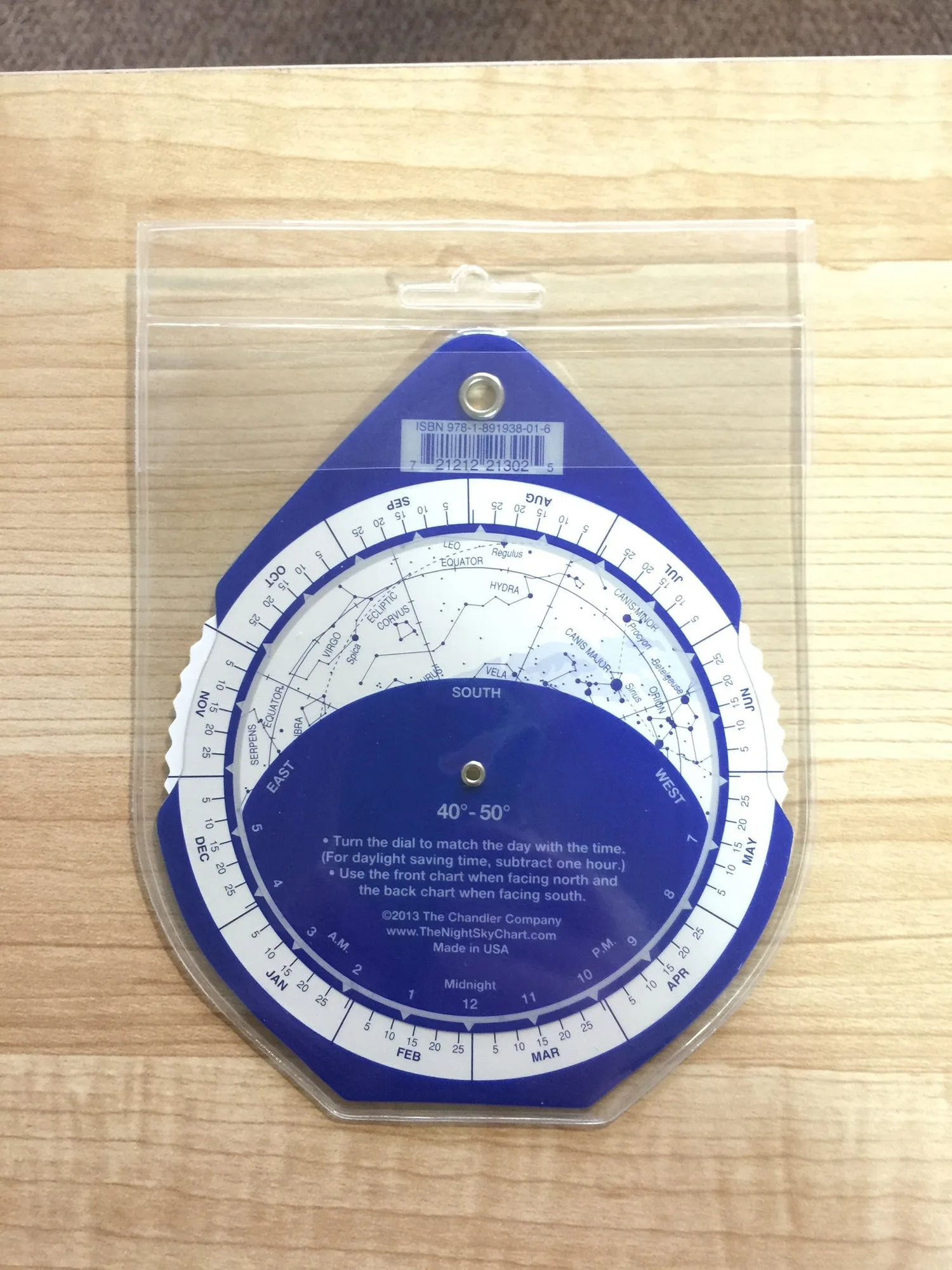
The Night Sky Planisphere Star Finder - Small
Using Your Planisphere
Follow these steps to align your planisphere and start identifying stars.
- Choose Your Latitude Version: The Night Sky Planisphere is available in latitude ranges: North 20°-30°, North 30°-40°, North 40°-50°, North 50°-60°, and a Southern Hemisphere version. Select the one closest to your observing location for accurate star positions.
- Set the Date and Time: Rotate the upper disk so that the current date on the rim aligns with the current time. The window will then show the portion of the sky visible from your latitude at that moment.
- Hold the Chart Overhead: Hold the planisphere above your head with the printed horizon line facing the direction you are looking. The chart is now oriented to match the actual sky, making it easier to identify constellations and stars.
- Find Constellations: Look for bright stars or recognizable patterns on the chart and then locate them in the sky. Start with well-known constellations like the Big Dipper or Orion to build confidence.
Practical Tips for Beginners
Use a red-light flashlight to read the chart without ruining your night vision. Start on a clear moonless night away from city lights. The planisphere works best when you already know a few reference stars, so begin with the brightest ones visible in your sky. Practice setting the date and time indoors first to avoid fumbling in the dark.
Limitations and What the Chart Doesn't Show
The planisphere shows only the brighter stars and constellations visible to the naked eye from a given latitude. It does not show planets, the moon, deep-sky objects, or precise star magnitudes. For those, you would need a star atlas or a digital app. The supplied information does not include instructions for using the chart with a telescope or for tracking moving objects.