Why untranslatable words help with emotional clarity
We all have moments when a feeling sits just out of reach—something between sadness and awe, or a sudden rush of tenderness that has no proper name. Without a word for it, the feeling stays fuzzy, harder to share or even understand. That is where untranslatable words come in.
The Untranslatable Words card deck gathers words from languages around the world that name moods, needs, and experiences English leaves unnamed. By learning these words, you give yourself a precise emotional vocabulary that makes your inner life clearer and easier to talk about.
What the deck contains
-
Untranslatable Words: 20 cards, each 159mm x 115mm, featuring a word from another language with a complementary image and definition. The compact size and curated selection make it easy to browse a few cards at a time without feeling overwhelmed.
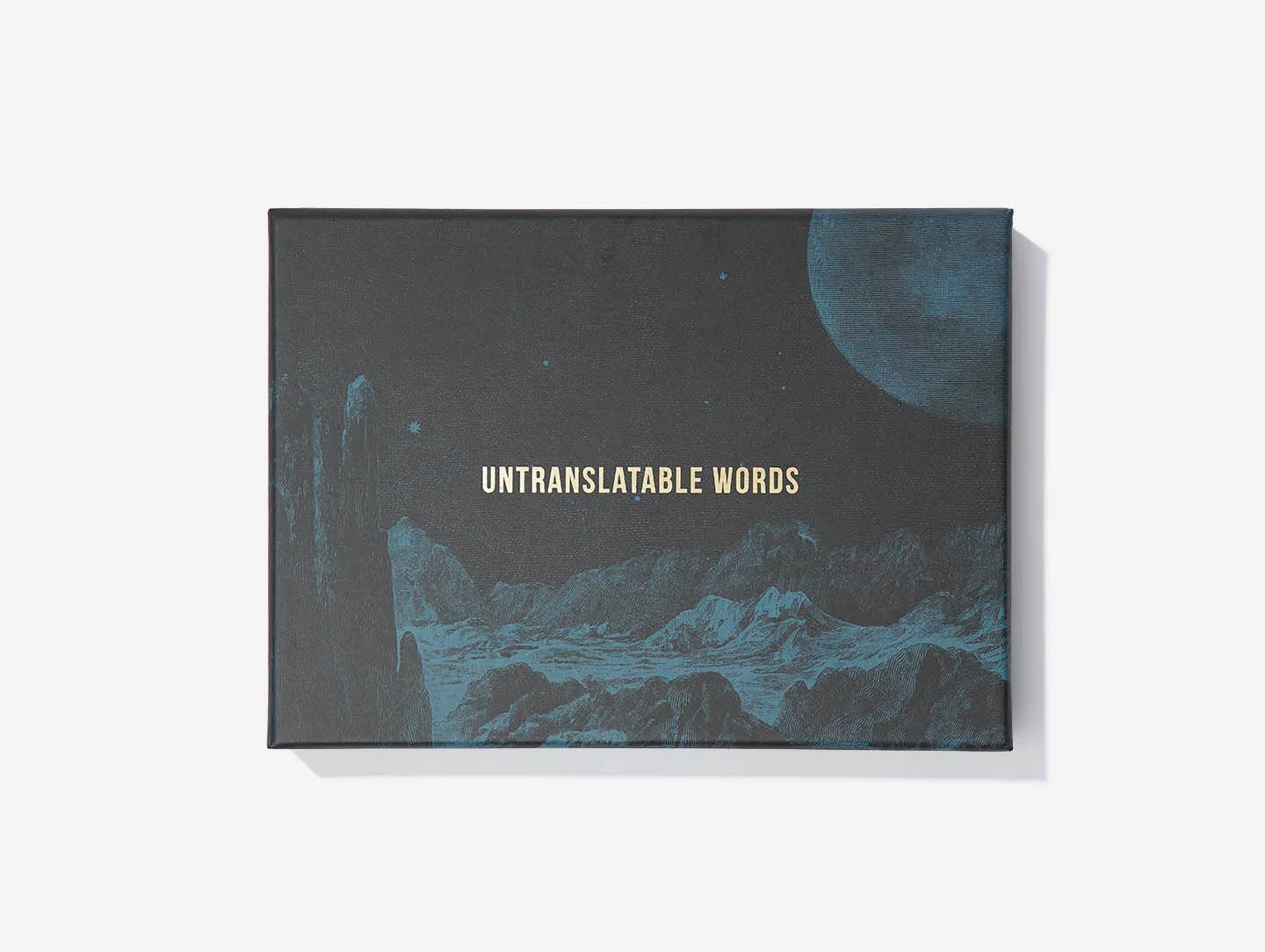
Untranslatable Words
How to use the cards for emotional clarity
You can use the deck alone or with a partner. The goal is not to memorize words but to let them prompt reflection and conversation.
- Pick a card that matches your current mood: Shuffle the deck and pull one card, or fan them out and choose the word that catches your eye. For example, if you feel a quiet wonder looking at a sunset, you might draw Yūgen (Japanese), which names that mysterious beauty.
- Read the definition and image aloud: Say the word and its meaning. Notice if the description fits your experience better than any English phrase you could think of.
- Describe a memory that matches the word: Think of a time you felt that way. For Forelsket (Norwegian)—the euphoric beginning of love—you might recall the early days of a relationship when everything felt new and electric.
- Use the word in a sentence about your day: Try saying, 'I felt a bit of duende watching that performance' or 'The walk home had a quiet yūgen to it.' Speaking the word makes it part of your emotional vocabulary.
- Share the word with someone close to you: Explain what the word means and why it fits. This turns a private feeling into a shared one and deepens your connection.
What the deck doesn't do
The deck is not a therapy tool or a diagnostic aid. It does not replace professional help for difficult emotions. Instead, it offers a gentle way to notice and name feelings that might otherwise stay vague. The cards work best as a starting point for reflection, not a complete emotional education.