Why a Winter Fairy Puppet in Therapy?
Puppets are a natural bridge to imaginative play, and the Winter Fairy Puppet offers a gentle, seasonal character that can help children express feelings they might not put into words. Its silver dress and winter accents create a visual cue for stories about change, cold feelings, or quiet moments—making it a useful tool for therapists working with young clients.
Because the puppet is open-ended, it does not prescribe a specific emotion or story. Children can decide whether the fairy is shy, brave, sad, or playful, giving the therapist insight into the child's inner world without direct questioning.
What the Winter Fairy Puppet Offers
-
Winter Fairy Puppet: The Winter Fairy Puppet measures approximately 14 inches tall and wears a silver dress with winter accents. The 14-inch size is large enough for a child to manipulate easily but not so big that it overwhelms small hands. The silver dress and winter accents provide a clear seasonal theme that can anchor stories about cold weather, holidays, or personal 'winter' emotions.
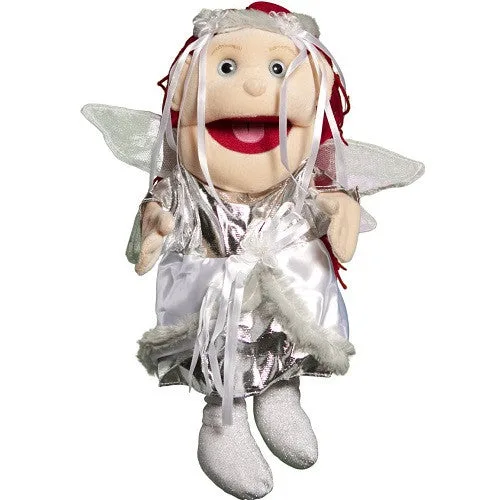
Winter Fairy Puppet
Introducing the Puppet in a Session
Start by letting the child explore the puppet at their own pace. You can model a simple greeting or movement, then step back to see how the child chooses to interact.
- 1. Warm-up with the Fairy: Hold the puppet and have it say hello in a soft voice. Ask the child if the fairy looks happy, tired, or curious. This low-pressure start helps the child project their own feelings onto the puppet.
- 2. Invite a Story: Ask open-ended questions such as, 'Where does the fairy live?' or 'What does she do when it snows?' Let the child guide the narrative. The winter theme can naturally lead to topics like waiting, change, or comfort.
- 3. Use the Puppet as a Listener: Sometimes children find it easier to talk to a puppet than to an adult. Have the fairy ask the child a question, such as, 'What is your favorite thing about winter?' or 'Have you ever felt cold on the inside?'
Therapeutic Puppetry Activities
The Winter Fairy Puppet can be part of several play therapy activities. For example, you can create a simple 'fairy rescue' scenario where the fairy needs help finding her way home, encouraging problem-solving and empathy. Alternatively, the fairy can be a witness to a scene the child builds with blocks or other toys, and the child can explain what the fairy sees.
Because the puppet's story is not fixed, it can reappear in different roles over multiple sessions. One week she might be a friend, the next a character who feels left out. This flexibility supports ongoing emotional exploration without requiring new props.
Practical Considerations for Your Setting
At 14 inches, the Winter Fairy Puppet is easy to store and carry between sessions. Its silver dress and winter accents are visually distinctive without being overly detailed, so children can project their own ideas onto the character.
The supplied catalog does not include specific care or age recommendations beyond the general product description. For younger children, supervise use to ensure gentle handling. The puppet is not a toy meant for rough play, but a therapeutic tool that benefits from a calm, supportive environment.
If you work with multiple children, consider whether the winter theme fits the season or the child's current emotional context. The puppet can also be used year-round if the child connects with the fairy's 'cold' or 'quiet' qualities, not just the seasonal look.