Quick answer
Use the puzzle as a short, repeatable routine: build the full alphabet together, then revisit one letter at a time through the real photo on each piece. Keep sessions to five or ten minutes and let the child lead the pace.
Why a floor puzzle works better than flashcards for some toddlers
A floor puzzle turns letter practice into a whole-body activity. Toddlers who resist sitting still for flashcards often stay engaged when they can kneel, reach, and place a piece. The size of floor pieces also makes the letter shape easier to see than a small card held at a distance.
The trade-off is pace. A 26-piece floor puzzle takes time to assemble, so it works best as a short routine rather than a long lesson. If your child loses interest halfway, stop and leave the rest for the next session.
When to introduce the full alphabet versus a few letters
Start with the full puzzle only if your child already recognizes a handful of letters or shows interest in print. Otherwise, pull out three to five pieces that match the first letters of familiar names or words and build from there.
Once the child can place most pieces with light help, move to the full 26-piece layout. This gradual approach prevents frustration and keeps the puzzle feeling achievable.
Step-by-step letter recognition routine
- Set up a defined puzzle space: Clear a low, flat area such as a rug or mat where the child can kneel and reach all the pieces. Lay the pieces photo-side up in a loose pile. Check that every piece is visible; hidden pieces cause wandering attention.
- Build the alphabet in order, narrating each letter: Place the A piece first, say the letter name, and point to the photo. Hand the next piece to the child and repeat. Continue until the child takes over placing pieces. Common mistake: rushing through all 26 letters. Pause after every few pieces to let the child name or point.
- Do a photo-to-letter match: Pick up one piece, cover the letter with your hand, and ask the child to name what is in the photo. Then reveal the letter and connect the sound to the picture. If the child guesses randomly, switch to two choices instead of open-ended naming.
- Play a find-the-letter game: Call out a letter sound and have the child find the matching piece from the completed puzzle or the pile. Start with letters in the child's name. Keep the game to five turns; stop while the child still wants more.
- Close with a quick review: Before putting the puzzle away, point to three letters the child placed and ask them to name each one. Celebrate effort, not just correct answers. Note which letters were tricky and start with those next time.
Product facts
-
Wooden Alphabet Floor Puzzle | 26-Piece Educational Puzzle with Real Photos: Each of the 26 pieces pairs a letter with a real photograph. Real photos give toddlers a concrete visual anchor, so you can ask 'what do you see?' instead of only naming the letter.
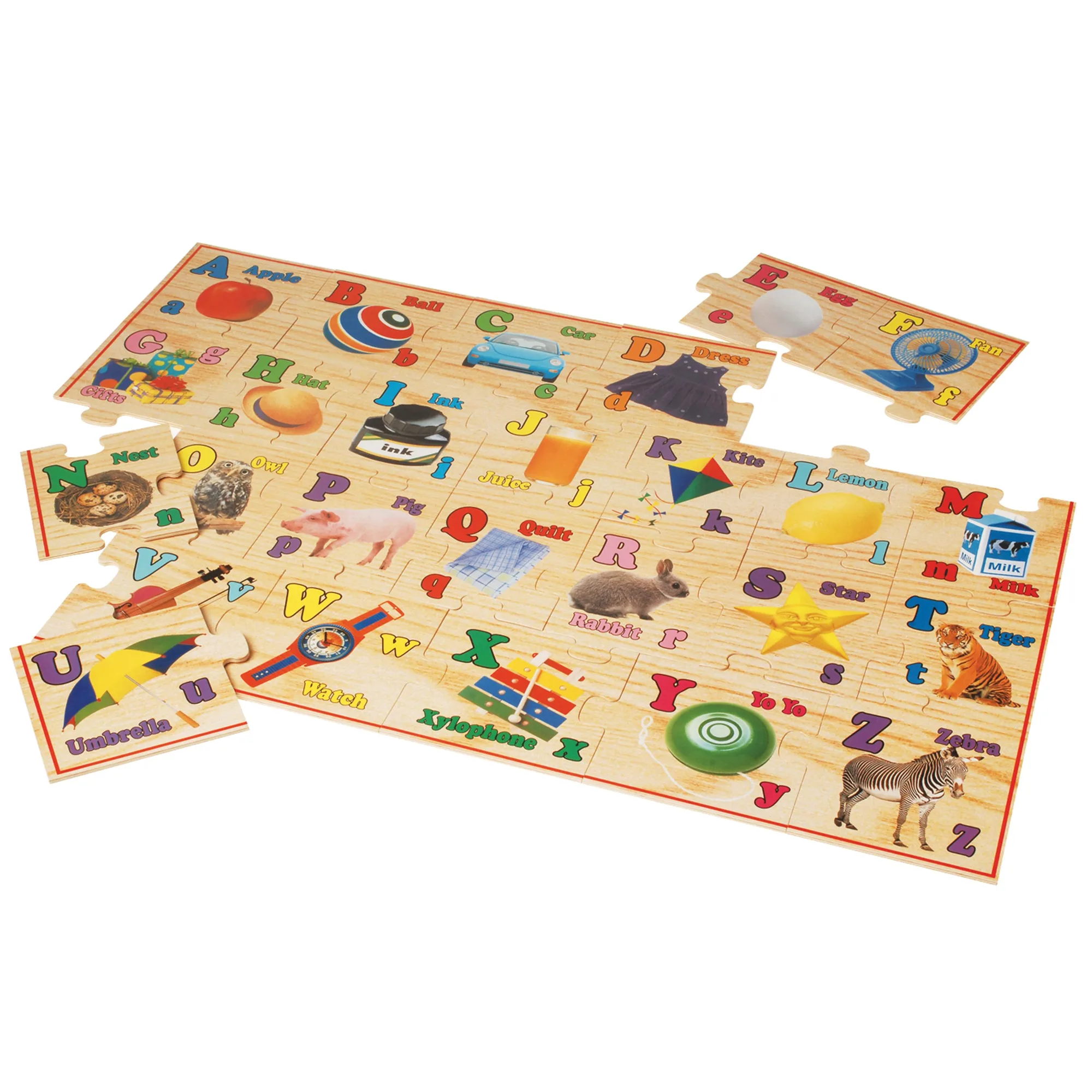
Wooden Alphabet Floor Puzzle | 26-Piece Educational Puzzle with Real Photos