Quick Answer
To use a wooden lid puzzle, start by placing a few high-value treats inside the compartments, let your pet explore at their own pace, and gradually increase difficulty to keep them engaged.
Why Foraging Puzzles Matter for Small Pets
Foraging is a natural behavior for rabbits, guinea pigs, and other small pets. In the wild, they spend hours searching for food, which keeps their minds sharp and bodies active. A wooden lid puzzle mimics that experience by hiding treats in compartments that your pet must figure out how to open.
Using a foraging toy regularly can help reduce boredom and prevent destructive habits like chewing on cage bars or over-grooming. It also gives your pet a healthy outlet for their natural curiosity and problem-solving skills.
Choosing the Right Treats
The best treats for a wooden lid puzzle are small, aromatic, and safe for your specific pet. For rabbits and guinea pigs, consider using pieces of their favorite herbs, such as parsley or cilantro, or a small slice of carrot. Avoid sugary treats or anything too large that might get stuck.
If your pet is new to puzzles, start with treats that are easy to smell and find. This encourages them to investigate the puzzle and builds confidence.
Safety and Supervision
Always supervise your pet during the first few sessions with a wooden lid puzzle. While the puzzle is made from durable birch veneer plywood with a pine core, some pets may chew more aggressively than others. Check the puzzle regularly for splinters or damage and replace it if it becomes worn.
If your pet shows little interest, don't force it. Some pets take time to warm up to new toys. Try placing the puzzle near their favorite resting spot or adding a bit of their usual hay on top to spark curiosity.
Step-by-Step Guide to Using the Wooden Lid Puzzle
- Introduce the Puzzle: Place the empty puzzle in your pet's enclosure for a day or two so they can investigate it without pressure. This helps them get used to the new object and reduces fear. Don't rush the introduction; let your pet approach the puzzle on their own terms.
- Add Easy Treats: Start by placing a few small, high-value treats in the compartments and leave the lids open. This shows your pet that the puzzle holds something rewarding and encourages them to explore. If your pet ignores the open puzzle, try a more enticing treat or rub a bit of hay on the puzzle to attract their attention.
- Close the Lids: Once your pet confidently takes treats from the open compartments, close the lids. Demonstrate by lifting one lid slightly so they see the treat inside, then let them figure out how to open it themselves. If your pet struggles for more than a few minutes, lift the lid a little more to help them succeed and build confidence.
- Increase Difficulty: After your pet masters the closed lids, you can hide treats in only one or two compartments, or use smaller treats that are harder to find. This keeps the puzzle challenging and engaging. Rotate the puzzle's location and change the treat type regularly to maintain novelty and interest.
- Clean and Maintain: After each use, remove any leftover food and wipe the puzzle with a damp cloth. Allow it to dry completely before storing. Periodically check for splinters or damage, especially if your pet is a heavy chewer. Replace the puzzle if you notice any sharp edges or broken pieces to keep your pet safe.
Product Spotlight
-
Wooden Lid Puzzle: The Wooden Lid Puzzle is crafted from durable 1/2-inch birch veneer plywood with a pine core and features three compartments that hide treats. This sturdy construction is built to withstand enthusiastic digging and foraging, while the three compartments offer a satisfying challenge for your small pet.
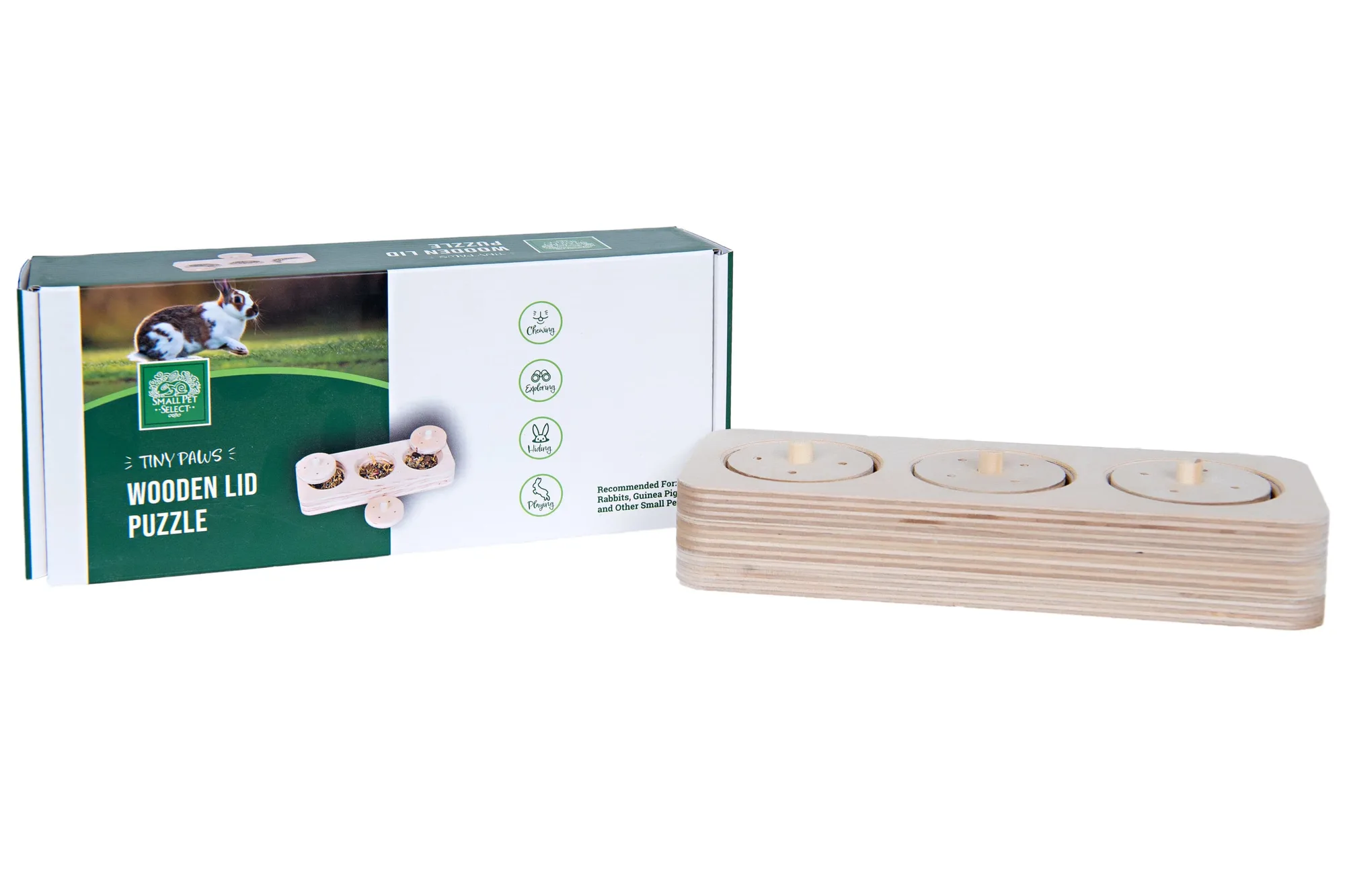
Wooden Lid Puzzle