What a 4.5-inch utility knife does best
A utility knife sits between a chef's knife and a paring knife. With a 4.5-inch blade, the ZWILLING TWIN Grip Utility Knife handles jobs that feel too small for a chef's knife but too large for a paring knife. Its serrated edge is especially useful for foods with tough skins and soft interiors.
Reach for this knife when you need more blade length than a paring knife offers but more control than a chef's knife gives you. Common tasks include slicing tomatoes, cutting sandwiches, trimming small fruits, and cutting cheese or cooked sausage.
Everyday tasks for a serrated utility knife
The serrated edge grips surfaces that a straight blade tends to crush. Use the knife for these common kitchen jobs:
- Slicing tomatoes and citrus: The serrations bite into the skin without squashing the flesh. Use a gentle sawing motion and let the knife do the work.
- Cutting sandwiches and wraps: A 4.5-inch blade is long enough to slice through stacked layers. Serrations help cut through crusty bread cleanly.
- Trimming small fruits and vegetables: Use the tip for removing stems or blemishes, and the middle of the blade for slicing small produce like plums or kiwis.
- Prepping cheese and cooked meats: For soft cheese or sliced sausage, the serrated edge reduces tearing compared to a straight blade.
Utility knife vs. paring knife: which to grab
The main difference is blade length and cutting style. A paring knife is typically shorter and used for precise, in-hand work. A utility knife gives you more length for slicing and chopping on a board.
- Use a utility knife: When you need to slice medium-sized items like tomatoes, sandwiches, or small fruits. The extra length gives better clearance over your knuckles.
- Use a paring knife: When you need to peel, core, or make detailed cuts while holding the food in your hand. A paring knife is more nimble for intricate work.
How to hold and cut with a utility knife
For safe and efficient cutting, hold the handle with your dominant hand and use your other hand to guide the food. Keep your fingertips curled under.
- Grip the handle firmly: Wrap your fingers around the handle and rest your thumb on the side of the blade for control. Avoid placing your index finger on the spine unless you need extra pressure.
- Use a sawing motion for serrated edges: Let the serrations do the cutting. Move the knife back and forth gently rather than pressing straight down.
- Cut on a stable board: Place the food on a cutting board and guide it with your non-dominant hand, keeping your fingertips away from the blade's path.
ZWILLING TWIN Grip Utility Knife at a glance
-
Buy ZWILLING TWIN Grip Utility knife: ZWILLING TWIN Grip 4.5-inch Utility Knife Red, Serrated Edge This confirms the blade length and serrated edge that make it suitable for the tasks described above.
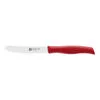
Buy ZWILLING TWIN Grip Utility knife
Caring for your utility knife
The supplied information does not include specific care instructions for this knife. In general, hand wash serrated knives and dry them promptly to protect the edge. Avoid cutting on hard surfaces like glass or stone, which can dull serrations faster.
Store the knife in a block, on a magnetic strip, or with a blade guard so the edge stays protected. If the knife feels dull, a serrated edge typically needs professional sharpening rather than a standard whetstone.