Quick answer
Wash bras in cold water with a gentle detergent, fasten the hooks, and use a mesh bag if you machine wash. Skip the dryer and bleach, reshape cups by hand, and dry flat or hanging by the band. Rotating three to four bras and washing them every two to three wears is the simplest way to make bras last longer.
Bras rarely wear out from wearing them. They wear out from washing them badly. Heat, agitation, and detergent residue break down elastic and stretch out bands, which is why a bra that fit perfectly in March can feel loose by September.
The good news is that bra care is not complicated. A few habits, done consistently, keep necklines from digging, straps from slipping, and wireless support intact for far longer. Here is the exact process, plus the mistakes that quietly shorten a bra's life.
What actually damages a bra
Elastic is the working part of any bra, and it is the first thing to fail. Hot water, tumble drying, and harsh detergent all attack elastane fibres, so the band relaxes and the straps lose their snap. Agitation is the second culprit: a bra tumbling against zips and denim in a mixed load gets stretched and twisted in ways it was never designed for.
Detergent residue matters too. Too much product leaves a film that attracts oils and dulls the fabric, and fabric softener coats fibres so they cannot recover their shape. If your bra feels stiff or smells slightly sour after washing, residue is usually the reason.
- Cold water protects elastic; hot water ages it fast.
- Fasten hooks before washing so they cannot snag other items.
- Never use bleach or fabric softener on bras.
Hand wash vs machine wash bras
Hand washing is the gentlest option and the best default for bras you rely on most. Fill a basin with cool water, add a small amount of gentle detergent, and submerge the bras for about ten minutes. Press the cups gently with your palms rather than scrubbing, then rinse in cool water until it runs clear. Do not wring or twist.
Machine washing is fine if you protect the bra. Use a mesh laundry bag, choose a delicate cycle at 30°C or lower, and wash bras with similar light items rather than towels or jeans. A short cycle with a low spin speed reduces the mechanical stress that stretches bands and distorts cups, especially in wireless styles where the support comes from the knit itself.
- One bra per mesh bag prevents hooks tangling with straps.
- Skip the pre-wash soak if you are machine washing; it adds unnecessary agitation.
- If your machine has a hand-wash or wool cycle, use it.
How often to wash, and how many bras to own
Washing after every wear is unnecessary and shortens lifespan. Two to three wears between washes is a reasonable rhythm for most people; wash after one wear if you have been sweating heavily or the bra was worn against sunscreen or body lotion. Rotating three to four bras spreads the wear and gives elastic time to recover between wears.
This rotation habit is the single easiest way to make bras last longer. A bra worn two days in a row never fully springs back, so the band gradually stays stretched. Giving each bra a rest day keeps the fit consistent and delays the moment when a band starts to ride up.
- Air a bra overnight between wears before putting it away.
- Wash sports or heavily sweated-in bras after each wear.
- Keep a small mesh bag in your laundry so you never skip the protection step.
Drying: the step most people get wrong
The dryer is the fastest way to ruin a bra. Heat degrades elastane and can warp cup shaping, so even a low tumble cycle shortens life noticeably. Air drying is not just gentler; it is also the reason a well-cared-for bra can hold its shape after many washes.
Lay bras flat to dry, or hang them by the band rather than by the straps. Hanging by straps puts the full weight of a wet bra on a thin piece of elastic, which is exactly how straps stretch out. If you must speed drying, press the bra between two towels to remove excess water first, then lay it flat away from direct sun.
- Never hang a wet bra by its straps.
- Keep drying bras out of direct sunlight to protect the fibres.
- Reshape cups and smooth the band while the bra is still damp.
Care tips specific to wireless and DD+ bras
Wireless bras depend on the knit and elastic for support, so they are more sensitive to heat and stretching than wired styles. Washing wireless bras in a mesh bag on a delicate cycle, or by hand, keeps the rib knit from being pulled out of shape. The same care applies to bra crops, where double-layer construction does the supporting work.
For DD+ styles, avoid hanging the bra by the shoulder straps and never wring the cups. Extra elastane in the body gives more support, but it also means the fabric is doing more work, so gentle handling pays off. If a bra crop or DD+ bra starts to feel loose, check whether the band has stretched before assuming the size is wrong.
- Support comes from the band, so protect it from heat and twisting.
- Do not store bras folded cup-inside-cup for long periods; it creases the shaping.
- Let a damp bra dry completely before wearing it again.
Your bra washing routine, step by step
- Step 1: Fasten hooks and check pockets: Close the hook-and-eye closure and remove any removable pads or inserts before washing. This stops hooks from snagging other garments and keeps pads from creasing. Common mistake: leaving hooks open so they catch on straps and tangle the load.
- Step 2: Sort and bag: Wash bras with similar light-coloured, low-lint items. Place each bra in its own mesh laundry bag, or wash by hand in a basin of cool water. Checkpoint: never wash bras with jeans, towels, or anything with zips.
- Step 3: Wash cool and gentle: Use cold or 30°C water, a small amount of gentle detergent, and a delicate or hand-wash cycle with a low spin. If hand washing, soak for about ten minutes and press gently rather than scrubbing. Common mistake: overdosing detergent, which leaves residue that dulls fabric and traps odour.
- Step 4: Rinse and remove excess water: Rinse until the water runs clear. Press the bra between your palms or between two towels to remove water. Do not wring, twist, or stretch the cups. Checkpoint: if the water still feels slippery, rinse again.
- Step 5: Dry flat or by the band: Lay the bra flat to dry, or hang it by the band, never by the straps. Keep it out of direct sunlight and away from radiators. Reshape the cups and smooth the band while damp. Common mistake: tumble drying, which is the fastest way to break down elastane.
- Step 6: Rest and rotate: Let each bra rest a full day between wears and rotate three to four bras so the elastic has time to recover. Wash after two to three wears, or after one heavy sweat. Next step: check the band fit monthly; if it rides up, the elastic is tired, not the size.
Product care facts worth knowing
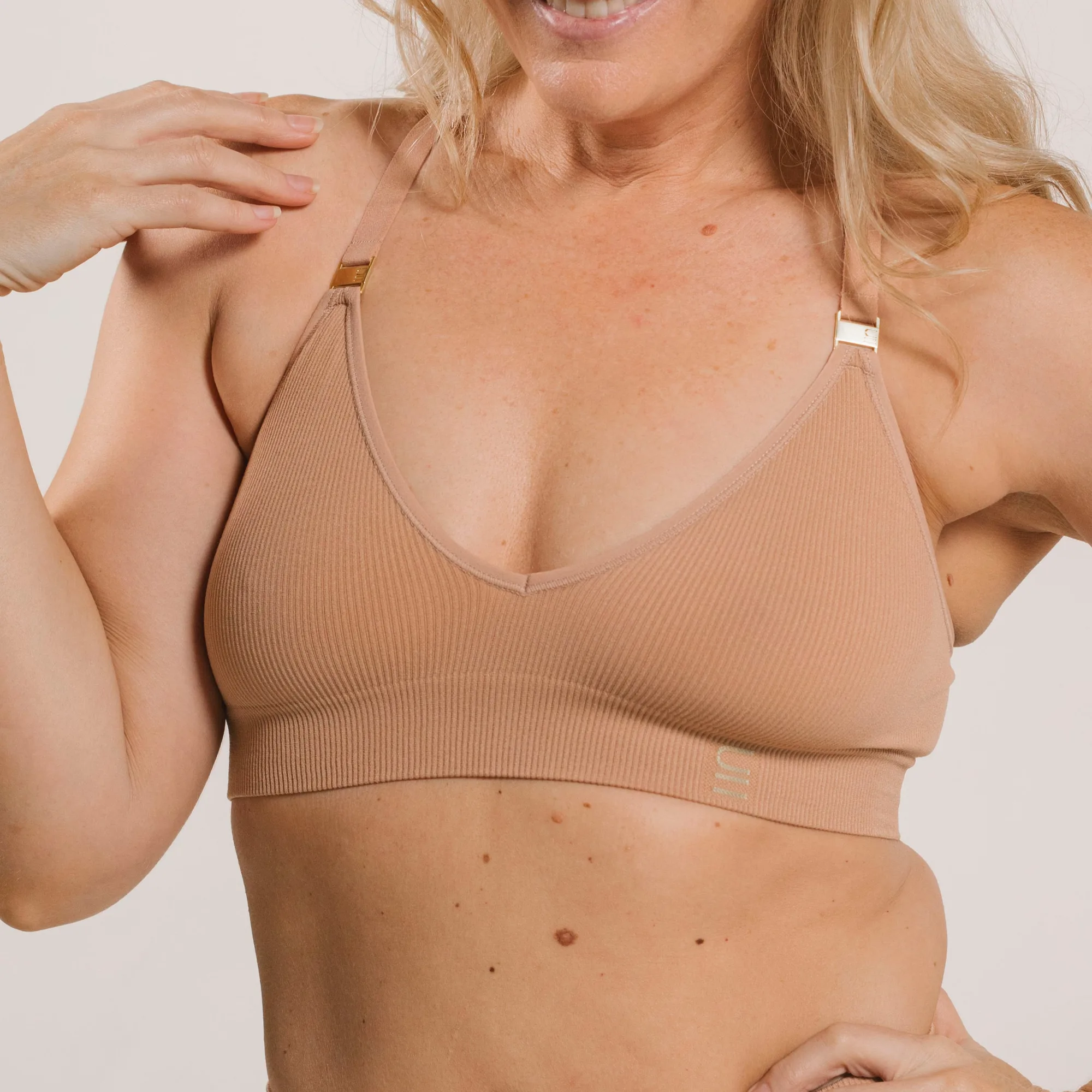
- Recycled Wireless Bra A-D - Nude 3: The elastic costs 13 times standard bra elastic, which is why the bra still supports properly after 100 washes when others have gone wavy and loose. This bra is built to survive repeated washing, so cold water and air drying protect an investment that is designed to hold its shape.
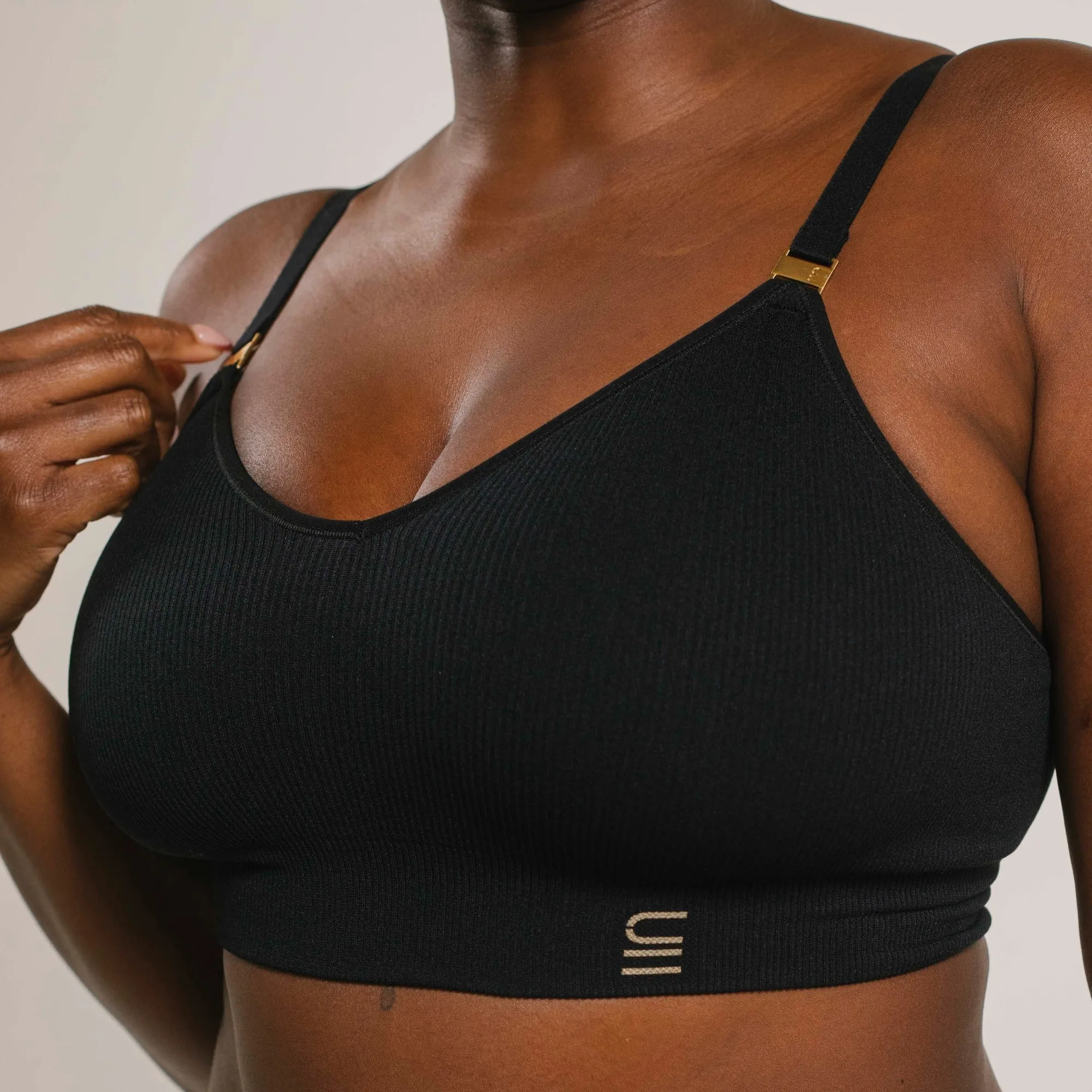
- Recycled Wireless Bra DD+ - Black: For DD+ the elastane in the body is increased for additional support without adding restriction. More elastane means more sensitivity to heat, so DD+ styles benefit most from cold washing and flat drying.
- Cheeky Brief - Recycled Seamfree - Elements: The recycled rib seam-free fabric stretches across sizes for a custom fit and is smooth under clothing. Seam-free recycled knits recover well when washed cool and dried flat, so treat them with the same care as your bras.
Good bra care is mostly about avoiding heat, agitation, and over-washing. Wash cool, bag it or hand wash it, dry it flat, and rotate your bras so each one gets a rest. Do that, and a well-made wireless or DD+ bra will keep its support and shape far longer than one that goes through the dryer every week.