Quick answer
Wash grip socks inside out in cold water on a gentle cycle, then air dry them flat. Skip fabric softener, dryer sheets, and high heat, because those coatings are what make the PVC grips lose their stickiness. A five-minute routine after each wear is what keeps Pilates socks gripping the mat instead of sliding on it.
Why grip socks stop gripping
The grips on the sole are PVC, and PVC holds traction best when the surface stays clean and slightly textured. Body oil, lotion, and detergent residue fill in that texture, so the socks start feeling slick even though the grips are still there. Heat is the second culprit: hot water and a hot dryer can soften and distort the grip pattern, which is why cold washing and air drying do most of the work in a grip socks care guide.
Cuffs matter too. Elasticised cuffs keep socks from bunching or sliding down mid-class, and heat plus heavy loads are what wear that elastic out. Treat the wash like you treat the grips: gentle, cool, and short.
How often to wash grip socks
After every class is the honest answer. Grip socks sit directly against sweaty feet, and the same oils that make them feel slick also sit on the grips. If you rotate two or three pairs, you always have a clean pair ready and each pair gets a rest between washes, which is easier on the elastic.
If you only wore them around the house or for a short stretch session, a quick hand rinse is enough. The rule is simple: if the soles feel slick to your fingers, they need a wash, not a stronger grip.
The grip socks washing routine, step by step
- Turn them inside out before washing: Pull each sock inside out so the PVC grips face inward. This keeps the grips from rubbing against other laundry and picking up lint, which is one of the fastest ways grip socks lose stickiness. Checkpoint: you should see the grip pattern facing you before the socks go in.
- Wash cold on a gentle cycle: Use cold water and a delicate or hand-wash cycle with a small amount of mild detergent. Common mistake: adding fabric softener. Softener leaves a film on PVC that makes the grips feel slippery, so leave it out entirely. If your machine has no gentle cycle, hand wash in a basin of cold water for a minute instead.
- Skip the dryer and air dry flat: Lay the socks flat to dry, grips facing up, away from direct sun and radiators. High dryer heat is the main reason cuffs stretch out and grips harden or warp. Checkpoint: socks should be fully dry before you wear them, since damp grips slide more.
- Refresh the grip between washes: If the soles feel slick after a class but the socks aren't dirty, wipe them with a damp cloth and let them air dry. This removes surface oil without a full wash, which is easier on the elastic over time. Don't scrub the grips with a stiff brush; abrasion wears the PVC down.
Grip socks built for this routine
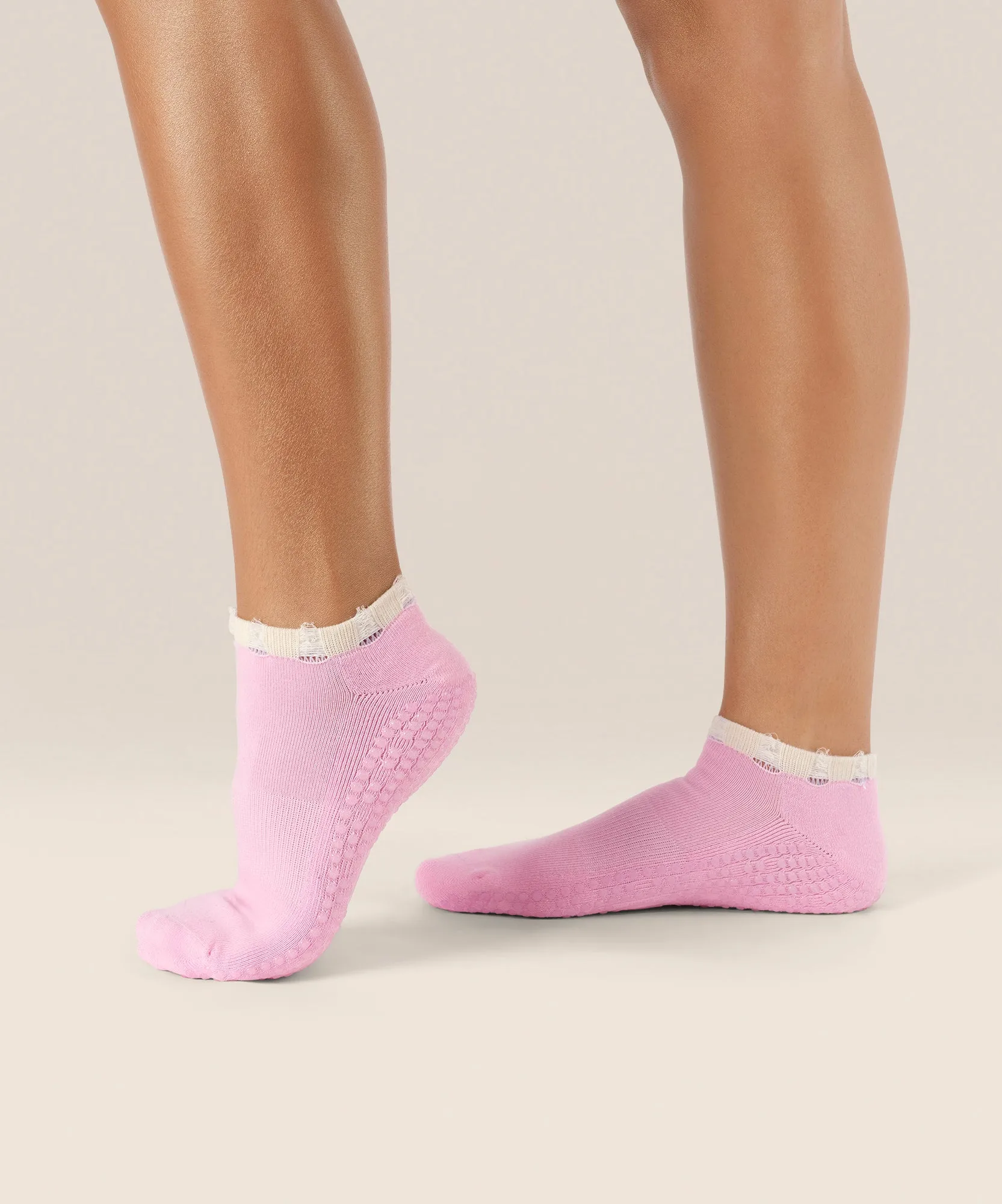
- Low Rise Grip Socks - Cool Pink: Low Rise Grip Socks - Cool Pink use non-slip PVC grips on the sole for traction on any surface, with an intentionally frayed cuff. The PVC sole is exactly what cold washing and air drying protect. The frayed cuff is a design detail, not wear, so don't treat loose threads there as a reason to replace the pair.
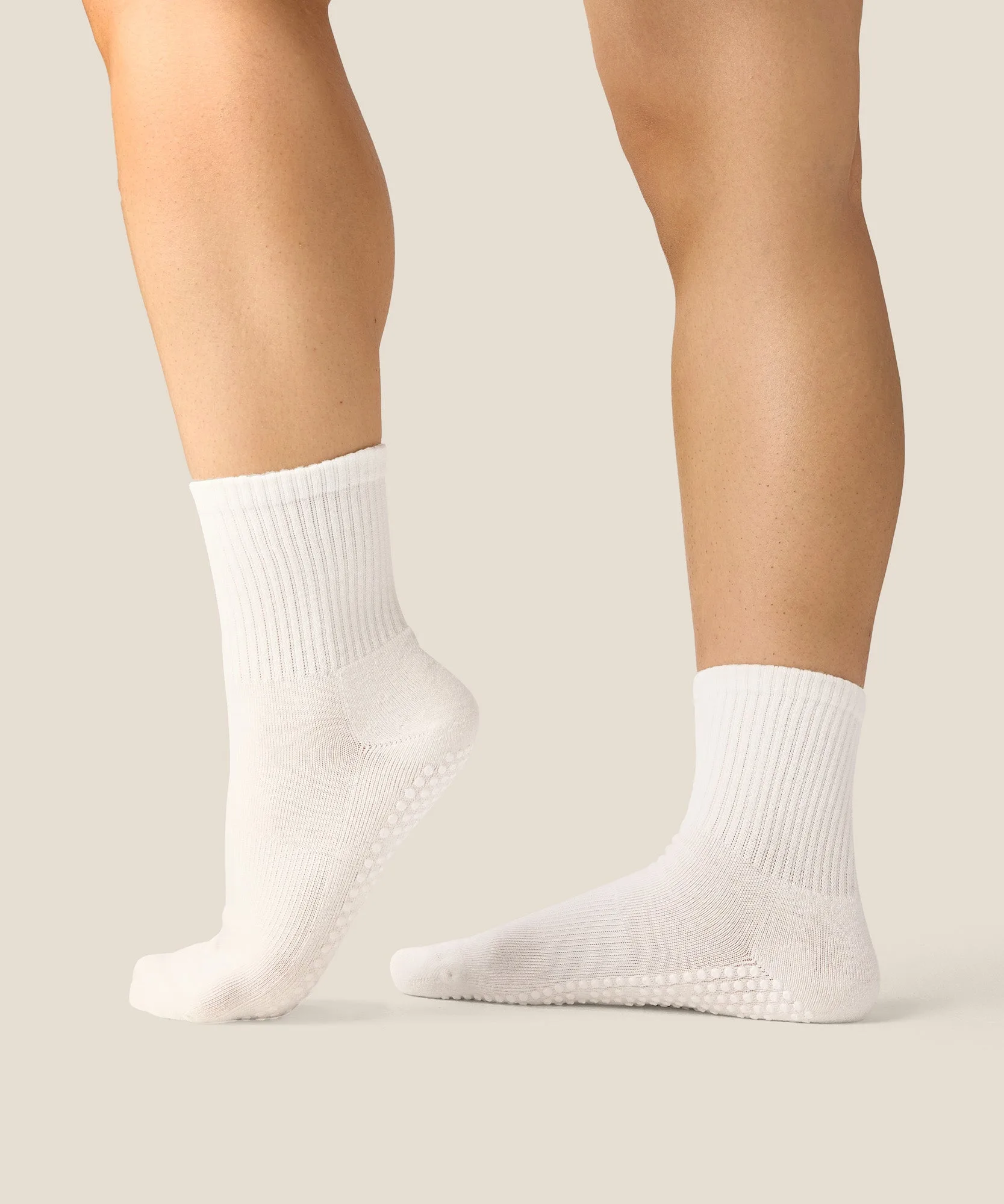
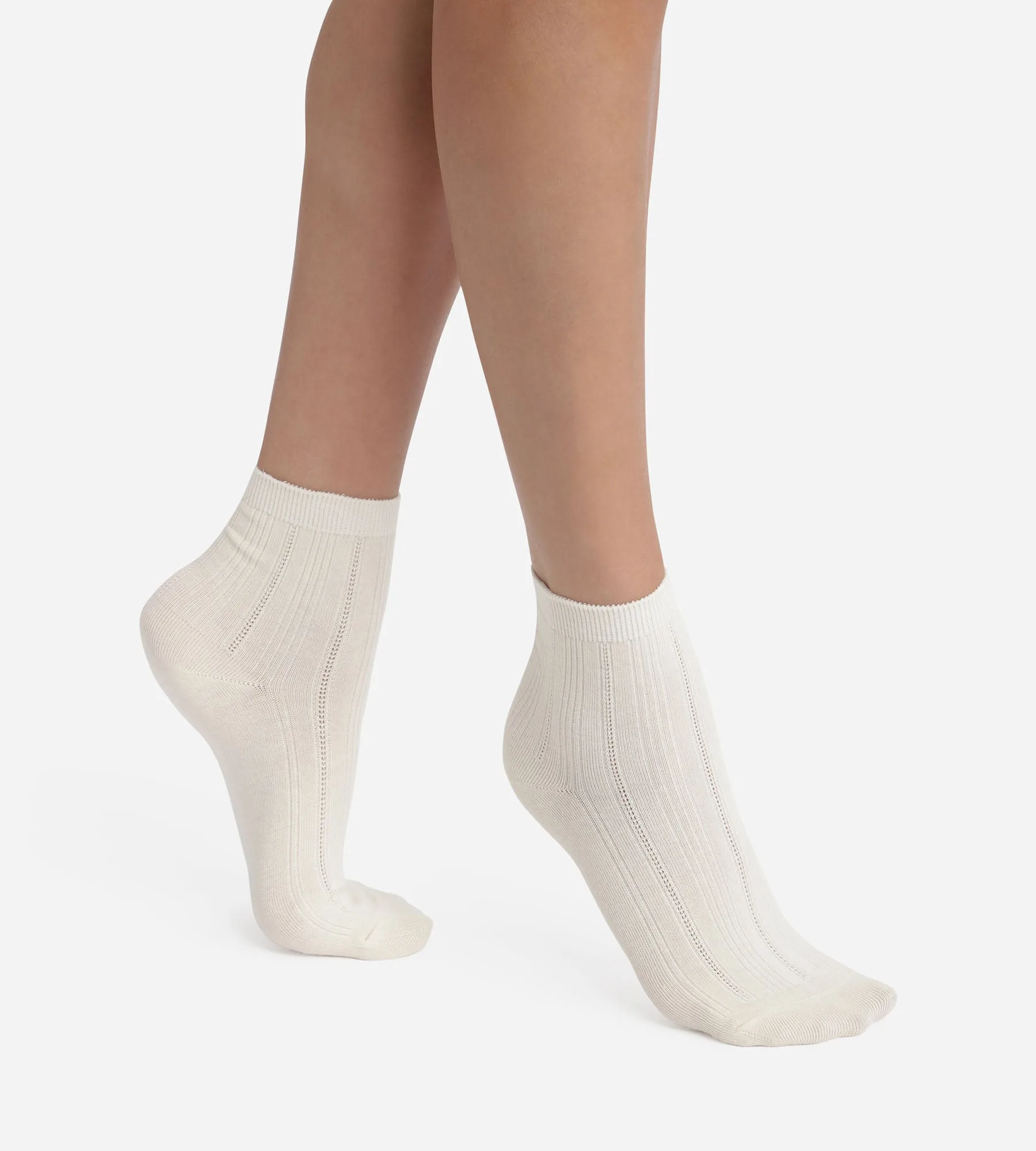
- Crew Grip Socks - Ivory: Crew Grip Socks - Ivory are made from a blend of breathable materials with a snug fit and non-slip PVC grips on the sole. Breathable fabric dries faster, so a crew pair is a practical choice if you wash after every class and want socks ready again by the next morning.
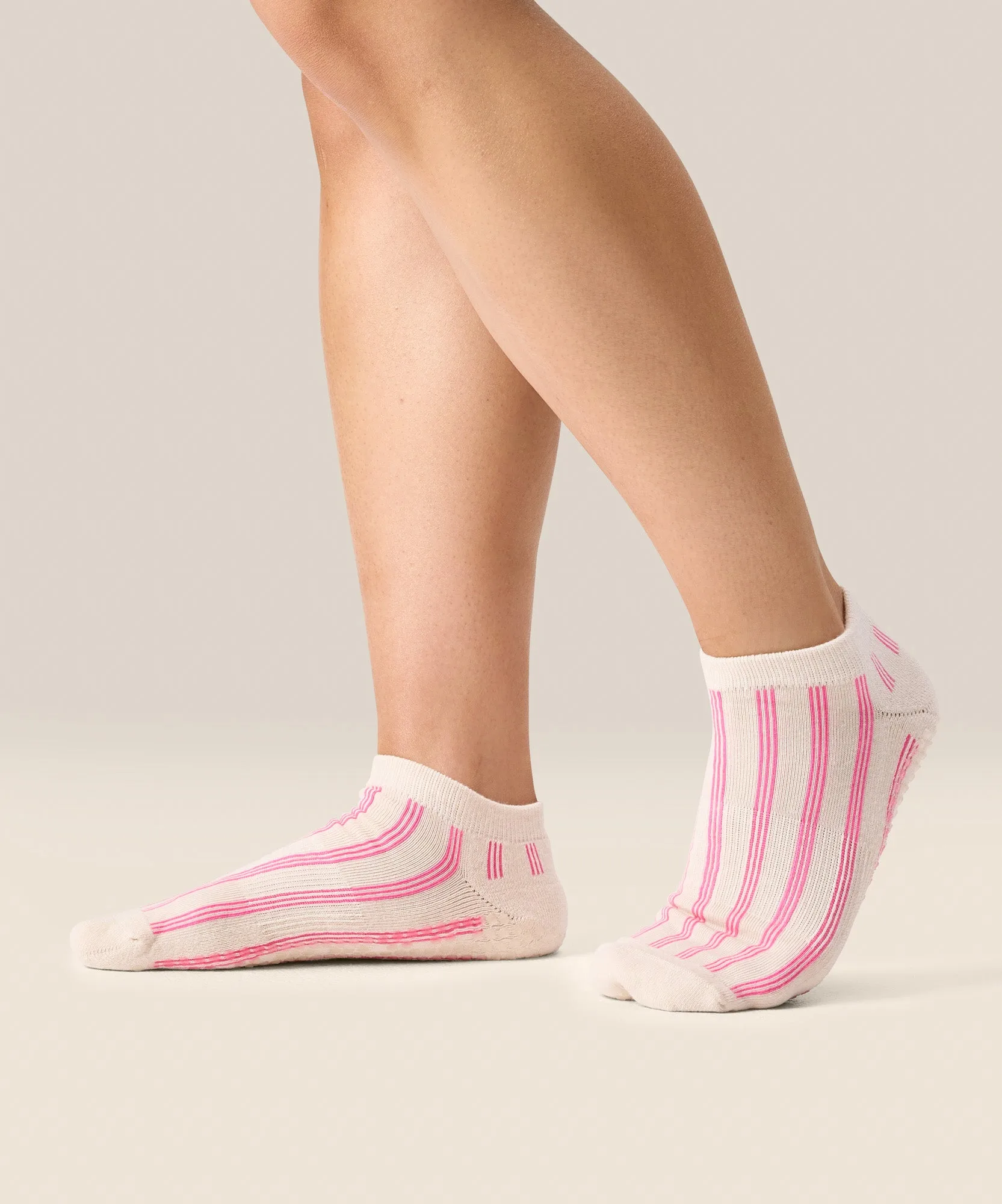
- Low Rise Grip Socks - Rosa Carnival: Low Rise Grip Socks - Rosa Carnival have elasticised cuffs that keep them securely in place, plus non-slip PVC grips. Elasticised cuffs are the part most damaged by hot water and dryer heat, so this pair benefits most from the cold-wash, air-dry steps below.