Quick answer
Choose a binder sized to your current chest measurement, put it on over bare skin or a thin layer, and adjust the closure until you can breathe deeply without pinching. Then check your range of motion and take planned breaks before discomfort starts.
Why all-day comfort starts with the right size, not the tightest fit
A binder that feels too tight at first is not a better binder. All-day wear depends on moderate, even compression that lets your ribs expand when you breathe. If you are between sizes, size up rather than down; you can always fine-tune the closure, but you cannot add room that is not there.
Fabric matters too. A nylon-spandex blend with a mesh panel can provide support while letting some heat escape, but it still needs to fit your frame. Check the size range against your actual measurement, not the size you wear in other clothing.
When to stop or switch to a looser option
Discomfort is information. If you feel sharp pain, numbness, tingling, shortness of breath, or dizziness, remove the binder immediately and do not push through it. Long wear should never come at the cost of breathing or circulation.
On hot or active days, or if you are new to binding, start with shorter sessions and build up gradually. A binder is not a substitute for medical advice; if you have a respiratory or musculoskeletal condition, talk to a healthcare professional before binding.
Your all-day binder routine, step by step
- Measure before you choose a size: Use a soft tape to measure around your chest at its fullest point. Compare that number to the size chart and pick the size that matches, not the size you hope to be. Common mistake: guessing based on T-shirt size, which can lead to a too-tight binder. If you are between sizes, choose the larger one and use the adjustable closure to fine-tune.
- Put it on over bare skin or a thin base layer: Fasten the hook-and-loop closure on the side, starting with a looser setting. Smooth the front and back panels so they sit flat and the scoop neckline sits where you want it. Common mistake: yanking it on already fastened, which twists the mesh and creates pressure points. Check in a mirror that the side closure is flat and not folded over.
- Do a breathing and movement check: Take three slow, deep breaths. You should feel gentle compression, not a band that stops your inhale. Then raise your arms overhead, roll your shoulders, and bend forward. Common mistake: ignoring a pinch at the ribs or underarm because it 'might go away.' If you cannot take a full breath or move without pinching, loosen the closure or size up.
- Plan your wear time and breaks: Start with a few hours and see how your body responds. If you need to wear it longer, take a short break every few hours to stretch and breathe deeply in a private space. Common mistake: wearing it from morning to night on the first try. Set a phone reminder for your first few days to check in with how you feel.
- Adjust as your day changes: After eating, exercising, or sitting for a long time, recheck the fit. Use the side closure to loosen slightly if you feel pressure. Common mistake: keeping the same tightness all day because it felt fine in the morning. A binder that needs constant loosening may be a size too small.
- Remove it gently and care for it right away: Unfasten the closure before pulling the binder off. Hand wash in cold water only and air dry; never machine dry. Common mistake: tossing it in the washer, which can break down the spandex and hook-and-loop tape. Wash after each wear or two to maintain elasticity and hygiene.
Product facts
-
Gender Fluid Chest Compression Binder in Black: Moderate chest compression with no underwire or padding, plus an adjustable side hook-and-loop closure for a custom fit. The adjustable closure lets you loosen or tighten through the day, which helps maintain comfort without changing sizes.
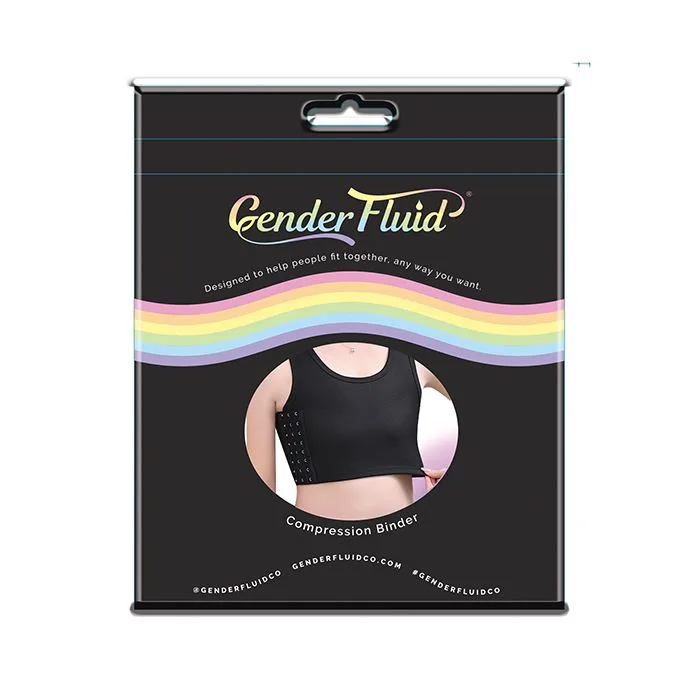
Gender Fluid Chest Compression Binder in Black
-
Gender Fluid Chest Compression Binder in Black: Strong mesh provides added support and compression to minimize chest. Mesh can improve airflow, but it still needs to be sized correctly to avoid digging or restricted breathing.
-
Gender Fluid Chest Compression Binder in Black: Hand wash in cold water only and air dry. Proper washing preserves the fabric's elasticity and hook-and-loop function, so the binder keeps its fit longer.