Quick answer
Wear a choker snug but not tight, with the clasp at the back and room to slip one finger underneath. For a flogger, start with light, controlled taps on a safe area like the upper back or thighs, and always agree on limits before you begin.
Why chokers and floggers are easier to start with than they look
Both pieces are accessories first, so you can treat them as styling tools before you treat them as play equipment. A choker adds a focal point at the neck; a flogger adds a prop that can be held, displayed, or used with gentle pressure. Neither requires prior experience, but both reward a slow, deliberate approach.
The main trade-off is confidence versus comfort. A choker draws attention to the neck, which can feel bold if you are not used to close-fitting accessories. A flogger can feel intimidating to hold if you have never used one. Start with short wear times and low-intensity handling, then build up as you feel more at ease.
Choker styling: where it works and where it does not
A choker works best with necklines that leave the neck visible: scoop necks, V-necks, strapless tops, and open shirts. It can also sit over a high-neck top for a layered look, but avoid pairing it with a collar that already sits at the same height, as the two will compete. For the Ophelia Choker, the red guipure lace is a statement on its own, so keep the rest of your outfit simpler to let it stand out.
If you have a shorter neck, a narrower choker tends to feel more comfortable than a wide band. If you have a longer neck, you can carry a wider style or a layered look more easily. The Ophelia Choker is adjustable, so you can fine-tune the fit rather than committing to one length.
Flogger safety: what beginners often overlook
A flogger is not a toy for unpredictable swings. The falls (the hanging strands) can sting if they land with force, and they can wrap around a limb if you swing too wildly. Keep your first sessions to light, downward taps on fleshy areas, and avoid the face, neck, spine, kidneys, and joints. The Aurora Flogger has a wrist strap for grip, but that does not replace a steady hand and a clear head.
Agree on a safe word or signal before you start, and check in regularly. If you are the one being flogged, say something the moment the sensation feels sharp rather than dull. If you are the one holding the flogger, watch your partner's breathing and body language, not just the flogger.
Step-by-step: wearing a choker and using a flogger
- Fit the choker before you style it: Fasten the choker at the back of your neck, then slip one finger underneath. If you cannot fit a finger, loosen it one notch. If it slides down your neck, tighten it one notch. Common mistake: wearing it so tight that it leaves a mark or restricts breathing. Check the fit again after 10 minutes, as lace can relax slightly with body heat.
- Choose a neckline that frames the choker: Pair the choker with a scoop neck, V-neck, or open collar so the neck is visible. If you wear a high neckline, keep the choker as the only accessory at that height. Common mistake: layering a choker over a turtleneck or a collared shirt that already has a tie or scarf.
- Set limits before you pick up the flogger: Agree on a safe word and on which areas are off-limits (face, neck, spine, kidneys, joints). Decide on a starting intensity: light taps only. Common mistake: skipping the conversation because you feel awkward. Say the words out loud before any play begins. If you are unsure, agree to stop after the first few taps and check in.
- Hold the flogger with a relaxed grip: Slide your hand through the wrist strap and hold the handle near its base. Keep your wrist loose and swing from the elbow, not the shoulder. Common mistake: gripping too tightly, which makes the swing jerky and harder to control.
- Start with light, downward taps: Aim for the upper back or thighs, and let the falls land flat rather than wrapping. Start with one tap, then pause and ask for feedback. Common mistake: swinging too hard or too fast on the first try. Build up only when your partner confirms the sensation is comfortable. Stop immediately if the falls wrap around a limb or if your partner flinches.
- Remove the choker if you feel any discomfort: If the choker feels tight, itchy, or distracting, take it off. It is an accessory, not a commitment. Common mistake: ignoring a mild irritation because you like the look. Comfort comes first.
Product facts
-
Aurora Flogger Black/Gold: Fitted with a practical wrist strap for a confident grip. The strap helps you keep control during light swings, which is especially useful when you are still learning your swing.
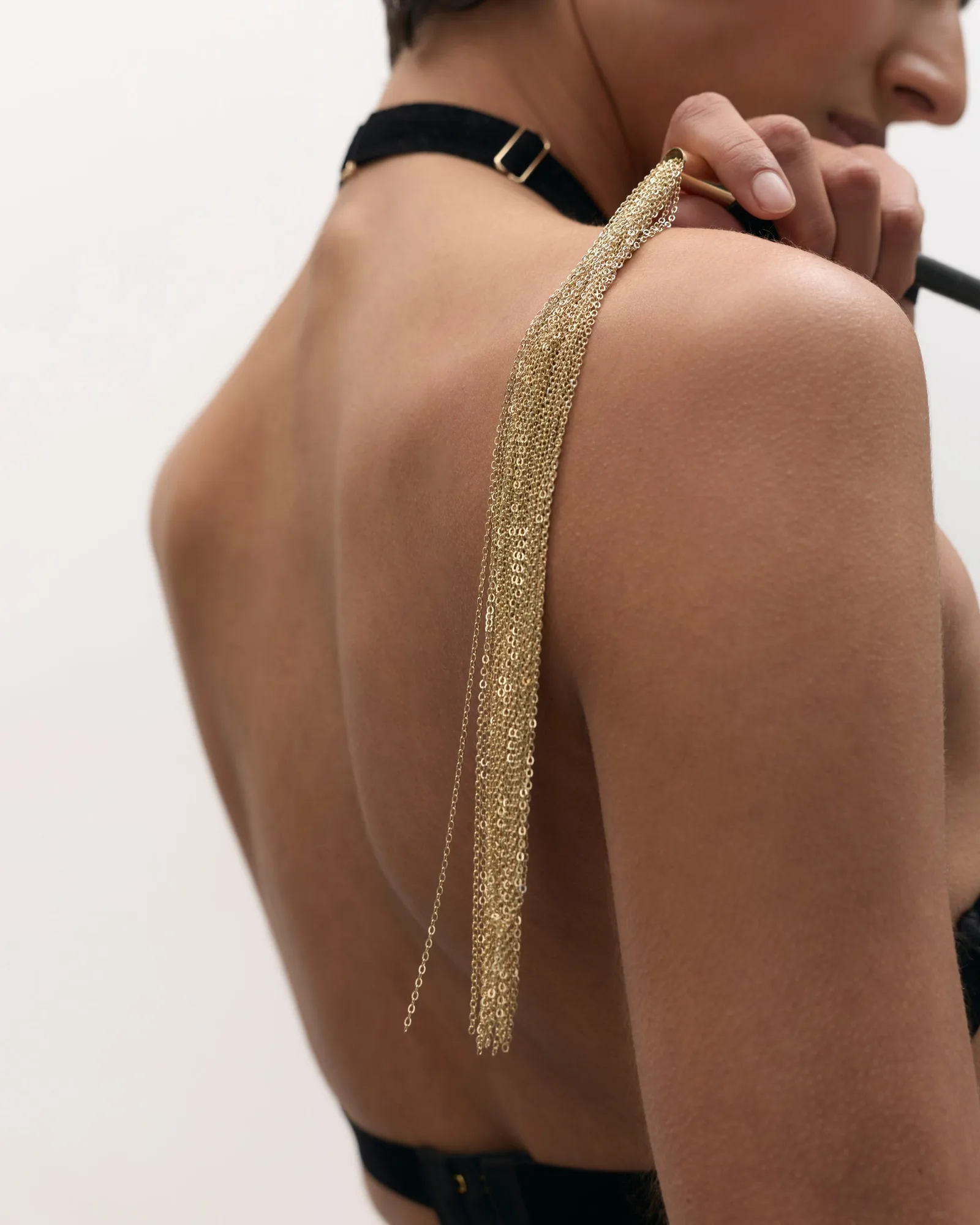
Aurora Flogger Black/Gold
-
Ophelia Choker: Features an adjustable lobster clasp fastening. You can set the choker to a comfortable fit rather than relying on a fixed length.
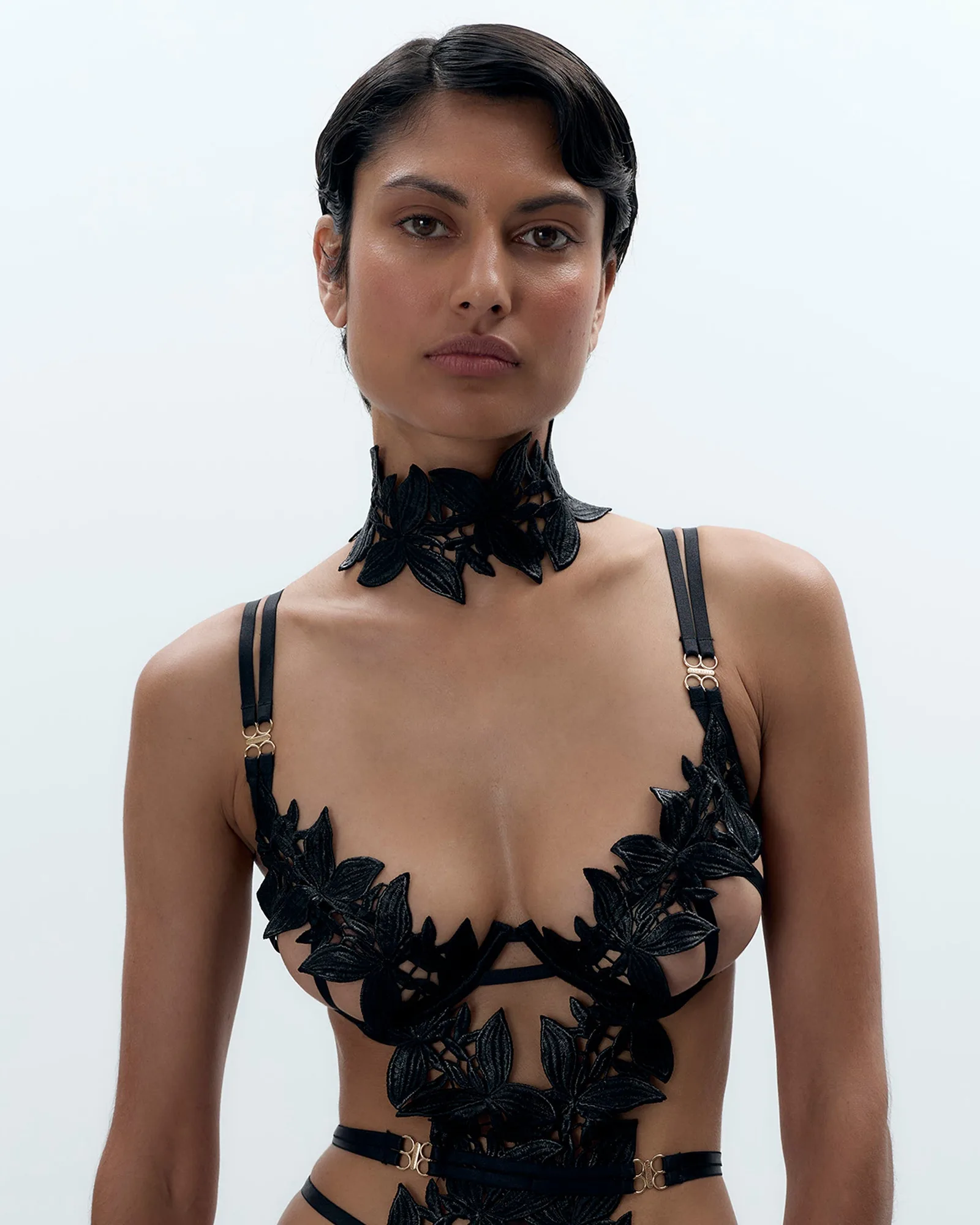
Ophelia Choker