Why the Claremont Veil Works with a High Neckline
A high-neck wedding dress creates a strong, elegant frame around your face and shoulders. The Claremont veil, with its airy tulle and signature chantilly lace trim, adds softness without competing with the neckline. The scalloped lace edge and delicate eyelash detailing draw the eye downward, balancing the covered neckline and creating a cohesive, romantic silhouette.
Because the veil is designed to drape beautifully and fall naturally to the floor, it won't bunch or pull at the neckline. The natural colorway is intended to match any Jane Hill gown, so the veil blends seamlessly rather than creating a stark contrast.
Claremont Veil Details That Matter for High-Neck Styling
-
Claremont veil: Crafted from an airy tulle, finished with signature Claremont lace trim, a scalloped edge, with soft eyelash detailing. The lightweight tulle prevents bulk around a high neckline, while the lace trim adds a decorative element that complements rather than overwhelms the dress.
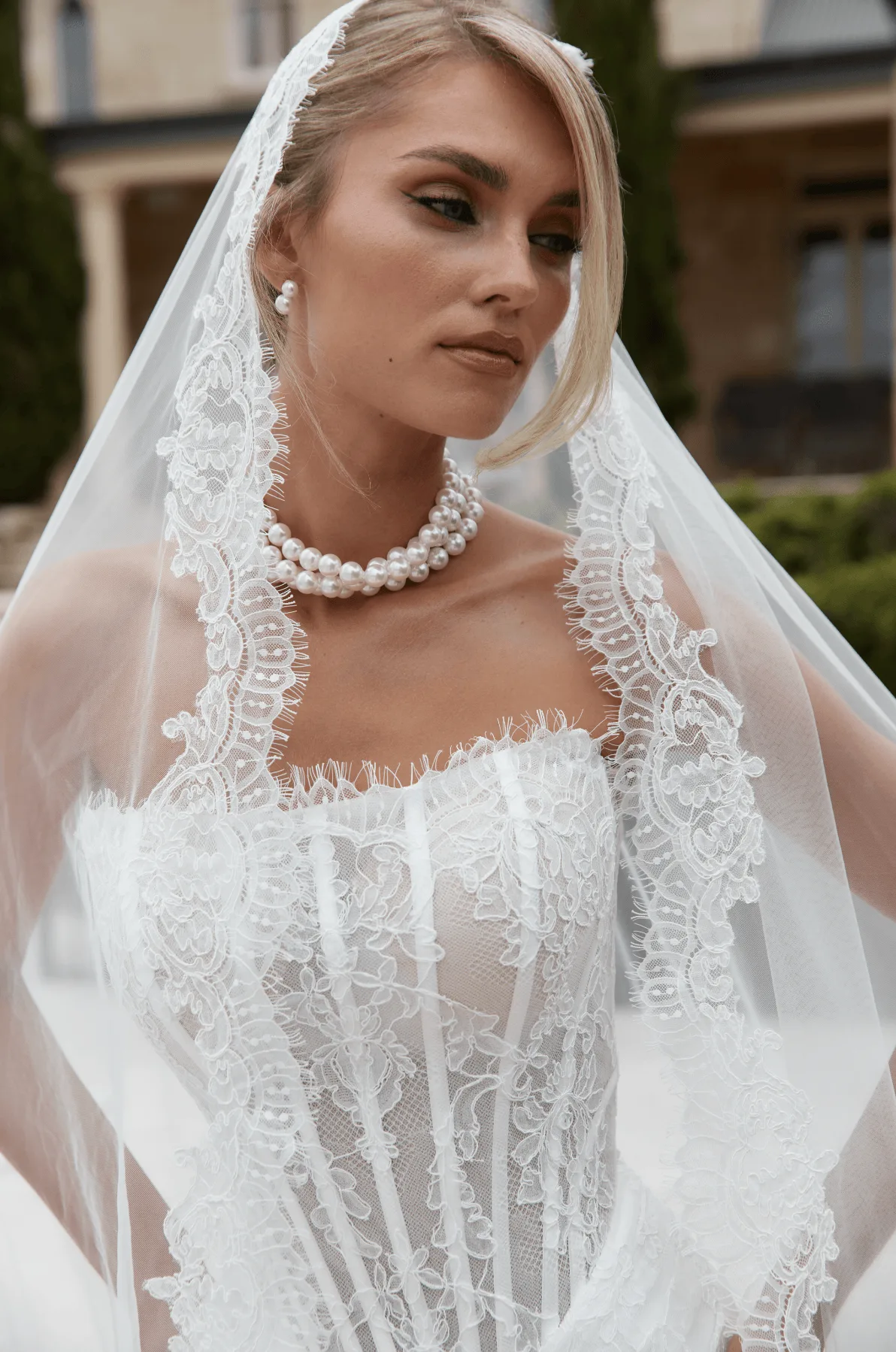
Claremont veil
-
Claremont veil: Comes in three styles: a sheath veil with a blusher, and two single-tier lengths – 2.8m (chapel) and 3.5m (cathedral). For a high-neck dress, a single-tier length (especially the 3.5m cathedral) keeps the focus on the neckline while adding drama behind you. The sheath with blusher offers a traditional option if you want a layer over your face.
-
Claremont veil: Comb is sewn at the edge of the trim for security and comfort in any hairstyle. A secure comb is essential when the veil sits near a high neckline, as it prevents slipping and keeps the veil comfortably in place without tugging on the dress fabric.
Choosing the Right Claremont Veil Length for a High-Neck Dress
The length of your veil affects how it interacts with a high-neck dress. Here's how each option works:
- 2.8m (chapel length): Falls just past the floor, creating a modest train. This length works well if your dress has a high neckline and you want the veil to end near the hem without pooling. It's also easier to manage during a reception.
- 3.5m (cathedral length): Creates a dramatic, sweeping train that extends well beyond the dress. The extra length draws the eye down and away from the neckline, making it a good choice if you want the veil to be the focal point. Cathedral veil tips: this length pairs beautifully with a high-neck dress because the veil doesn't compete with the neckline – it complements it from behind.
- Sheath (two-tier with blusher): Includes a blusher that falls over the front of the face. With a high-neck dress, the blusher adds a layer of coverage that can feel traditional but may also feel busy. Consider this option if you plan to wear the blusher only during the ceremony and then flip it back.
Where to Attach the Veil with a High Neckline
The comb on the Claremont veil is sewn at the edge of the trim, which gives you flexibility in placement. For a high-neck dress, consider these attachment ideas:
– Place the comb directly above the high neckline, at the crown of your head. This keeps the veil away from the dress fabric and lets the lace trim frame your face without touching the neckline.
– If your dress has a back closure (like buttons or a zipper), position the comb just below the closure's top. This hides the comb and lets the veil cascade from the nape of your neck, which can feel more secure.
– For a cathedral-length veil, a higher placement (crown or top of the head) reduces the weight pulling on the comb and keeps the veil from dragging on the dress shoulders.
Styling Tips for a Cohesive Look
A high-neck dress and a lace-trimmed veil can look stunning together when you pay attention to a few details:
- Match the lace tones: The Claremont veil comes in a natural colorway designed to match Jane Hill gowns. If your dress has a slightly different white or ivory, check the veil against the dress in natural light to ensure the lace trim doesn't contrast sharply.
- Consider your hairstyle: An updo or half-up style works well because it exposes the high neckline and lets the veil's lace trim be visible. A low bun or chignon also keeps the veil secure. Avoid a high ponytail or topknot that might push the veil too far forward.
- Test the drape before the wedding day: Put on your dress and veil together to see how the veil falls. The lightweight tulle should drape naturally, but if the veil catches on the dress fabric (especially if the dress has beading or sequins), adjust the comb placement slightly.
What the Supplied Information Does Not Cover
The catalog confirms the veil's material, lengths, and comb placement, but it does not specify how the veil interacts with different dress fabrics or neckline shapes beyond the general design. For a high-neck dress with intricate back details, you may want to consult with a seamstress to confirm the comb position won't damage the dress. Also, the care instructions for the veil are not detailed in the supplied records, so handle the tulle gently and store it flat or hanging to avoid creasing.