Quick answer
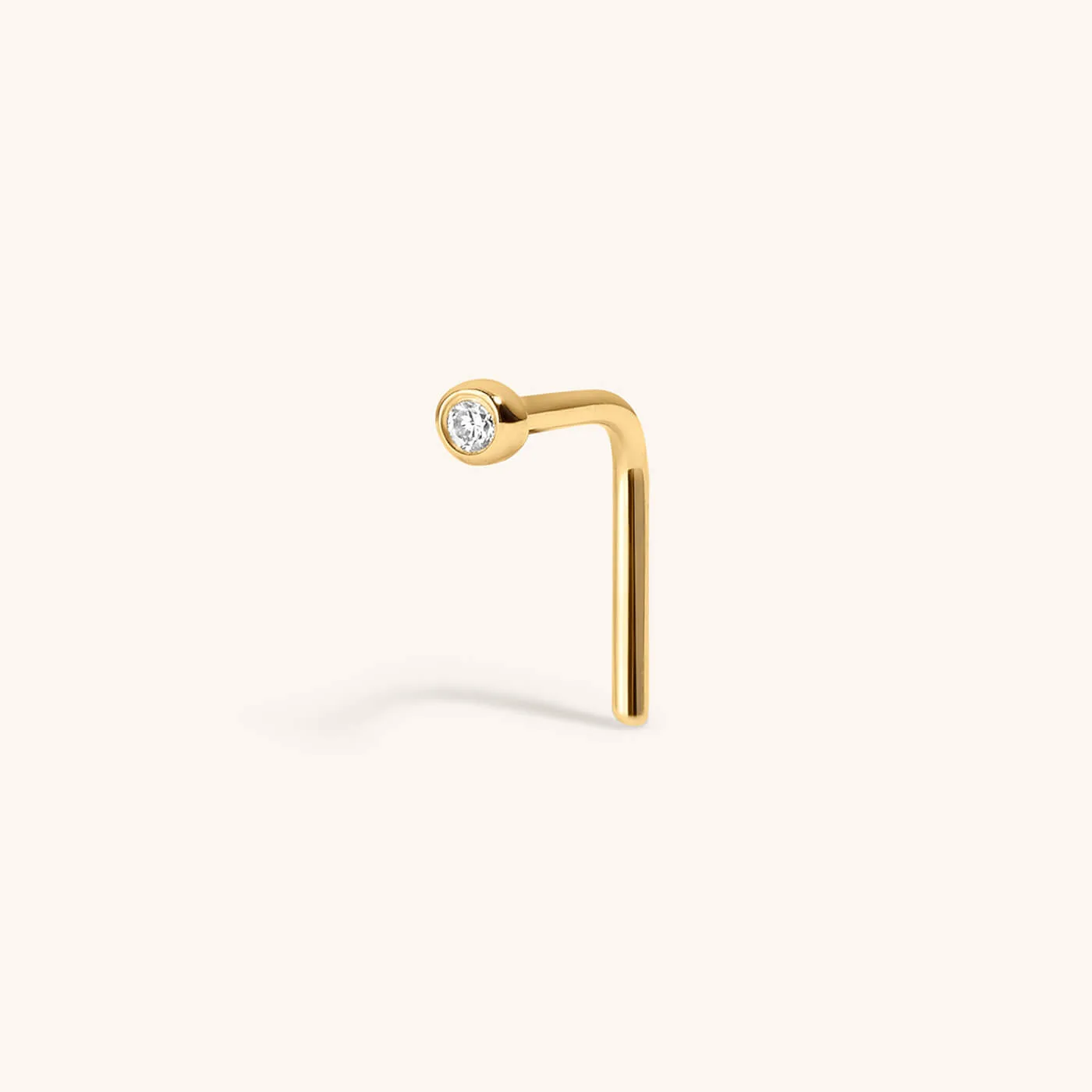
Wear a tiny diamond nose ring without irritation by inserting the L-shape correctly, keeping the diamond facing forward, and securing the tail flat against the inside of your nostril. Clean the stud daily and avoid pressing it against your pillow at night.
Why the L-shape needs a different insertion approach
An L-shape nose ring stays put through a bent tail that rests inside the nostril, not through a ball or screw. That design makes it comfortable for everyday wear, but it also means the fit depends on the tail sitting flat and the gem sitting flush. If the tail is too long or the angle is off, the stud can rotate, catch on tissue, or press against the inside of your nose—common sources of diamond nose stud irritation.
When to size up or choose a different style
If you have a very narrow nostril or a fresh piercing, an L-shape may feel unstable or sit too deep. In that case, a flat-back or screw style can be a better fit until healing is complete. Also, if your piercing is still healing, check with your piercer before switching jewelry; the L-shape is not a one-size solution for every nose.
Step-by-step: insert and wear your L-shape nose ring comfortably
- Wash your hands and clean the stud: Use soap and water, then rinse the stud with sterile saline or clean water. Dry it with a lint-free cloth. Never insert jewelry with unwashed hands—this is the most common cause of new irritation.
- Find the L-shape orientation: Hold the stud so the diamond faces forward and the bent tail points down and slightly back. The short leg of the L should slide into the piercing first. If the tail points the wrong way, you will feel resistance—stop and rotate the jewelry, not your nose.
- Insert gently at the original angle: Guide the short leg through the piercing hole without forcing. Once through, gently rotate the tail so it rests flat against the inside of your nostril. A sharp pinch means the angle is wrong; withdraw slightly and try again rather than pushing through.
- Check the fit and gem position: The diamond should sit snug against the outside of your nostril without sinking in. The tail should not poke or press against the septum or side wall. If the tail extends past the inside curve or feels loose, the L-shape may be too long for your anatomy—consider a shorter tail or a different style.
- Secure for sleep: Before bed, gently press the tail flat and avoid sleeping directly on that side. If you toss and turn, a travel pillow or soft headband can keep pressure off the stud. A stud that shifts during sleep is a common source of morning soreness—check its position each morning and readjust if needed.
- Clean daily without overdoing it: Rinse the area with sterile saline once or twice a day and pat dry. Avoid touching or rotating the jewelry when your hands are not clean. Skip harsh soaps, alcohol, and hydrogen peroxide—they dry the piercing and can make irritation worse.
Product facts
-
Tiny Diamond Stud L-Shape Nose Ring in 14k Gold: Made in solid 14k gold and described as safe for sensitive skin and healing piercings. This reduces the risk of metal-related irritation, so you can focus on fit and cleaning rather than reacting to the material.