Quick answer
Wiring a 20A double pole switch requires connecting both live and neutral conductors to the switch terminals to ensure complete isolation of high-power appliances like boilers or extractor fans.
Why use a double pole switch?
A standard single pole switch only cuts the live supply, leaving the neutral circuit energized. A double pole switch disconnects both live and neutral, providing a higher level of safety for fixed appliances that draw high current or are in damp locations. This is why building regulations often specify a double pole isolator for items like underfloor heating controllers or ventilation units.
Understanding the SYLVIE 20A switch
The SYLVIE 20A switch features a slim, low-profile plate that sits flush against the wall, giving a clean modern face. Its neon indicator glows when the circuit is live, offering a visual reminder that power is present. The antique brass finish is a rich, warm darkened brass with golden highlights, designed to match other Plank Hardware switches and cabinet hardware.
Wiring steps
- Isolate the circuit: Turn off the mains supply at the consumer unit and confirm isolation with a voltage tester. Never rely on the switch itself for isolation during installation. Always double-check with a tester; a neon indicator only shows power when the circuit is live.
- Prepare the cables: Strip approximately 10–12 mm of insulation from the ends of the live (brown/red) and neutral (blue/black) cables. Use a suitable cable size for a 20A load (typically 2.5 mm² or larger). If the cable is too thin, the switch may overheat under full load.
- Connect the live conductors: Connect the incoming live conductor to the top live terminal (marked L IN) and the outgoing live conductor to the bottom live terminal (marked L OUT). Tighten the terminal screws securely. Mixing up live and neutral on the same pole will not cause immediate failure but will defeat the double-pole isolation purpose.
- Connect the neutral conductors: Connect the incoming neutral conductor to the top neutral terminal (marked N IN) and the outgoing neutral conductor to the bottom neutral terminal (marked N OUT). Tighten firmly. A loose neutral connection can cause arcing and damage the switch over time.
- Test the neon indicator: After wiring, restore power and check that the neon indicator illuminates when the switch is in the ON position. If it does not light, verify the connections and that the bulb (if replaceable) is seated correctly. A non-illuminating neon may indicate a wiring fault or a faulty indicator; do not rely on the switch until the indicator works.
- Secure and label: Gently push the switch into the back box, ensuring no wires are pinched. Fasten the plate with the supplied screws. Label the switch clearly (e.g., 'Boiler Isolator') to avoid confusion. Overtightening the plate screws can crack the antique brass finish.
Product details
-
SYLVIE 20A Double Pole Switch with Neon Indicator - Antique Brass: A 20A double-pole switch with neon indicator in antique brass, rated for boilers, extractor fans and underfloor heating. The 20A rating and double-pole design ensure safe isolation for high-power appliances that exceed the capacity of standard 15A switches.
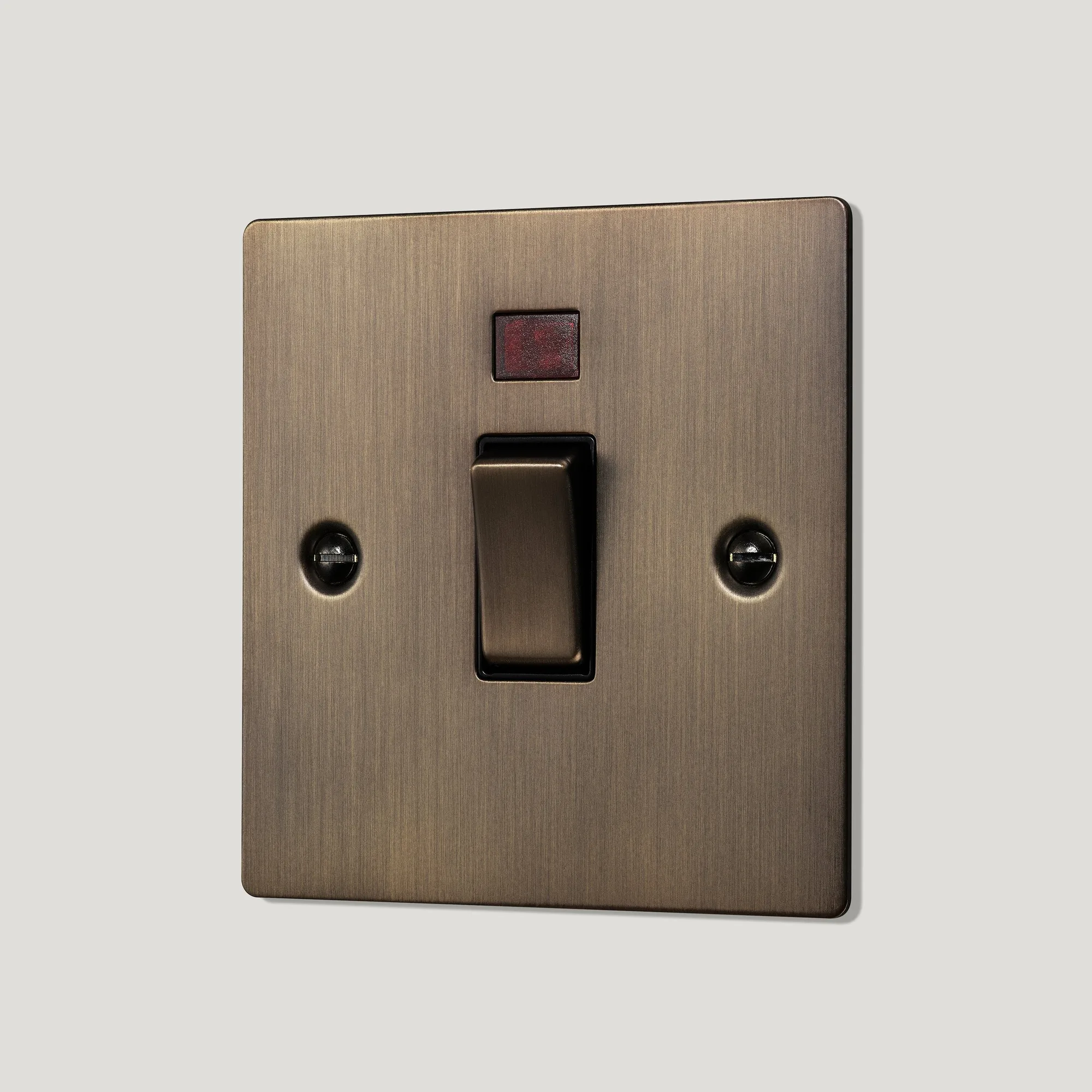
SYLVIE 20A Double Pole Switch with Neon Indicator - Antique Brass