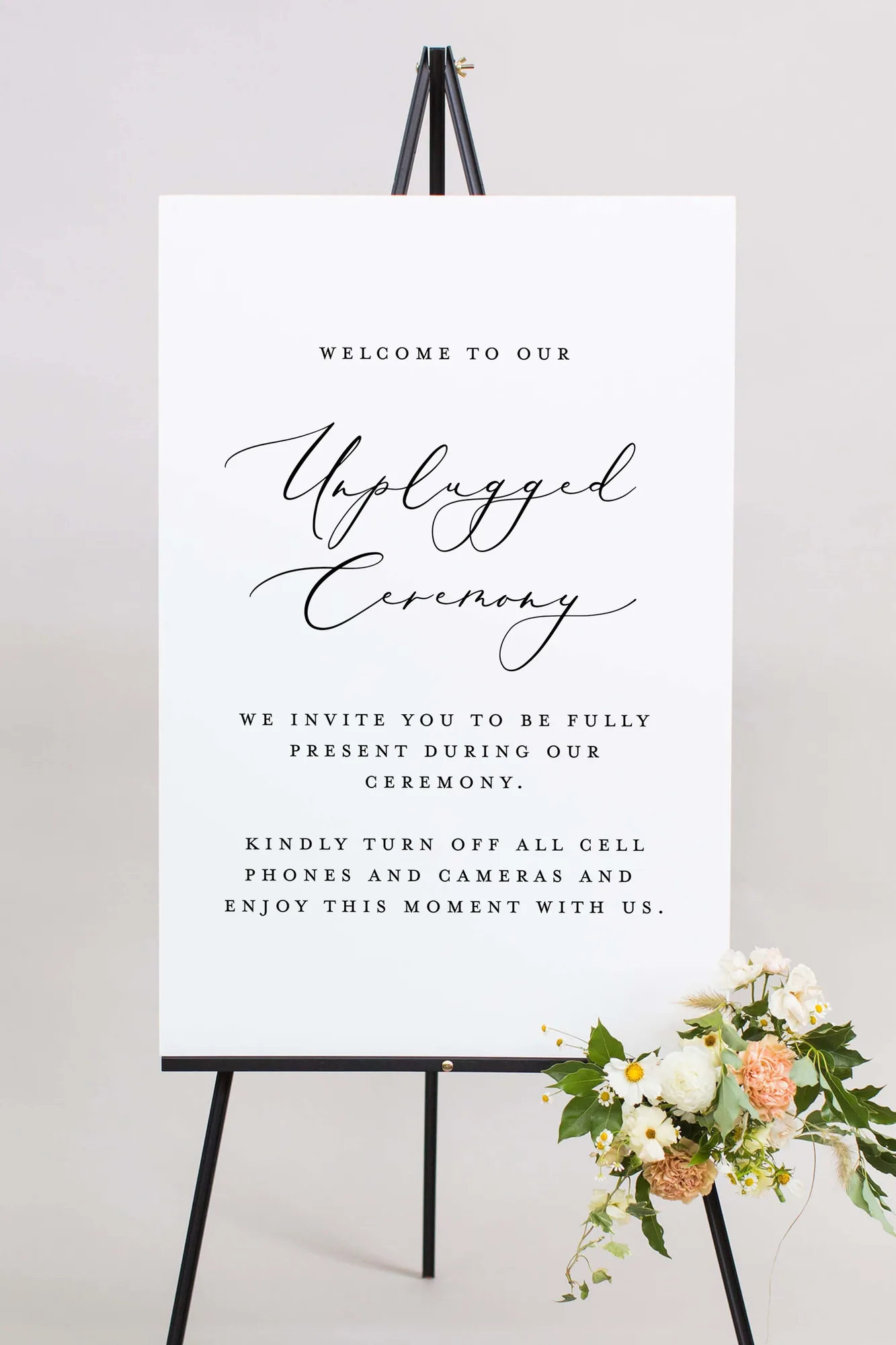
Quick answer
Start your unplugged ceremony sign wording with a warm welcome, state your request clearly, and end with a thank-you. Keep it short and polite so guests feel invited, not scolded.
Why tone matters more than you think
A sign that sounds bossy or demanding can create an awkward vibe before the ceremony even starts. The goal is to remind guests gently that you want them fully present, not to police their behavior. A friendly, grateful tone makes people more likely to comply without resentment.
If you're worried about being too subtle, you can add a short reason—like "We want to see your smiling faces, not your screens"—without turning the sign into a paragraph. Balance clarity with warmth.
Size and placement affect readability
Your wording only works if guests can actually read it. A sign that's too small or placed too far from the entrance will be ignored. Choose a size that fits your venue's scale and place it at eye level near the ceremony entrance, where guests naturally pause.
For example, the Gatorboard signs from Lily & Roe Co. come in multiple sizes, so you can pick one that's large enough to be seen from a few steps away. If your venue has a narrow entry, a smaller sign may work, but for a wide garden path, go bigger.
Step-by-step wording guide
- Start with a warm welcome: Open with a phrase like "Welcome!" or "We're so glad you're here." This sets a positive tone before you make your request. Avoid jumping straight into a command. Common mistake: leading with "No phones" can feel abrupt. Always greet first.
- State your request clearly and politely: Use phrases like "We kindly ask that you put away your phones and cameras" or "Please enjoy our ceremony unplugged." Be direct but soft. Avoid negative wording like "No phones allowed." Checkpoint: read your line out loud—if it sounds like a rule, soften it.
- Add a short reason (optional but helpful): Explain why you're asking, e.g., "We want to see your faces, not your screens" or "Let's be fully present for this moment." One sentence is enough. Too much explanation dilutes the message. Common mistake: over-explaining makes the sign wordy and less effective.
- End with a thank-you: Close with "Thank you for being here with us" or "We appreciate your presence (literally!)." A grateful ending reinforces the positive tone and leaves guests feeling appreciated. Checkpoint: if your sign doesn't say thank you, add it—it makes a big difference.
- Keep it short—3 to 4 lines max: Aim for no more than 30–40 words total. Guests will glance at the sign for a few seconds, so every word should earn its place. If you can cut a line without losing meaning, do it. Common mistake: cramming too much text makes the sign hard to read at a glance.
Sign options to consider
-
The Hannah | Unplugged Ceremony Sign: This modern no cell phone wedding ceremony sign is available in an assortment of sizes and colors. You can match the sign to your wedding color palette and venue size, making the wording feel cohesive rather than an afterthought.
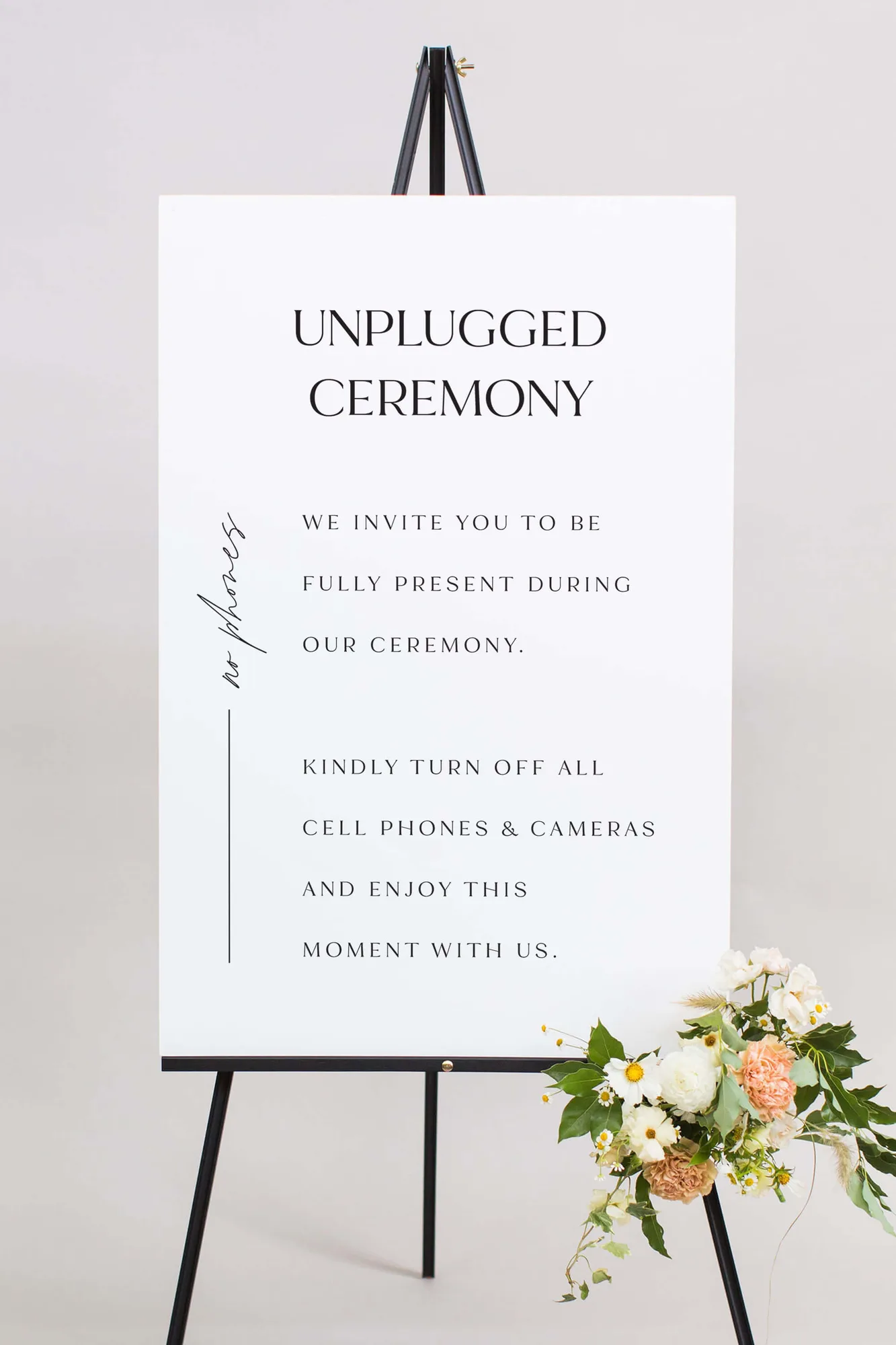
The Hannah | Unplugged Ceremony Sign
-
Unplugged Wedding Ceremony Sign | The Lauren: Expertly designed and available in an assortment of sizes and colors, this no phones sign is a perfect fit for any event. The elegant design supports a polite, timeless tone—ideal if your ceremony is formal or traditional and you want the sign to blend in.
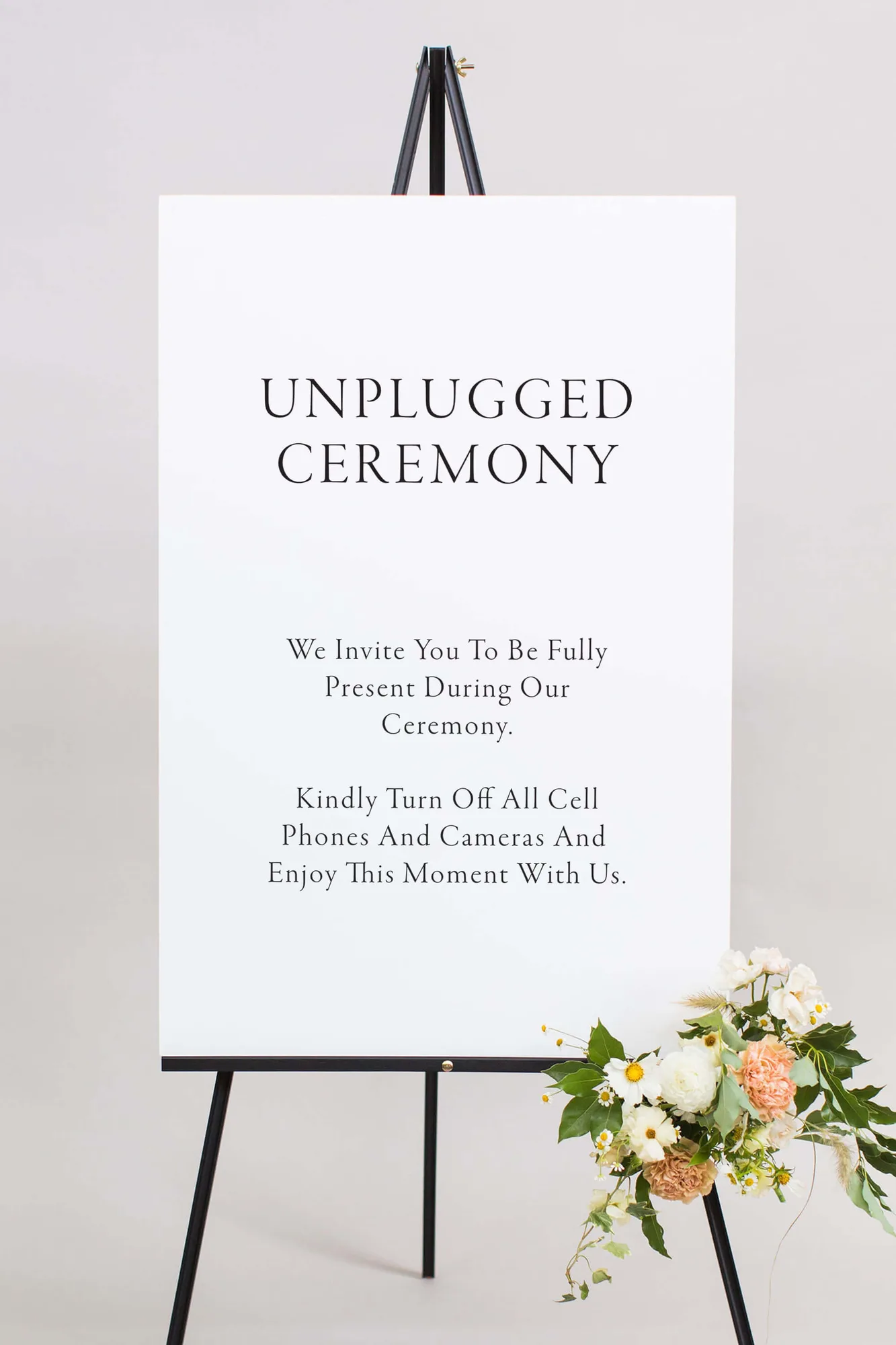
Unplugged Wedding Ceremony Sign | The Lauren
-
Unplugged Wedding Signs | The Madison: This elegant unplugged wedding sign is available in an assortment of sizes and colors. If you prefer a minimalist look, this sign offers clean lines that let your wording stand out without competing with decor.