Quick answer
Write the message on a separate note first, then copy it onto the card once it fits the space. Aim for one specific memory or detail, one honest sentence about why the person matters, and a simple sign-off. If the card has a blank interior, that blank space is an invitation, not a problem to fill with filler.
A blank card is only intimidating until you treat it like a small piece of writing with a clear job: say something true to one person, in your own voice, in fewer words than you think. The card itself gives you clues about tone, space, and formality, so start there rather than staring at the empty page.
These seven steps walk through drafting, fitting the message to the card, and the small etiquette decisions that trip people up, from how to address someone to whether a sticky note is ever acceptable. You do not need to be a natural writer. You need a pen, a scrap of paper, and about ten minutes.
Start with the person, not the occasion
Before you write a single word on the card, decide who is actually reading it and what you want them to feel. A birthday card for a close friend and a birthday card for a colleague can carry the same occasion but need completely different messages. Naming the reader in your head keeps the tone honest and stops you reaching for generic lines.
Ask yourself two questions: what do I want them to remember from this card, and what would sound strange coming from me? The second question matters more than people expect. If you are not naturally effusive, a gushing message will read as borrowed. Write the version of warmth that sounds like you.
- Common mistake: writing for the occasion instead of the person, which produces a card they could have received from anyone.
- Checkpoint: if you could swap the recipient's name and the card still worked, the message is too generic.
Draft on a separate sheet first
Write your message on a notebook page or the back of an envelope before it goes near the card. This gives you room to cross things out, reorder sentences, and read it aloud without ruining the card. Most people write better in the second or third attempt, and a draft is what makes that possible.
Keep the draft roughly the length you expect to fit. If you draft four flowing paragraphs and the card has a small blank interior, you will either cram the writing or cut the best line. Counting words at the draft stage is faster than discovering the problem with a pen in your hand.
- Read the draft aloud. Anything that sounds stiff spoken is going to sound stiff written.
- If you are writing several cards at once, draft them all before writing any of them, so each one stays distinct.
Match the message length to the card's blank space
Card formats vary more than most people realize, and the blank interior is a design decision, not just leftover paper. A mini card leaves room for a line or two, while a larger format can comfortably hold a short paragraph. Knowing the measurements before you write saves you from a cramped, uneven message.
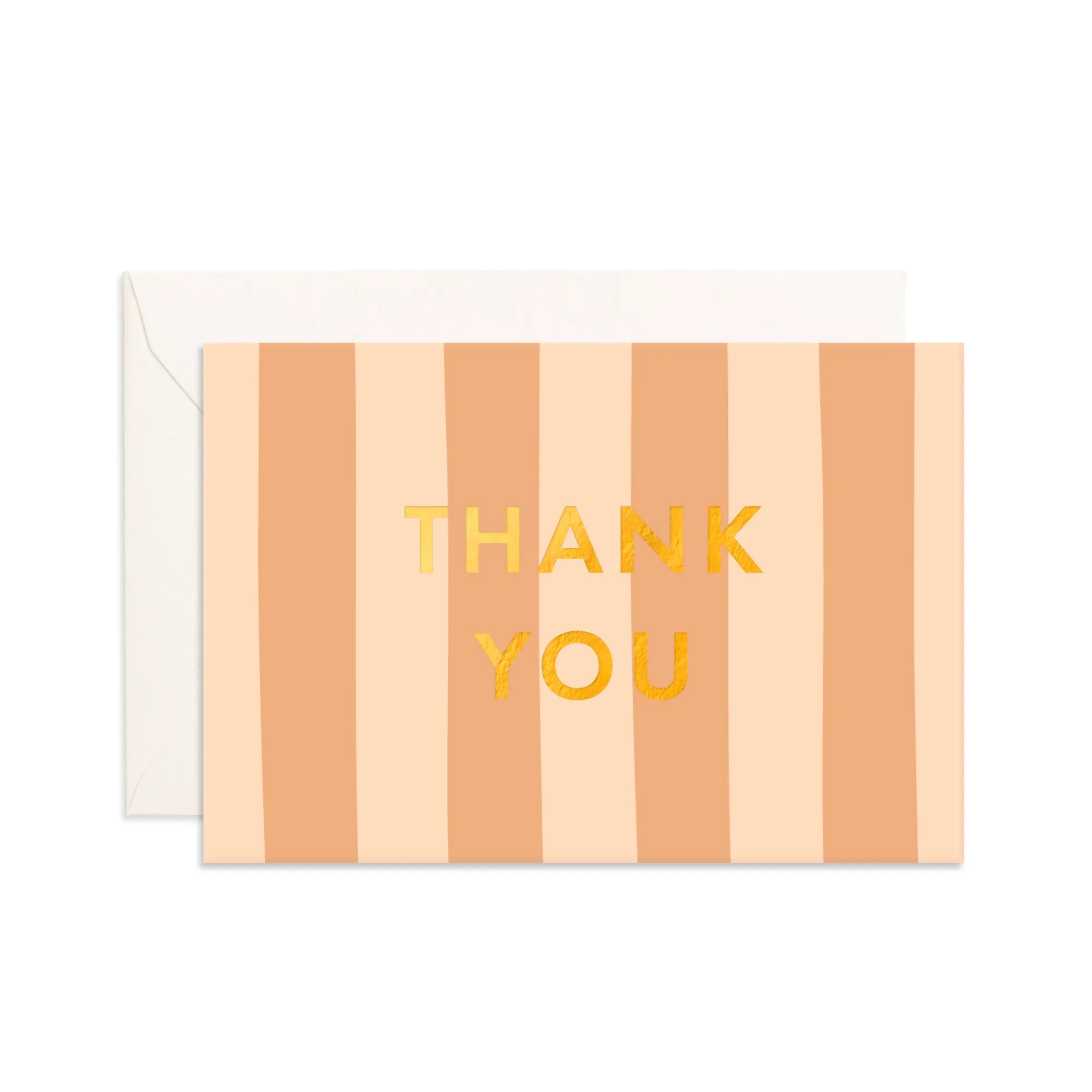
For example, the Thank You Corsica Stripe Mini Greeting Card is 98 x 67mm (3.8 x 2.6 inches) with a blank interior and gold metallic foil on white uncoated card stock. That is a card built for a short, warm line, not a letter. Larger formats such as the Christmas Bella Rosa Greeting Card, at 108 x 140mm, give you noticeably more room for a fuller message.
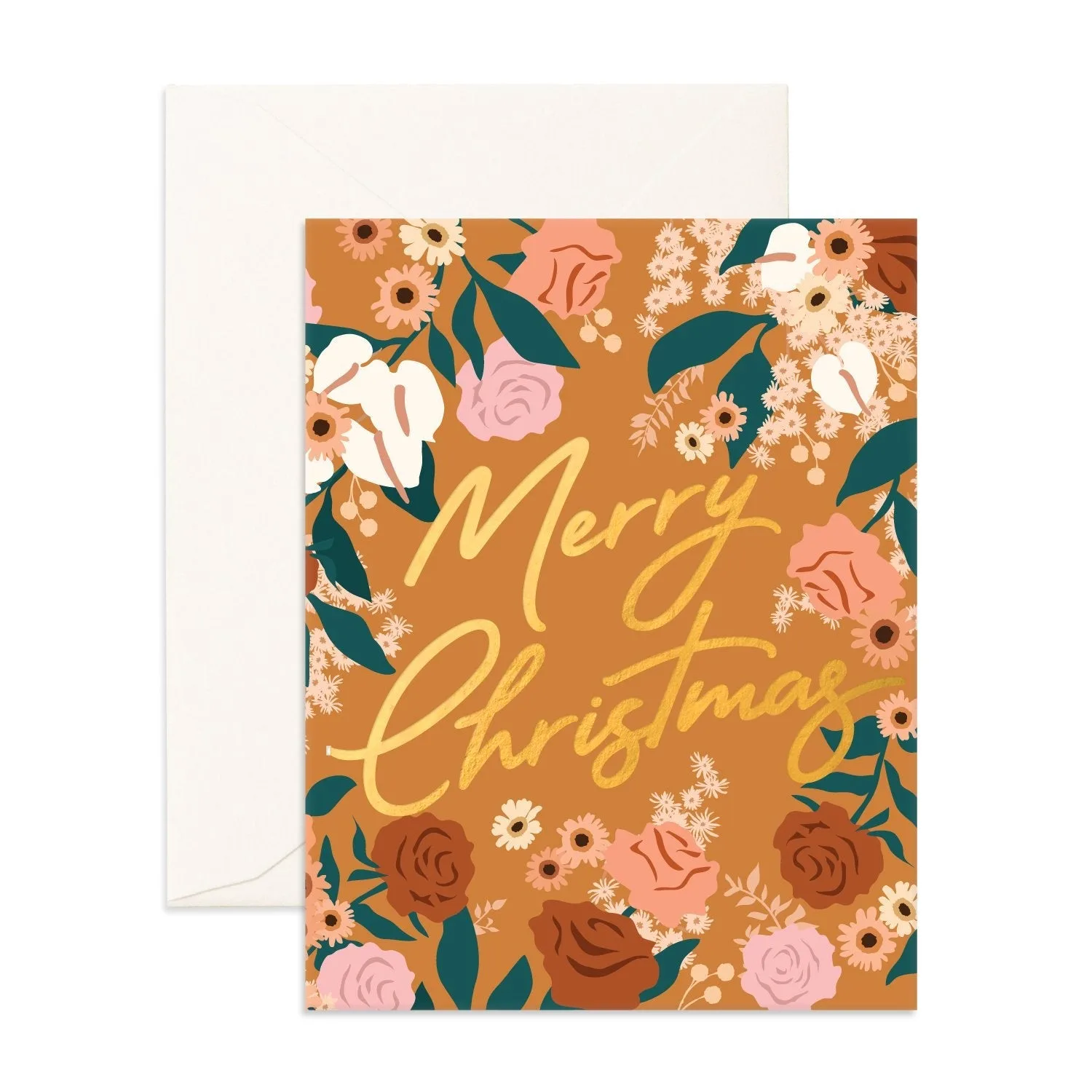
Christmas Bella Rosa Greeting Card
- Common mistake: writing a long message on a mini card and running out of space before the sign-off.
- Checkpoint: leave at least a centimetre of clear space below your last line so the card does not look crowded.
Open with a specific detail, not a category greeting
The first line sets the temperature of the whole message. "Happy birthday" is fine, but "Happy birthday, and I still think about the night we got lost driving back from the coast" does far more work. Specific details signal that you were paying attention, and they give the recipient something to respond to.
If you are stuck, think of one shared moment, one thing they did recently, or one quality you admire. Choose the smallest true detail rather than the biggest abstract compliment. "You always remember how everyone takes their coffee" lands harder than "you're such a caring person."
- Keep the detail short. One sentence is usually enough to anchor the message.
- Avoid inside jokes that exclude other people who might read the card, such as a shared office card.
Say the real thing in the middle
The middle of the card is where the actual message lives: the thank you, the congratulations, the sympathy, the apology. Be direct about the purpose. If you are thanking someone, name what they did and what it meant. If you are offering condolences, keep it simple and avoid trying to explain or fix the loss.
This is also where greeting card etiquette matters most. For a sympathy card, short and sincere beats long and philosophical. For a thank-you card, mention the specific gift or gesture. For a congratulations card, name the achievement rather than the general category of success.
- Common mistake: burying the real message under two sentences of throat-clearing.
- Checkpoint: the recipient should be able to point to the one sentence that is the point of the card.
Close with a sign-off that fits the relationship
The sign-off is a small decision with a lot of signal. "Love" suits close family and partners, "with love" softens it slightly, "warmly" works for colleagues, and "thanks again" is a clean choice for a thank-you card. Match the closing to how you actually speak to the person, not to how cards in shops are printed.
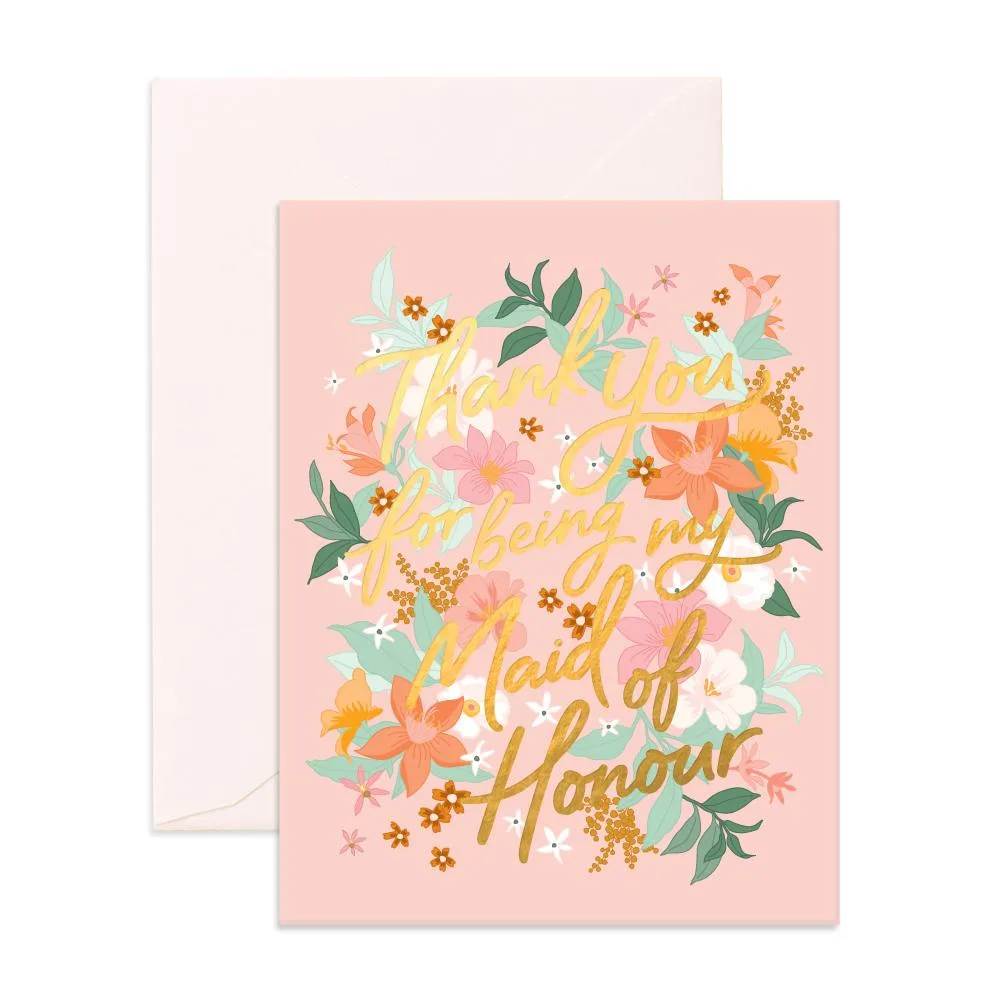
Leave the card's printed design to do some of the work. Cards such as the Thank You Maid Bohemia Greeting Card carry a blush envelope and gold foil, so the visual tone is already warm; your sign-off does not need to overstate it. A plain "thank you" plus your name can be the right level of warmth.
- Sign your name the way the recipient knows you, not the formal version on your passport.
- If you are writing on behalf of a group, sign all names rather than one name plus "and family."
Check the practical details before you seal the envelope
Before the envelope goes anywhere, confirm the recipient's name is spelled correctly, the card is signed, and the envelope is addressed. If you are posting it, check the address against a recent message rather than memory. These small checks prevent the most avoidable card mistakes.
Also check the card's envelope colour against your ink. The Thank You Maid Bohemia Greeting Card comes with a blush envelope, and the Christmas Bella Rosa Greeting Card comes with a cream one. If you plan to address the envelope by hand, test your pen on a corner first so it does not smudge or bleed.
- Common mistake: sealing the envelope before checking the name spelling and the signature.
- Checkpoint: hold the sealed card for a moment and confirm nothing is missing before it leaves your hand.
Your card-writing sequence
- Name the reader and the feeling: Decide who the card is for and what you want them to feel when they open it. Write that down in one line before drafting anything else. Checkpoint: if the message would work for anyone, it is not specific enough yet.
- Draft on scrap paper: Write the full message on a separate sheet, read it aloud, and trim anything that sounds borrowed or stiff. Checkpoint: the draft should fit the card's blank space before you copy it over.
- Open with one real detail: Replace the generic greeting with a specific shared moment, recent action, or quality you admire. Checkpoint: the first line should be impossible to send to someone else.
- State the point plainly: In the middle of the card, say the actual thank you, congratulations, or condolence without burying it. Checkpoint: the recipient can identify the one sentence that is the reason for the card.
- Sign off in your own voice: Choose a closing that matches how you actually speak to the person, and sign your name the way they know you. Checkpoint: the sign-off should sound like the end of a conversation, not a form letter.
- Check the details before sealing: Confirm the name spelling, the signature, and the envelope address, and test your pen on the envelope corner if you are handwriting it. Checkpoint: nothing missing, nothing misspelled, nothing smudged.
Card formats worth knowing before you write
- Thank You Corsica Stripe Mini Greeting Card: Mini foil greeting card, 98 x 67mm (3.8 x 2.6 inches), white uncoated card stock, gold metallic foil, blank interior, cream envelope, made in Australia. The small format sets a natural limit of one or two lines, so plan a short message rather than a paragraph.
- Christmas Bella Rosa Greeting Card: 108 x 140mm, warm white uncoated card stock, full-color plus gold metallic foil, blank interior, cream envelope, made in Australia. The larger size gives you room for a fuller message, which suits a longer note to family or a close friend.
- Thank You Maid Bohemia Greeting Card: 108 x 140mm (4.25 x 5.5 inches), warm white uncoated card stock, gold foil, blank interior, blush envelope, made in Australia. The blush envelope is already a warm visual cue, so a simple, direct thank-you message is enough.
A good card message is not about finding the perfect words. It is about choosing one true detail, saying the point clearly, and signing off in a way that sounds like you. Draft it once, fit it to the card, check the details, and send it.