Quick answer
For run-and-gun video, the Hoya 72mm Variable ND offers quick exposure adjustments, while the Pro ND 100 provides consistent, predictable light reduction for controlled shoots.
Flexibility vs. consistency
The main trade-off between these two filters is how you control light. A variable ND lets you dial in exposure on the fly, which is ideal when lighting changes or you're moving between scenes. A fixed ND like the Pro ND 100 gives you a set amount of reduction, so you can lock in your settings and focus on composition without worrying about accidental shifts.
Consider your shooting style: if you often shoot in changing conditions or need speed, the variable ND saves time. If you prefer a repeatable setup and don't want to risk cross-polarization artifacts, a fixed ND is more reliable.
Choosing between Variable ND and Pro ND 100
- Variable ND for flexibility: Choose the Hoya 72mm Variable ND if you need to quickly change exposure while shooting in varying light. Its 1.5 to 9-stop range covers most situations without carrying multiple filters. Remember to avoid extreme settings to prevent cross-polarization artifacts.
- Pro ND 100 for consistency: Choose the Hoya 72mm Pro ND 100 if you want a fixed 6 2/3-stop reduction for predictable results. It's great for controlled shoots where you set your exposure once and keep it. Pair it with a variable ND or other fixed NDs if you need different stops.
- Consider your workflow: If you shoot solo or fast-moving scenes, the variable ND's speed is a big advantage. If you work with a team or need repeatable setups, the fixed ND's simplicity reduces variables. Think about whether you prioritize speed or consistency in your typical shoot.
Product facts
-
Hoya 72mm Pro ND 100 Neutral Density Filter: The Hoya 72mm Pro ND 100 is a fixed neutral density filter that reduces light by 6 2/3 stops. This consistent reduction lets you set a slow shutter speed for motion blur without adjusting the filter between takes.
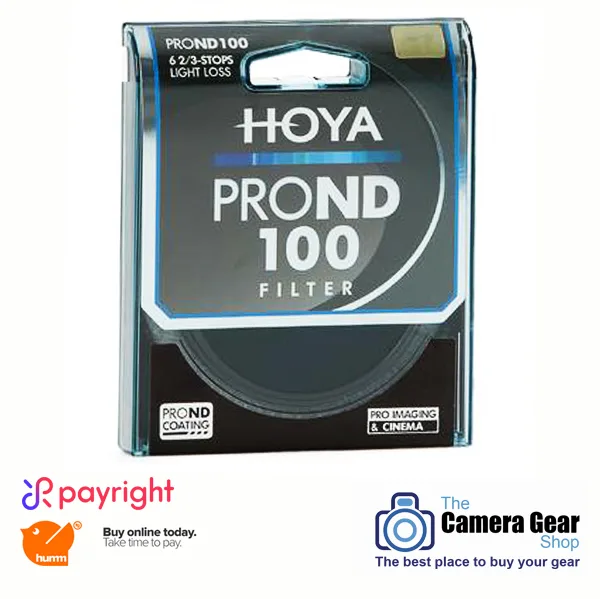
Hoya 72mm Pro ND 100 Neutral Density Filter
-
Hoya 72mm Variable ND Neutral Density Filter: The Hoya 72mm Variable ND uses two polarizing layers to adjust light from 1.5 stops up to 9 stops. You can adapt to changing brightness without swapping filters, making it convenient for handheld or documentary-style video.
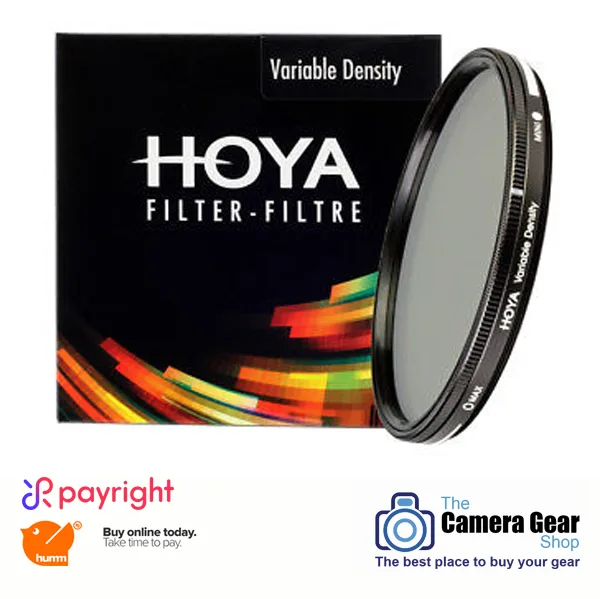
Hoya 72mm Variable ND Neutral Density Filter
Which filter fits you?
Best for
- Run-and-gun videographers who need quick exposure adjustments
- Solo shooters covering events or documentaries with changing light
Not for
- Studio or controlled shoots where a fixed stop is preferred
- Shooters who want to avoid any risk of cross-polarization artifacts