The core difference: gel sheet vs serum-soaked fabric
Most sheet masks you see are fabric soaked in a serum blend. When you apply them, a significant amount of the actives can evaporate before they ever reach your skin. A hydrogel mask takes a different approach: the formula itself is gelled into a solid sheet, so the ingredients are delivered directly to the skin while the gel creates a seal that minimises evaporation and helps lock in moisture.
That structural difference is the main reason to choose one over the other. It is not about which format is universally better, but about which one matches your current skin concern and how you plan to use it.
How the two formats compare on delivery and fit
- Ingredient delivery: Fabric masks rely on soaked serum; some actives can evaporate during wear. Hydrogel masks solidify the formulation into the gel sheet, which adheres closely and creates a seal to minimise evaporation, effectively delivering the serum directly to the skin.
- Moisture retention: The gel sheet is designed to seal in moisture and prevent evaporation. Fabric masks can feel wet initially but may dry out as the liquid evaporates, especially if worn longer than intended.
- Adherence and comfort: The Aesthetics Rx Hydrogel Sheet Mask is described as adhering to the skin better than regular sheet masks, thanks to its gel structure. Fabric masks can lift at the edges or feel heavy when saturated.
- Suitability for sensitive or irritated skin: Hydrogel masks are often chosen for calming and soothing. The Aesthetics Rx hydrogel is suitable for all skin types, particularly dehydrated skin and for post-dermal treatment to calm and soothe. Fabric masks vary widely; check the serum ingredients if your skin is reactive.
Which format suits your skin concern?
If your main concern is dehydration or a compromised barrier, a hydrogel mask's sealing effect and moisture-retaining design make it a logical choice. The gel sheet is intended to restore the skin barrier with moisture while delivering a hydrating formulation. For post-treatment soothing, the same sealing and calming properties can be useful, though always follow your clinician's advice after in-clinic procedures.
If you are looking for a quick boost of serum actives and your skin is not particularly dry or sensitive, a well-formulated fabric sheet mask can still be a convenient option. The trade-off is that evaporation may reduce the amount of active that stays on the skin, and fit can be less precise. For very dry or irritated skin, the hydrogel format's occlusion and adherence give it an edge in keeping ingredients in contact with the skin.
What the Aesthetics Rx Hydrogel Sheet Mask record confirms
-
Hydrogel Sheet Mask x5: The hydrogel sheet mask is a bespoke formulation made exclusively by the “glass skin” experts in Korea for Aesthetics Rx®. This tells you the format is not a generic fabric mask but a purpose-made gel sheet, which is relevant when comparing delivery and fit.
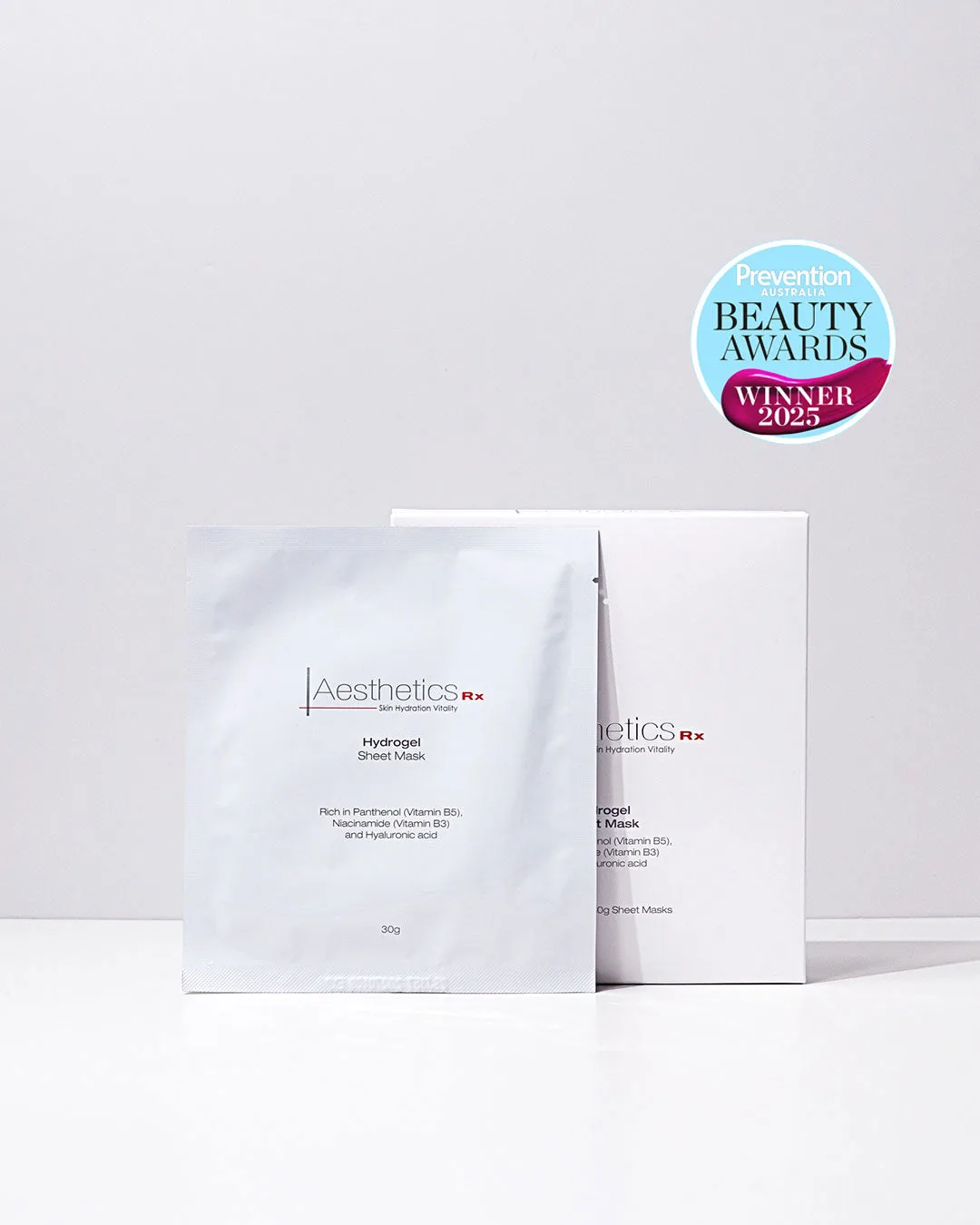
Hydrogel Sheet Mask x5
-
Hydrogel Sheet Mask x5: It is especially designed to reveal a brighter looking complexion and visibly soothe irritated skin. These are the stated benefits, so you can match them to your concern—brightening or soothing—rather than assuming all hydrogel masks do the same.
-
Hydrogel Sheet Mask x5: The gel sheet is made by cooling and gelling a proprietary blend of moisturisers and concept ingredients. This explains why the formula stays in the sheet instead of evaporating, which is the key mechanical difference from soaked fabric.
-
Hydrogel Sheet Mask x5: Use in conjunction with LED light to amplify skin glowing benefits. If you already use LED, this mask is designed to pair with it; that is a usage consideration a fabric mask may not specifically support.
-
Hydrogel Sheet Mask x5: Suitable for all skin types, particularly dehydrated skin and for post dermal treatment to calm and soothe. This directly addresses the dehydration and post-treatment concerns that often drive the hydrogel vs sheet mask decision.
Practical selection advice: when to reach for which
Choose a hydrogel mask when your skin feels tight, dehydrated, or reactive, or when you want a mask that stays put and keeps ingredients in close contact. It is also the better fit if you are using LED light and want to amplify glow, as the Aesthetics Rx hydrogel is designed for that combination. For post-dermal treatment soothing, its calming and sealing properties are relevant, but confirm with your practitioner first.
Choose a fabric sheet mask when you want a lightweight serum hit and your skin is not especially dry or sensitive—and when you are comfortable with the possibility that some actives may evaporate during wear. If you are comparing specific products, look beyond the format: check the serum ingredients, the fit of the mask, and whether the brand provides clear usage instructions. The hydrogel format's advantage is structural, but the formula still matters.
What the evidence does not settle
The supplied information for the Aesthetics Rx Hydrogel Sheet Mask does not include step-by-step application instructions, recommended wear time, or frequency of use. It also does not provide clinical results or comparisons against specific fabric masks. That means you should not treat this comparison as a claim that hydrogel is universally superior; it is a format with different mechanics. For any mask, follow the manufacturer's directions on the pack, and if you have a diagnosed skin condition or are recovering from a procedure, seek professional advice before use.