Quick answer
Buy for your busiest realistic day, not your average day. For most households, a countertop model that makes 26 pounds per day covers daily drinks and small gatherings; step up to a nugget maker if you chew ice or serve soft pellet ice, a clear-cube maker if cocktails are the priority, or a freestanding unit if you routinely need more than 40 pounds per day.
Start with how much ice per day you actually use
Estimate your demand from the number of people and the way they use ice. A reasonable planning rule is 1 to 1.5 pounds of ice per person for a party, plus extra for pitchers or coolers. Two people making iced coffee and water daily usually stay under 10 pounds; a 10-person gathering can consume 10 to 15 pounds in an evening. Match that number to the maker's 24-hour output, and remember that storage capacity matters as much as output for parties—ice you make at noon needs somewhere to sit until guests arrive.
Match the ice style to how you serve it
Countertop cube makers produce familiar crescent or square cubes that chill drinks quickly and work for everyday use. Nugget makers produce soft, chewable pellet ice that packs well in cups and is popular for chewing and for drinks where a softer texture is welcome. Clear-cube makers produce slow-frozen, transparent cubes that melt more slowly and look better in a cocktail glass, but they typically cost more and make fewer cubes per cycle than a standard countertop model. None of these styles is universally better; the right one depends on whether you prioritize volume, texture, or presentation.
Countertop vs. freestanding: space, plumbing, and output
Countertop makers sit on a counter and need only a standard outlet; you fill the reservoir by hand and empty the bin manually. They suit renters, small kitchens, and anyone who wants ice without installation. Freestanding and commercial-style machines produce far more ice and hold a larger storage bin, but they take up floor space and may require a drain or dedicated water line depending on the model. If you are considering a commercial ice maker for home use, confirm the electrical and plumbing requirements before buying—output numbers alone do not tell you whether the machine will fit your space.
Features worth paying for—and ones you can skip
A self-cleaning function saves time and reduces scale buildup, especially if you use hard water. A 24-hour timer lets you schedule ice production for a party or for off-peak hours. A visible water-level or bin-full indicator prevents overflow. Features you can usually skip include app connectivity and decorative lighting unless they directly solve a problem you have. Prioritize easy access to the water reservoir and bin, because you will interact with those parts daily.
Decision rules for choosing an ice maker
- If you need more than 40 pounds per day: Choose a freestanding or commercial-style machine with a large storage bin. Countertop models are not designed for continuous high-volume output. Check electrical and plumbing requirements first.
- If you mainly chew ice or want soft pellet ice: Choose a nugget ice maker. Its soft, chewable pellets are the defining feature, and output around 34 pounds per day covers most households. Confirm bin size if you plan to make ice in advance.
- If cocktails and presentation are the priority: Choose a clear-cube maker. Clear cubes melt more slowly and look better in the glass, but expect slower production than a standard countertop model. Use the timer to build a batch before guests arrive.
- If you want the lowest-fuss daily setup: Choose a countertop model with self-cleaning and a fast cycle. It needs only a counter and an outlet, and you can store it when not in use. Plan to refill the bin for parties; storage is limited.
- If you are unsure, size for your busiest day: Estimate 1 to 1.5 pounds of ice per person for gatherings and compare that with the maker's daily output and bin capacity. A maker that barely covers your average day will fall short at parties.
Antarctic Star models at a glance
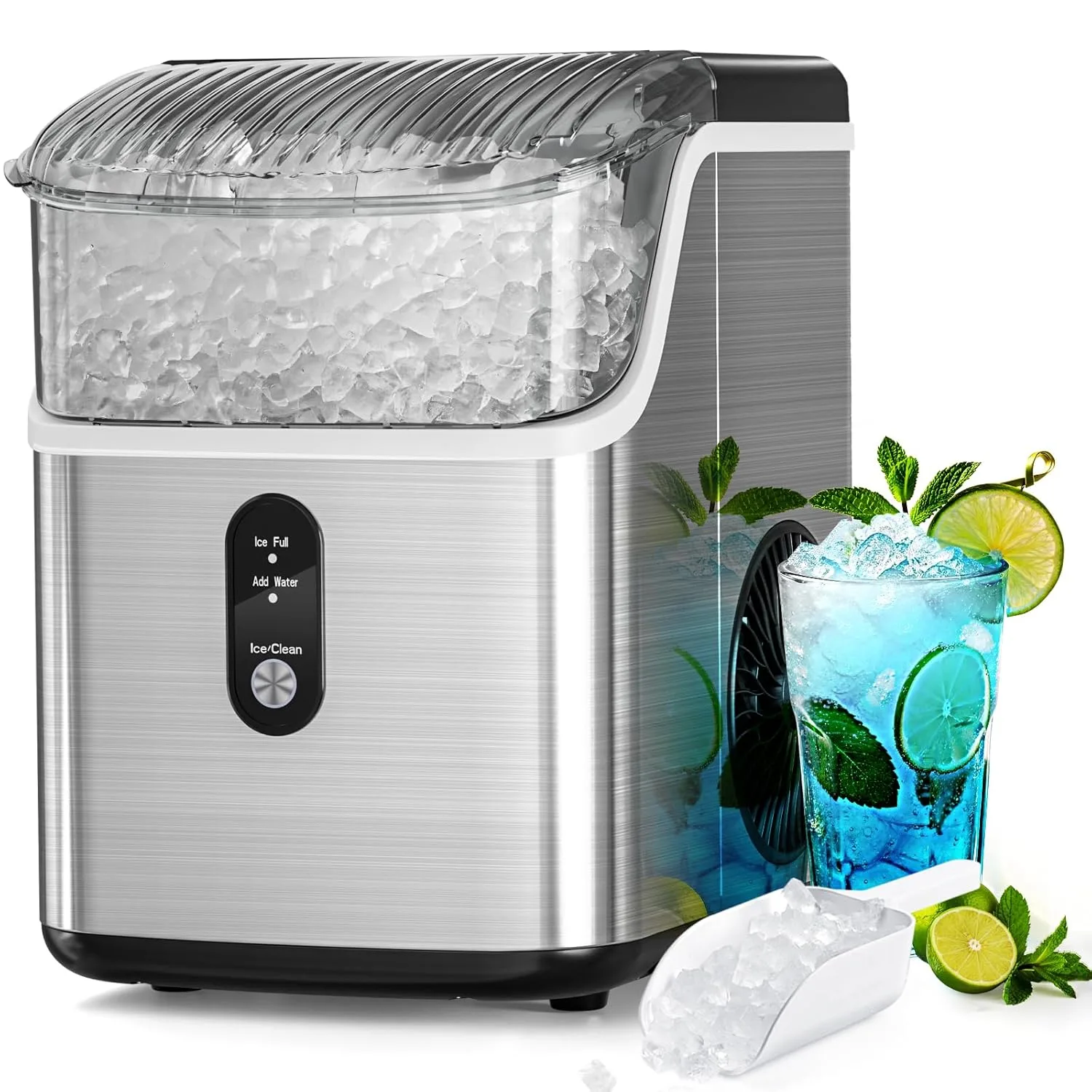
- Antarctic Star Nugget Ice Maker with Soft Chewable Pellet Ice 34lbs/24H: Produces up to 34 pounds of pellet ice within 24 hours. A good fit if you want soft, chewable nugget ice and need enough output for daily use or a party; check the bin capacity if you plan to make ice hours before serving.
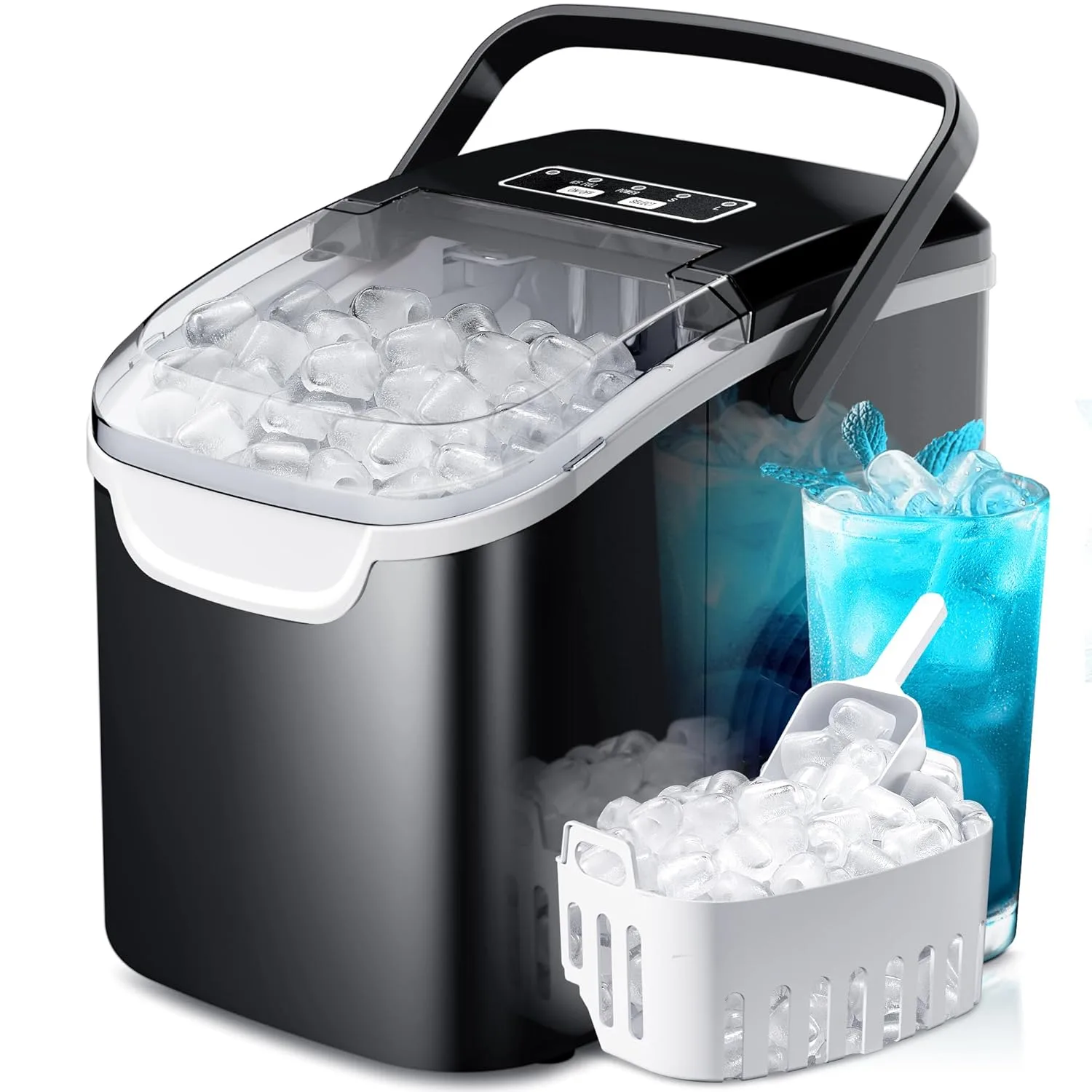
- Antarctic Star Ice Makers Countertop with Handle: Makes a batch in 6–12 minutes, produces up to 26 pounds per day, and has a 1.3-pound storage capacity. Fast first ice and a compact footprint suit everyday countertop use, but the small bin means you will need to empty and restart it for larger gatherings.
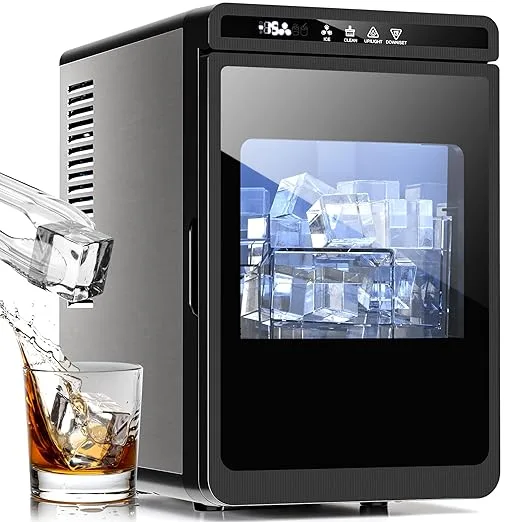
- Antarctic Star Clear Ice Cube Makers 58003RIM0-BLACK: Produces 3 clear cubes every 20 minutes, up to 155 cubes per day, with a 24-hour timer. Choose this if clear ice for cocktails matters more than speed; the slower cycle is the trade-off for transparency and slower melting.
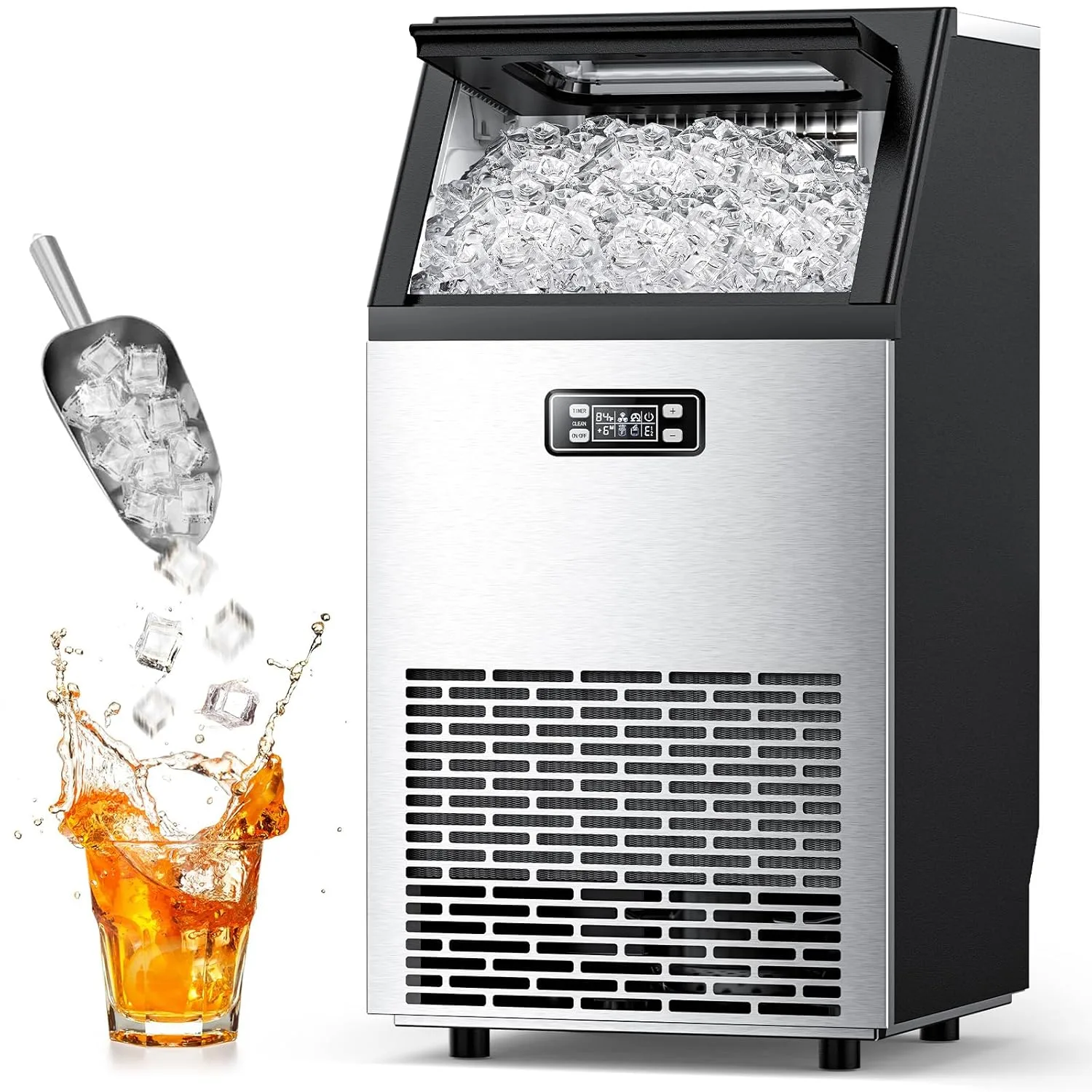
- Antarctic Star Commercial Ice Makers Machine Stainless Steel Makers Freestanding: Makes about 100 pounds of ice in 24 hours and has a 48-pound storage bin. Handles high-volume entertaining or small-business use, but requires floor space and a plan for drainage or water supply; confirm installation requirements before ordering.
Who should buy which type
Best for
- Households that want fast, everyday cube ice without installation (countertop)
- People who chew ice or prefer soft pellet texture (nugget)
- Cocktail enthusiasts who care about clarity and slow melting (clear-cube)
- High-volume entertainers or small businesses with space for a freestanding unit
Not for
- Buyers who need more than 40 pounds per day from a countertop machine
- Renters or small kitchens with no floor space for a freestanding unit
- Anyone who wants clear, slow-melting cubes from a standard countertop cube maker
- Buyers who cannot meet a freestanding machine's plumbing or drainage requirements