Start with the tee's two visual anchors
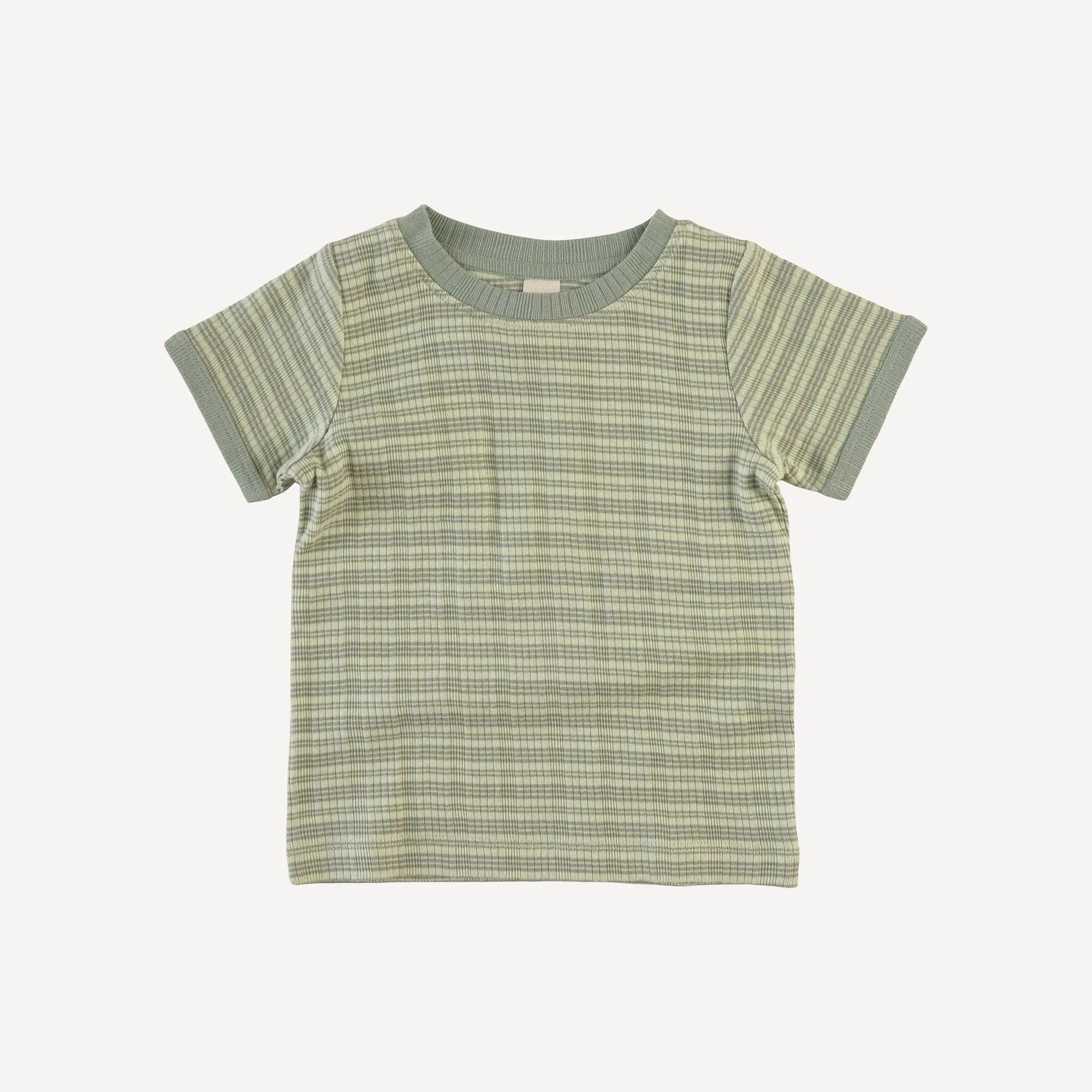
A matching outfit works best when you build from the piece that is hardest to coordinate. Here, that piece is the iceberg stripe ringer tee. It combines a classic iceberg stripe pattern with contrasting ringer trim at the neck and arms, so it already carries two visual elements: the stripe and the contrast edge.
Your job is not to add more pattern. It is to repeat one of those anchors somewhere else in the outfit so the look reads as intentional rather than random. Repeating the stripe is the safest route; repeating the trim color is the more subtle one.
What the product record confirms
-
short sleeve ringer tee | iceberg stripe | organic cotton multi rib: Short sleeve ringer tee with a classic iceberg stripe pattern and contrasting ringer neck and arm trim. The contrast trim gives you a second color to echo in shorts, socks or a hat, which is what makes a matching outfit feel planned.
short sleeve ringer tee | iceberg stripe | organic cotton multi rib
-
short sleeve ringer tee | iceberg stripe | organic cotton multi rib: Made from 100% organic cotton rib material. Rib fabric has a textured surface, so pair it with smooth or solid bottoms rather than another busy rib print.
-
short sleeve ringer tee | iceberg stripe | organic cotton multi rib: Available in sizes 2T through 8Y. The size range tells you which children can wear the tee, and whether siblings can be dressed in the same anchor piece.
Build the outfit in four decisions
- 1. Pick the bottom first, not the accessories: Choose a solid short or pant in one of the two colors already present in the tee: the stripe or the ringer trim. A solid bottom lets the striped tee stay the focal point. If you want a true iceberg stripe matching set, look for a bottom that repeats the same stripe rather than a different pattern.
- 2. Decide whether to echo the stripe or the trim: Echoing the stripe means choosing a bottom or layer with the same iceberg stripe direction and scale. Echoing the trim means choosing a solid in the trim color. Pick one approach per outfit; doing both at once usually makes the look busy.
- 3. Add one layer that does not compete: If the weather needs a layer, choose a solid, unpatterned piece so the striped tee remains the visual anchor. The product record does not confirm specific layering or temperature guidance, so treat this as a styling choice rather than a warmth rating.
- 4. Stop before the outfit gets loud: With a striped tee and contrast trim already in play, one more small repeat is usually enough. Socks, a hat or shoes in the trim color can tie the look together; a second bold print usually breaks it.
Two matching routes and what each one needs
Both routes use the same tee. The difference is which visual anchor you repeat and how much you ask of the rest of the outfit.
- Stripe-on-stripe matching set: Repeat the iceberg stripe in the bottom. This is the strongest match and works best when the second piece uses the same stripe scale. Keep everything else solid so the stripes do not fight.
- Trim-color coordination: Keep the bottom solid and pull its color from the ringer neck and arm trim. This is easier to shop for and more forgiving if you cannot find an exact stripe match. It also lets the tee be worn with pieces already in the drawer.
Checkpoints before you commit to a size
The supplied record lists sizes 2T through 8Y but does not include a measurement chart, so use these practical checks rather than a number you cannot verify.
- Confirm the child falls inside 2T–8Y: The tee is listed only in that range. If the child is outside it, this specific tee is not the right anchor piece.
- Check the shoulder and sleeve feel: Ringer trim sits at the neck and arm openings. If a child is sensitive to snug edges, check that the trim sits comfortably before relying on this tee for everyday wear.
- Plan for the size you need now: The record does not confirm shrinkage or growth allowance, so choose the size that fits the child at purchase rather than guessing how much room to leave.
What the record does not confirm
The supplied information does not include care instructions, washing temperature, drying method or safety guidance for this tee. It also does not confirm color-matching codes for the iceberg stripe or the ringer trim, so match by eye rather than by a named color.
That does not mean those details are unavailable from the brand; it means you should check the garment label or product page before washing or making a firm color match. For outfit planning, the confirmed facts are enough: a striped organic cotton rib tee with contrast trim, sized 2T to 8Y.