Quick answer
Start with the five foundational palming techniques in If an Octopus Could Palm: the Classic Palm, the Finger Palm, the Thumb Palm, the Tenkai Palm, and the Top Palm. Learn them in this order to build control and confidence before moving to advanced moves.
Why this order works
Palming is a physical skill, not a memorization exercise. Each technique in this sequence builds on the previous one: the Classic Palm teaches the basic grip, the Finger Palm adds subtlety, the Thumb Palm introduces a different hand position, the Tenkai Palm refines concealment, and the Top Palm combines everything into a practical move you can use in routines.
Skipping ahead often leads to bad habits, like tensing your hand or flashing the card. By following this order, you develop the muscle memory and awareness needed for clean palming.
The 5-step learning sequence
- 1. Classic Palm: Hold the card in the center of your palm using the base of your thumb and your pinky. Practice gripping and releasing until the card feels secure without excessive tension. Check that your hand looks natural when relaxed; a stiff hand is a giveaway.
- 2. Finger Palm: Position the card between your curled fingers and the palm. This grip allows more natural hand movement. Practice holding the card while moving your hand casually. Ensure the card edge is hidden by your fingers; any visible edge is a flash.
- 3. Thumb Palm: Clamp the card between the base of your thumb and the side of your palm. This grip is useful when you need to access the card quickly. Practice transferring from a normal grip to the thumb palm smoothly. Watch your thumb angle; a bent thumb can signal that you're hiding something.
- 4. Tenkai Palm: Hold the card between your thumb and the side of your hand, near the base of the thumb. This grip allows you to hold the card while your hand appears open. Practice keeping your fingers straight and relaxed. Your fingers should stay naturally spread; forced straightness looks unnatural.
- 5. Top Palm: Combine the previous grips to secretly steal the top card while your hand is in motion. Practice the classic top palm, then experiment with variations from If an Octopus Could Palm to add your own style. Check that your hand's movement is consistent with the action you're performing, like reaching for a deck or pointing.
The source material
-
If an Octopus Could Palm: The 10 Year Anniversary Edition of If an Octopus Could Palm features all-new cover art by Jonathan Burton and a foreword by Tony Chang, and teaches over a dozen conceptual palming techniques. This book gives you a structured, visual approach to learning palming, with techniques that go beyond basic grips to inspire new ways of thinking about holding out.
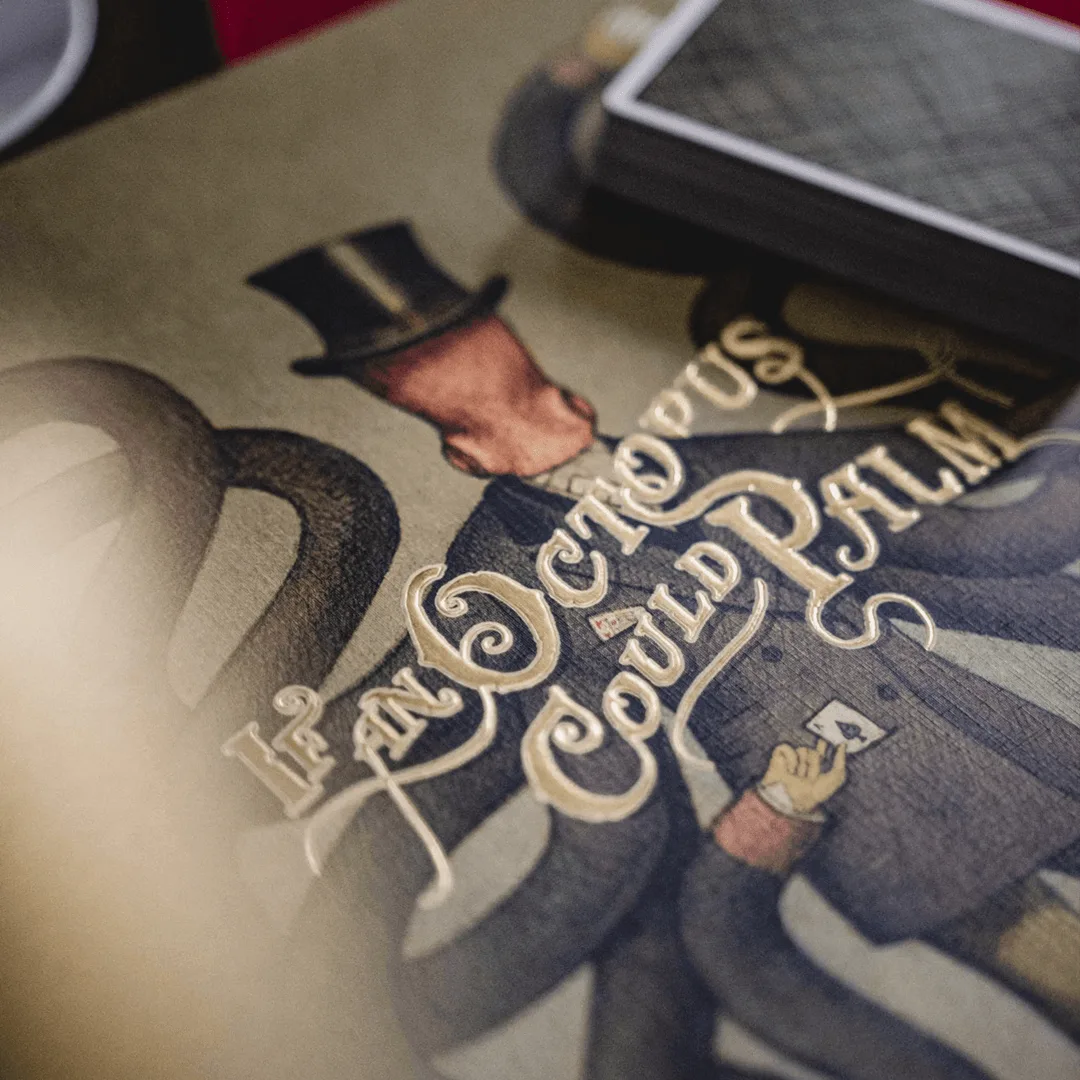
If an Octopus Could Palm