As a parent, your child's safety is always the top priority—especially when it comes to car travel. One of the most debated topics in car seat safety is the direction your child should face. While forward-facing seats may seem more convenient for older babies and toddlers, experts overwhelmingly recommend keeping your child rear-facing for as long as possible. In fact, the American Academy of Pediatrics (AAP) advises parents to keep children rear-facing until they reach the maximum height or weight limit allowed by their car seat.
Rear-facing car seats provide critical protection for your baby's head, neck, and spine during a crash. Because infants and young children have proportionally larger heads and weaker necks, a rear-facing position cradles the child, distributing crash forces evenly across the shell of the seat. This simple orientation can make the difference between a minor injury and a life-threatening one. In this guide, we'll explore the science behind rear-facing, the latest guidelines, and how to choose the right seat for your family.
Why Rear-Facing Is Safer: The Science Behind the Recommendation
When a car stops suddenly or is involved in a collision, the forces exerted on the body can be extreme. For a forward-facing child, the crash force pulls the head and torso forward, placing immense strain on the neck and spinal cord. In a rear-facing seat, the child's back is supported by the seat shell, and the head, neck, and spine are kept in alignment. The seat absorbs much of the impact, reducing the risk of serious injury.
Studies have shown that children under two years old are five times safer in a rear-facing seat than in a forward-facing one. This is because the bones in a baby's spine are not fully ossified, and the ligaments are still developing. Rear-facing allows the seat to cradle the child, preventing the head from snapping forward. Even for toddlers, the benefits persist: a rear-facing seat can reduce the risk of injury by up to 75% compared to forward-facing.
- Rear-facing spreads crash forces over the entire back of the seat, protecting the neck and spine.
- Young children have heavy heads and weak necks—rear-facing keeps the head and neck aligned.
- The AAP recommends rear-facing until the child reaches the maximum height or weight limit of the seat.
When to Switch to Forward-Facing: Understanding Car Seat Limits
Many parents are eager to turn their child around, thinking it's more comfortable or that their child is 'big enough.' However, the safest practice is to keep your child rear-facing until they exceed the limits of their convertible car seat. Most convertible seats allow rear-facing up to 40 or 50 pounds and a certain height, often until the child's head is within one inch of the top of the seat shell.
For example, the Scenera Extend Convertible Car Seat is designed to accommodate rear-facing use for a long period, with a weight limit of 40 pounds and an extended shell height. This gives parents peace of mind that their child can remain rear-facing well into toddlerhood. Always check the seat's manual and the labels on the side for specific limits. Never rush the transition—every extra month rear-facing adds a layer of protection.
- Check your seat's manual for rear-facing weight and height limits.
- The Scenera Extend Convertible Car Seat allows rear-facing up to 40 lbs.
- Keep rear-facing until your child's head is within one inch of the top of the seat shell.
Common Myths About Rear-Facing Car Seats Debunked
Despite the clear safety evidence, several myths persist. One common myth is that rear-facing causes leg injuries in a crash. In reality, legs are rarely injured in rear-facing seats because children's legs are flexible and can bend naturally. Another myth is that rear-facing is uncomfortable for older toddlers. Actually, many children find it more comfortable because they can sit cross-legged or rest their feet on the seat back.
Some parents worry that rear-facing limits their ability to see their child. While it's true that you can't make eye contact as easily, modern mirrors and cameras can help. More importantly, the safety benefit far outweighs any inconvenience. There is also a misconception that once a child's feet touch the seat back, they need to be turned around. This is false—children can safely bend their legs or rest them on the seat back without increasing injury risk.
- Myth: Rear-facing causes leg injuries. Fact: Legs are flexible and rarely injured.
- Myth: Rear-facing is uncomfortable. Fact: Children can sit cross-legged comfortably.
- Myth: Feet touching the seat means it's time to turn. Fact: Bending legs is safe.
Choosing the Right Rear-Facing Car Seat for Your Baby
Selecting the right car seat is essential for safety and convenience. Infant car seats are designed to be used rear-facing from birth and often come with a base that stays in the car. The Cosco Kids Infant Car Seat Base makes installation quick and secure, allowing you to click the seat in and out with ease. However, infant seats have lower weight limits, so you'll eventually need to transition to a convertible seat.
Convertible car seats, like the Scenera NEXT, offer the flexibility of rear-facing and later forward-facing use. They are designed to accommodate your child from infancy through toddlerhood, making them a cost-effective choice. When shopping, look for seats with high rear-facing weight limits, easy installation features, and a five-point harness. Always check for current safety standards and recall information.
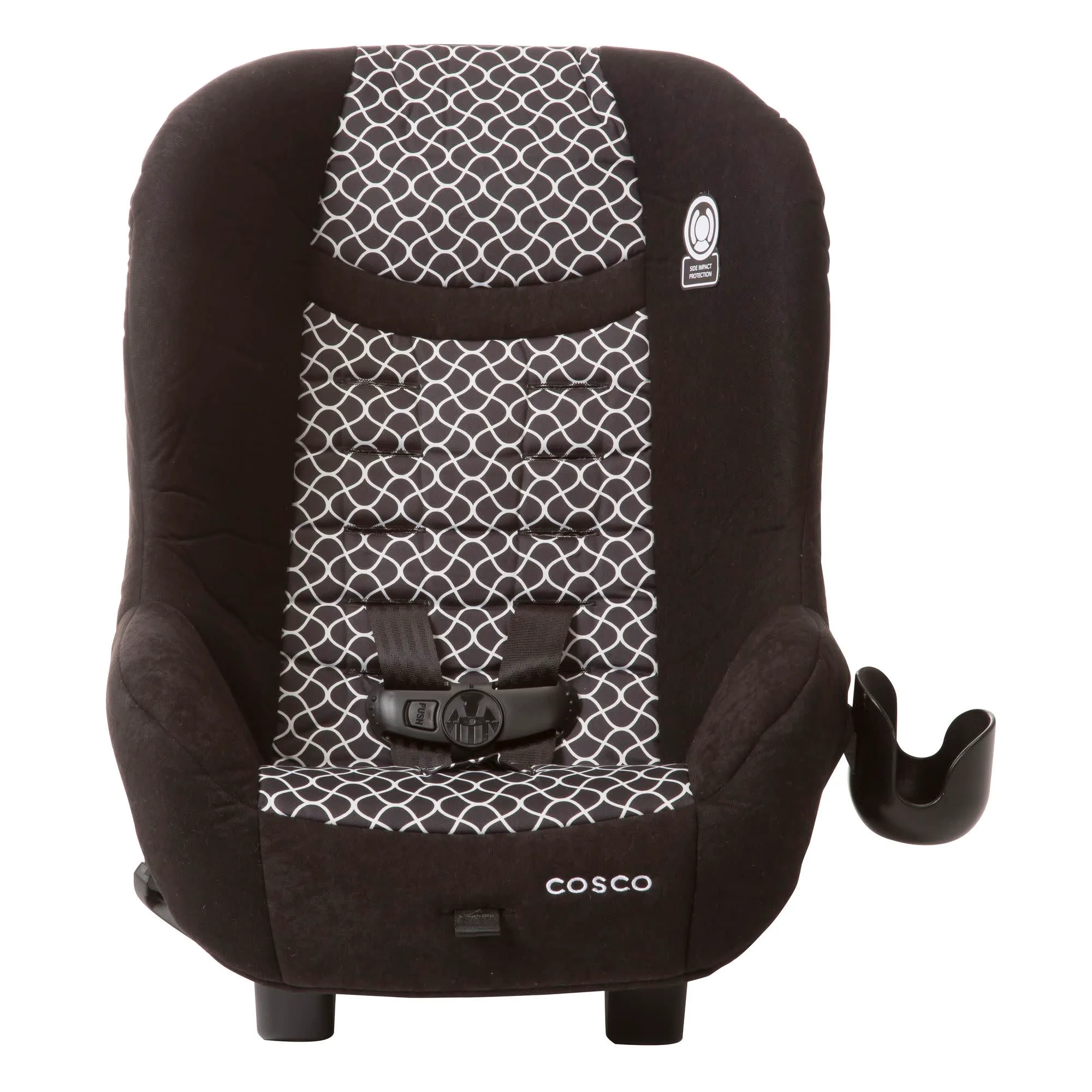
Scenera NEXT
- Infant car seats are portable and great for newborns but have lower weight limits.
- Convertible seats like the Scenera NEXT grow with your child, offering long rear-facing use.
- Look for seats with a five-point harness, easy installation, and high rear-facing limits.
Installation Tips for Rear-Facing Car Seats
Proper installation is just as important as choosing the right seat. A rear-facing car seat must be installed at the correct angle—usually between 30 and 45 degrees—to keep the baby's head from flopping forward. Many seats have a built-in level indicator to help you achieve the right angle. Use the seat belt or LATCH system, and ensure the seat moves less than one inch side to side at the belt path.
If your child is a newborn, use the seat's insert or padding to provide extra support. Avoid bulky clothing or blankets under the harness straps, as they can compress in a crash and loosen the fit. Instead, dress your baby in thin layers and use a blanket over the harness after buckling. Always double-check that the harness is snug—you should not be able to pinch any webbing at the shoulder.
- Install the seat at a 30-45 degree angle using the level indicator.
- Ensure the seat moves less than one inch side to side at the belt path.
- Keep harness straps snug and free of bulky clothing for proper fit.
Keeping your child rear-facing for as long as possible is one of the most important decisions you can make for their safety. By understanding the science, debunking myths, and choosing a high-quality car seat, you can ensure every journey is as safe as possible. Explore the Scenera Extend Convertible Car Seat for a reliable option that supports extended rear-facing use and gives you peace of mind on the road.