Start with the mat side that matches your objective
The indi Code Mat & Literacy Cards is a two-sided mat, so your first planning decision is which side to use. The indi Land side connects eight locations to different literacy concepts, which makes it the natural choice when you want coding to carry an ELA objective. The flip side is an adaptable, blank grid that helps students place Color Tiles when programming indi.
That split keeps the planning concrete: choose the indi Land side for a shared-text discussion or a literacy skill, and choose the blank grid when the goal is laying out and testing a Color Tile path. You do not need to use both sides in one session.
Build a lesson around one indi Land location
The mat is designed to support ELA curriculum, and each of the eight indi Land locations offers an opportunity to strengthen literacy skills through discussion rooted in a shared text. Use one location per lesson so the coding task and the literacy task stay connected.
- Pick the shared text and the literacy focus: The supplied product details name letter identification, word formation, and sentence construction as objectives the accompanying literacy cards can practice. Choose one of these, or another objective your shared text supports, before you set up the mat.
- Match the location to the concept: Each indi Land location is connected to a different literacy concept. For example, the Retelling Rollercoaster is described for discussing the beginning, middle, and end of a story, and the Character Cabins for identifying and considering characters.
- Set the coding task with Color Tiles: Students use Color Tiles to guide indi to the location. Keep the path short enough that the literacy discussion, not the tile layout, remains the main work of the lesson.
- Close with the discussion the location invites: The mat is built for discussions rooted in a shared text, so leave room for students to talk through the literacy concept after indi arrives.
What the mat and cards give you to plan with
-
indi Code Mat & Literacy Cards: Two-sided, interactive coding mat with accompanying literacy activity cards and a guide with standards-aligned lesson ideas, designed to support ELA curriculum. The guide and cards are the planning backbone; you are adapting supplied lesson ideas rather than inventing a literacy-coded curriculum from scratch.
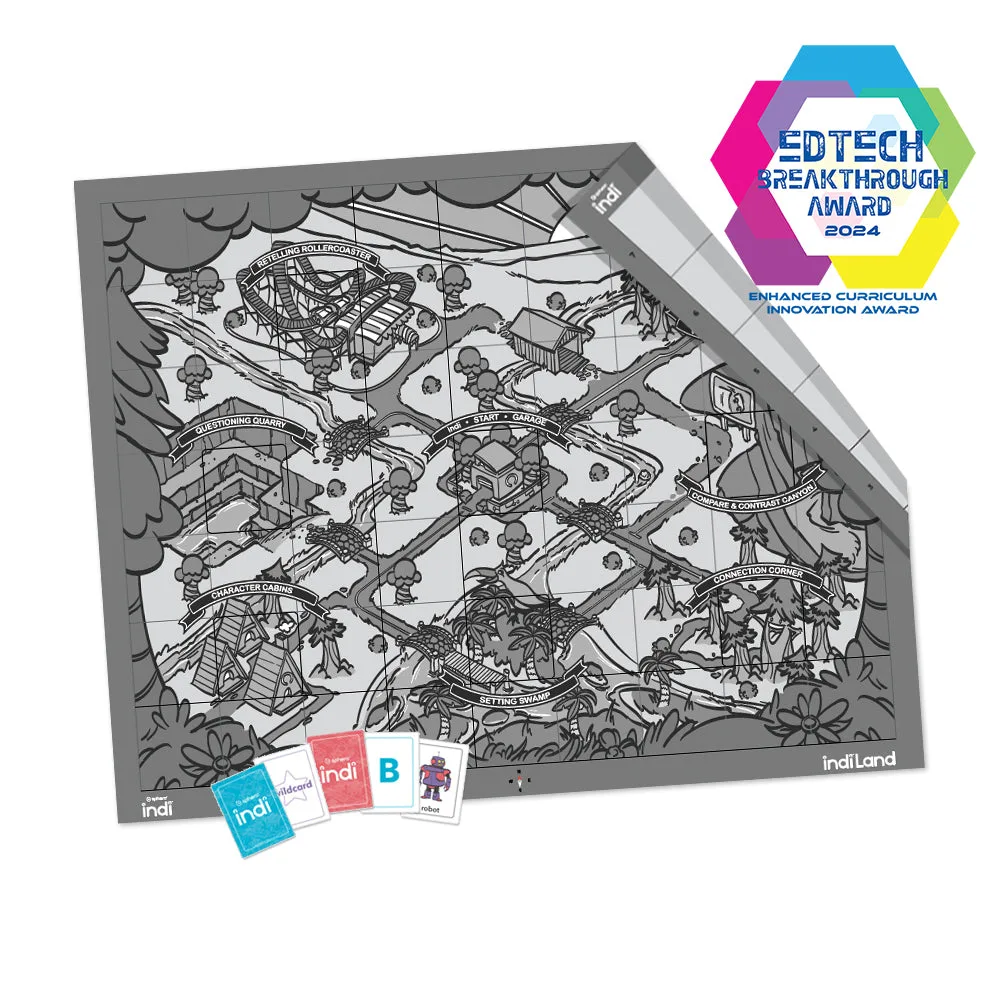
indi Code Mat & Literacy Cards
-
indi Code Mat & Literacy Cards: One side features indi Land, where each of the eight locations is connected to a different literacy concept. Eight locations give you a menu of concepts, which supports planning a short series of lessons instead of a single activity.
-
indi Code Mat & Literacy Cards: The flip side is an adaptable, blank grid that assists students in placing Color Tiles when programming indi. The blank grid is your option when the lesson goal shifts from literacy discussion to path planning and tile placement.
Use the blank grid when the coding is the point
Not every lesson needs a story discussion. When you want students to practice placing Color Tiles and guiding indi, turn the mat over to the blank grid. The grid assists students in placing Color Tiles when programming indi, which makes it a practical surface for letting students design a route and then test it.
A simple sequence works well: students sketch or agree on a route, place the Color Tiles on the grid, run indi, and adjust the tiles if the path does not do what they expected. The mat itself does not supply a route, so your learning goal should define the start and end points.
Plan for screenless learning
The mat is described as offering screenless learning and fun with Sphero indi. That matters for early coding lessons because the physical mat, Color Tiles, and cards carry the activity; students interact with the mat rather than a screen.
- Check your indi setup before the lesson: The mat is designed for use with Sphero indi, so confirm your indi robots and Color Tiles are available before students arrive. The supplied information does not list a separate tile set or additional hardware requirements.
- Keep the literacy cards within reach: The accompanying literacy cards are the tool for practicing letter identification, word formation, and sentence construction, so plan where they sit relative to the mat.
- Use the guide for standards alignment: For recommended lessons and alignment to WIDA and CCSS Standards, the product points to the free indi Land guide. Use it to check that your chosen location and objective fit the standards you report on.
Which side of the mat for which lesson
- indi Land side: Best when the lesson has an ELA objective and a shared text. Each of the eight locations is tied to a literacy concept, and the Retelling Rollercoaster and Character Cabins show how a location can anchor discussion.
- Blank grid side: Best when the lesson focuses on programming with Color Tiles. The grid assists students in placing tiles, so route design and testing become the main activity.
What to confirm before you build a unit
The supplied information does not give a recommended lesson length, group size, or a required number of Color Tiles. Plan those details from your own classroom routines rather than treating them as product specifications.
The product details also do not confirm storage or cleaning instructions. If you need those procedures for your setting, check the manufacturer documentation rather than assuming them from the mat's description.
Product at a glance
- indi Code Mat & Literacy Cards: indi Code Mat & Literacy Cards, catalog price USD 153.30 (catalog comparison price USD 219.00). One mat purchase covers both the indi Land literacy side and the blank programming grid, which is useful when you are equipping a single station.
- indi Code Mat & Literacy Cards: The product has been awarded an EdTech Break Through award. It is a supplied recognition detail, not a substitute for checking that the mat fits your own curriculum and classroom.