Quick Answer
The Inductor Block in Circuit Blox stores energy in a magnetic field and resists sudden changes in current, making it useful for smoothing signals or creating timing effects. Use it when your build needs stable current flow or a brief delay, not for simple current limiting—that's a resistor's job.
Why an Inductor Behaves Differently from a Resistor
In a DC circuit, an inductor acts like a short piece of wire once the current settles, so it doesn't reduce brightness the way a resistor does. Its real effect happens during changes: it opposes a sudden increase or decrease in current, which can smooth out flickers or create a gradual ramp-up in LED brightness.
If your Circuit Blox project uses a motor or a flashing LED, an inductor can help prevent voltage spikes that might make the behavior erratic. However, if you're trying to limit current to protect an LED, an inductor won't do that—you still need a resistor.
Diagnosing When to Use the Inductor Block
- Symptom: Your circuit's LED flickers or the motor speed varies when you change the power level.
- Likely Cause: Sudden current changes from the power source or switching components are affecting the circuit.
- Corrective Action: Insert the Inductor Block in series with the load to smooth current flow and reduce rapid fluctuations. If the flicker continues, check other connections before adding more components.
- Stop or Choose Another Option: If you need to limit current to protect an LED, an inductor won't help—use a resistor instead. Stop here and swap the component. Remember: inductors store energy, resistors limit current.
The Inductor Block at a Glance
-
Inductor Block - E-Blox®: The Inductor Block from E-Blox is a single-piece component designed for use with Circuit Blox building sets. It's a drop-in part that adds an inductor to your project without extra wiring, so you can experiment with inductive effects right away.
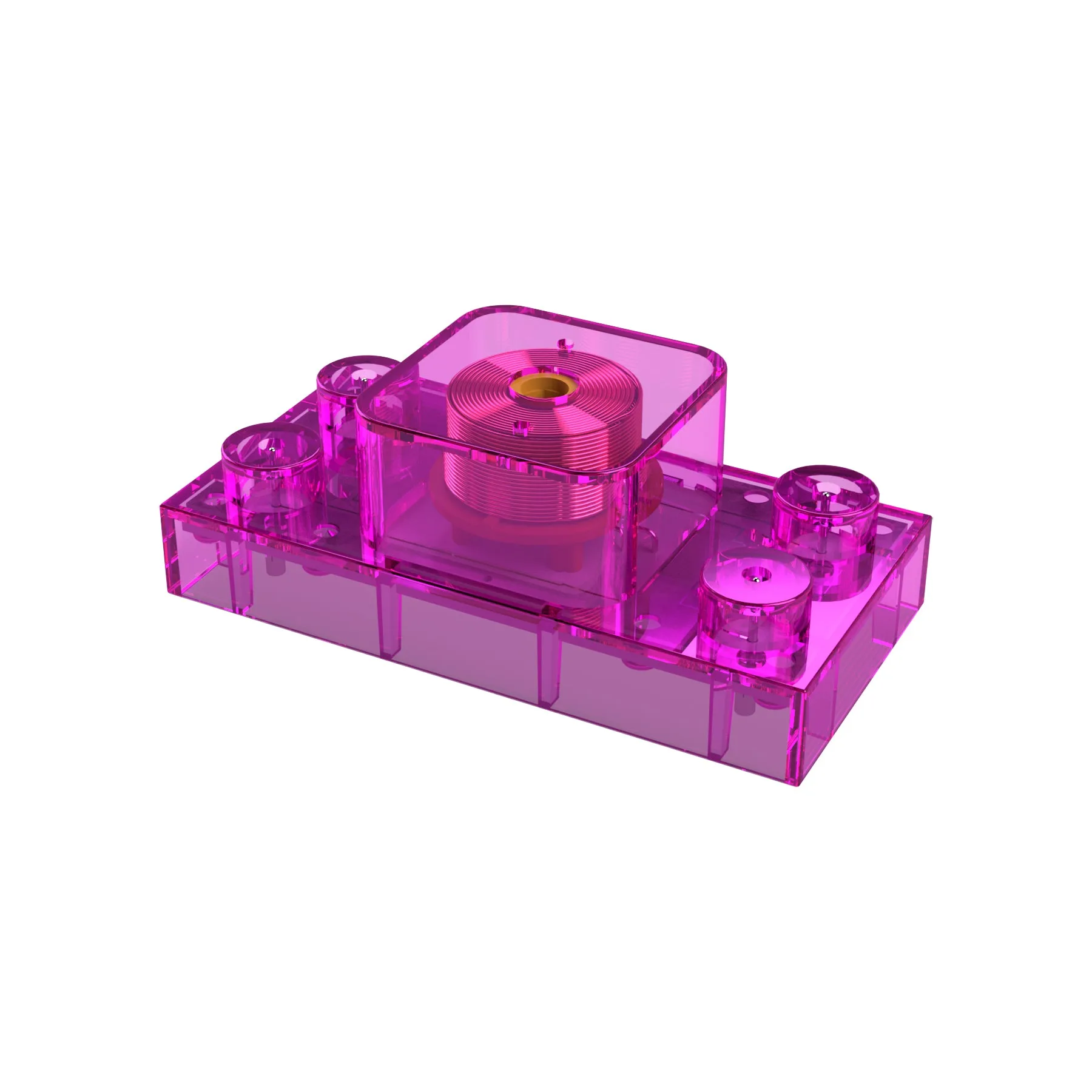
Inductor Block - E-Blox®