Quick answer
Set the Welcome Pod Lounger on a firm, flat surface and use it only for supervised play and tummy time, never for sleep. Check the pod and its disc before each use, and spot-clean the cover according to the care label.
Why supervised use matters with a baby nest
A baby nest like the Welcome Pod is designed to give your newborn a cozy, contained space for waking play and tummy time. It is not a sleep surface, and it should never be used in a crib, bassinet, or bed for overnight sleep. The sides and soft materials that make it comforting can pose a risk if a baby is left unattended or falls asleep in it.
The practical rule is simple: keep the pod on the floor in the same room as you, and stay within arm's reach whenever your baby is in it. If you need to step away, move your baby to a safe sleep space first.
Setting up for tummy time versus playtime
The Welcome Pod works for both playtime and tummy time, but the setup is slightly different. For tummy time, place your baby on their stomach inside the pod with the supportive sides helping them feel secure, and stay close to encourage them. For playtime, lay your baby on their back so they can look around and kick.
Always place the pod on a firm, flat surface such as a carpeted floor or a play mat. Avoid soft surfaces like beds, sofas, or pillows, which can make the pod unstable and increase the risk of suffocation if your baby rolls.
When to stop using the pod
The Welcome Pod is intended for newborns and small infants, and it is not designed for babies who can roll, sit, or pull themselves up. Once your baby starts trying to roll or push up, the pod can become a tipping hazard. At that point, switch to a flat play mat for tummy time and play.
If you are unsure whether your baby has outgrown the pod, watch for signs like rolling attempts, reaching over the sides, or fussing when placed inside. Those are cues to retire it from active use.
Daily setup and care steps
- Place the pod on a firm, flat surface: Set the Welcome Pod on the floor or a firm play mat, away from furniture edges, pets, and older siblings. Common mistake: placing it on a bed or sofa, which is too soft and unstable. Check that the surface does not indent under the pod.
- Inspect the pod and disc before each use: Run your hand around the sides and check the disc for any tears, loose threads, or flattened padding. If you notice damage, stop using the pod until you can replace it. A quick squeeze of the sides catches most padding issues.
- Position your baby correctly for play or tummy time: For tummy time, place your baby on their stomach with their arms forward and stay face-to-face. For playtime, lay them on their back. Never let your baby sleep in the pod. If your baby falls asleep, move them to a crib or bassinet right away.
- Use the disc as intended during supervised play: Follow the included instructions for placing the disc under your baby's head during waking play. Do not add extra pillows, blankets, or toys inside the pod. Keep the pod free of loose bedding at all times.
- Spot-clean the cover after spit-up or spills: Remove the cover if it is removable and wash it according to the care label, using a mild detergent. For quick cleanups, wipe the surface with a damp cloth and let it air-dry completely before use. Never put the pod in a dryer unless the care label explicitly allows it.
- Store the pod flat and dry between uses: Keep the pod in a dry, ventilated spot away from direct sunlight and heat. Avoid folding or stacking heavy items on top, which can misshape the sides. A quick air-out after cleaning prevents musty odors.
Product facts
-
Inglesina Welcome Pod Lounger: The Inglesina Welcome Pod includes a special disc designed to help mitigate flat head syndrome. Use the disc as intended during supervised play to support head shape, but remember it does not replace tummy time or safe sleep practices.
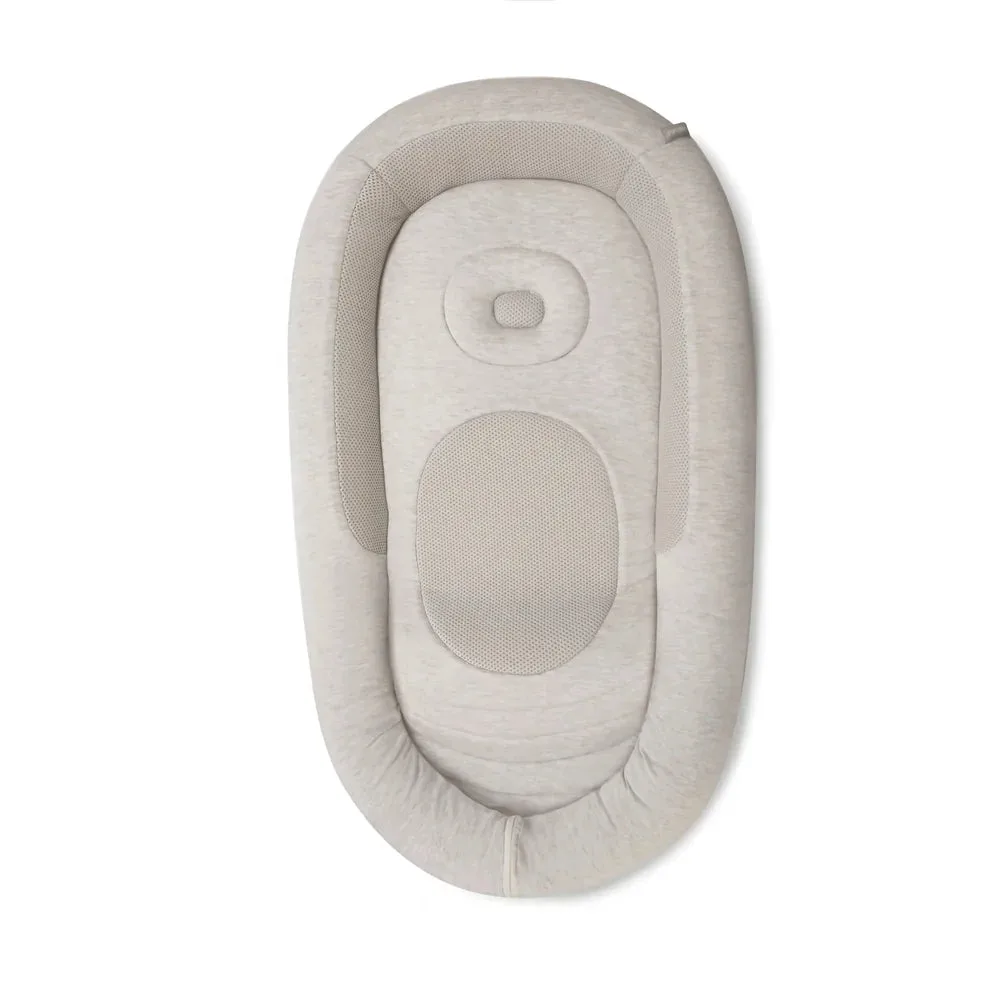
Inglesina Welcome Pod Lounger
-
Inglesina Welcome Pod Lounger: The pod is made with natural, breathable materials and an ergonomic design that supports proper posture. Breathable materials help keep your baby comfortable during waking play, and the ergonomic shape supports a natural position while supervised.