A loose insert usually points to the screw
When a carbide insert shifts, rocks, or pulls away from its seat, the first suspect should be the retaining screw. The insert itself may be fine. The screw that clamps it can loosen, wear, or be the wrong size for the tool. Before you blame the insert or the holder, check the screw.
The fix is not always a new insert. Often it is a fresh retaining screw matched to your specific turning tool. The challenge is identifying the correct screw, because small differences in thread and length matter.
What the M2.5x8 retaining screw fits
The catalog lists this screw as a replacement for the 1779 Boring Bar with 3/8 in. indexable CCMT inserts. It is identified as model 252401-02 and is used with a T-8 Torx wrench. That is a specific fit, not a universal one.
If your turning tool is not the 1779 Boring Bar, do not assume this screw will fit. The catalog note is direct: make sure you get the correct inserts and retaining screws for your indexable turning tools. The chart of indexable inserts shows which inserts and which screw to use with each tool.
Catalog details for the M2.5x8 screw
-
Screw, Insert Retaining, M2.5x8: Replacement screw for 1779 Boring Bar, 3/8" Indexable CCMT Inserts. Model #252401-02. T-8 Torx Wrench. Confirms the intended tool and insert family, and tells you the driver size needed for removal and installation.
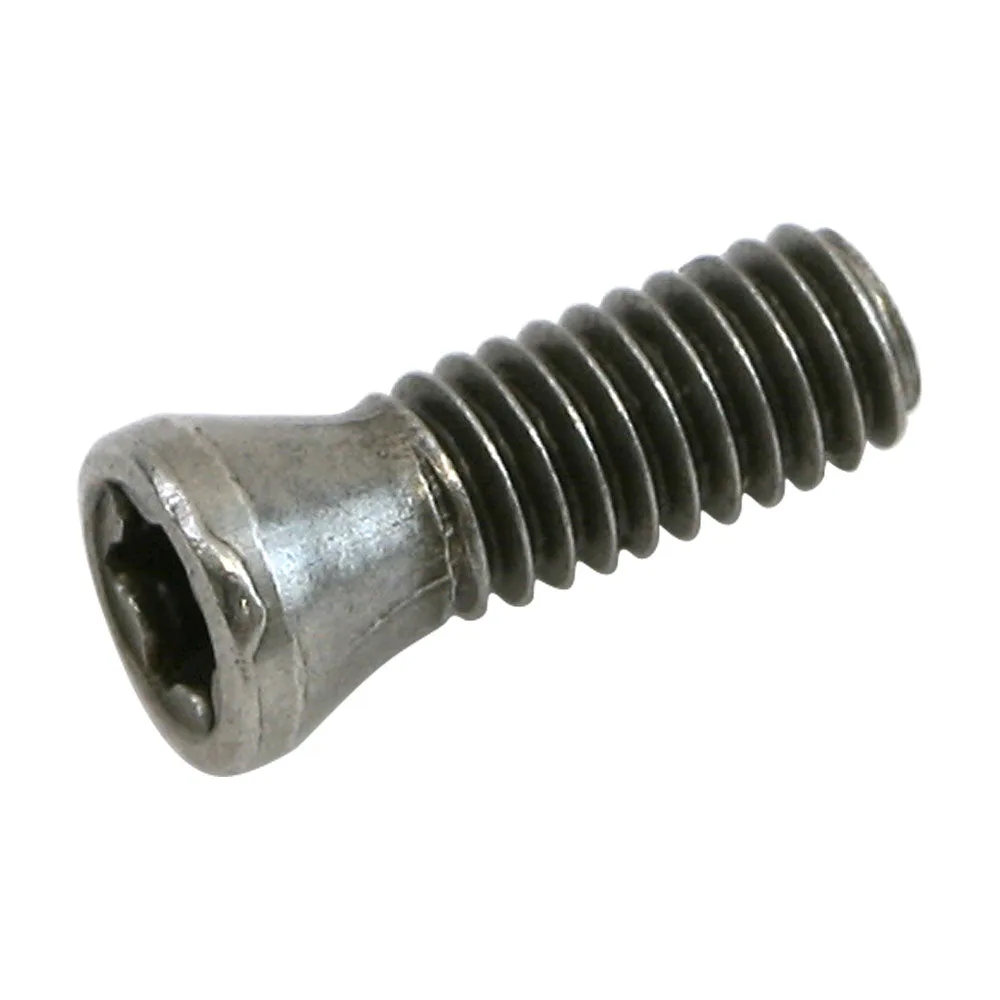
Screw, Insert Retaining, M2.5x8
-
Screw, Insert Retaining, M2.5x8: Make sure you get the correct inserts and retaining screws for your indexable turning tools. The chart of indexable inserts shows which inserts and which screw to use with each tool. Prevents ordering a screw that looks similar but does not match your holder or insert.
How to confirm the right screw before ordering
Use the catalog chart as your primary reference. The steps below help you gather the information you need to use it correctly.
- Identify your turning tool: Find the model number or name of your indexable turning tool. The 1779 Boring Bar is the tool named for this screw.
- Identify the insert: Note the insert type and size. This screw is listed for 3/8 in. indexable CCMT inserts.
- Check the chart: Use the chart of indexable inserts to match your tool and insert to the correct retaining screw.
- Match the screw model: Confirm the screw model number. This one is 252401-02, a M2.5x8 screw.
- Use the right driver: A T-8 Torx wrench is specified for this screw. Using the wrong driver can damage the head.
What the catalog does not tell you about torque
The supplied product information does not include a torque specification or an installation procedure for this screw. That is a real limitation, not an invitation to guess. Insert retaining screws are small, and over-tightening can damage the screw, the insert, or the tool. Under-tightening lets the insert move.
Because no torque value is supplied here, follow the instructions that came with your turning tool or insert holder. If you do not have them, contact the tool manufacturer. Do not rely on a generic torque figure from another tool or another screw size.
Signs the screw, not the insert, is the problem
These symptoms are consistent with a loose or damaged retaining screw. They do not prove the screw is at fault, but they make it worth checking.
- The insert moves when you touch it: A seated insert should not rock or shift. Movement can come from a loose screw or a screw that no longer clamps properly.
- The screw backs out during use: Vibration can loosen a screw that was not fully seated or one that is worn.
- The Torx head is damaged: A stripped T-8 head makes proper tightening impossible and points to replacement.
- The insert sits unevenly: Check that the screw is the correct one for the tool before assuming the insert seat is worn.
When a new screw is the right fix
If your tool is the 1779 Boring Bar and the screw is loose, damaged, or missing, the M2.5x8 retaining screw is the catalog-matched replacement. If your tool is different, use the chart to find the correct screw rather than forcing this one to fit.
A loose turning insert fix starts with correct identification. Get the tool, insert, and screw model right, use the specified T-8 Torx wrench, and follow the manufacturer's tightening guidance. That approach solves the problem without guesswork.