Quick answer
Install a DeatschWerks billet fuel filter regulator by mounting it securely, connecting the inlet and outlet with the correct fittings, and setting the desired fuel pressure.
Choose the right regulator size
DeatschWerks offers two lengths: the 70mm and the 160mm billet fuel filter regulators. The 70mm unit (part DWFFR-X) is compact and works well in tight engine bays, while the 160mm version provides extra length for easier plumbing in larger builds. Both combine a 10-micron filter with a precision regulator, simplifying your fuel system layout.
Installation steps
- Mount the regulator: Secure the billet fuel filter regulator to a sturdy bracket near the fuel rail. Use the mounting holes provided and ensure it is level to prevent air pockets. Check that the bracket can handle the weight and vibration.
- Connect inlet and outlet lines: Attach the fuel supply line to the inlet port (usually marked) and the return line to the outlet. Use the supplied 3/8in fittings or adapters as needed. Tighten fittings by hand plus a quarter turn with a wrench. Avoid over-tightening aluminum fittings—they can strip easily.
- Set the fuel pressure: With the pump running, adjust the regulator's adjustment screw to your target pressure (typically 43-58 psi for most systems). Use a fuel pressure gauge to verify. Make small adjustments and allow the system to stabilize before rechecking.
- Check for leaks: Inspect all connections for fuel leaks. Wipe dry and run the pump; look for drips or wet spots. Tighten any leaking fittings slightly. Never start the engine with a visible leak—fix it first.
Product facts
-
70mm Billet Fuel Filter Regulator 10 Micron with 3/8in Fittings: 70mm billet construction with 10-micron filtration and 3/8in fittings. Compact size fits tight spaces, and the 10-micron filter protects injectors from debris.
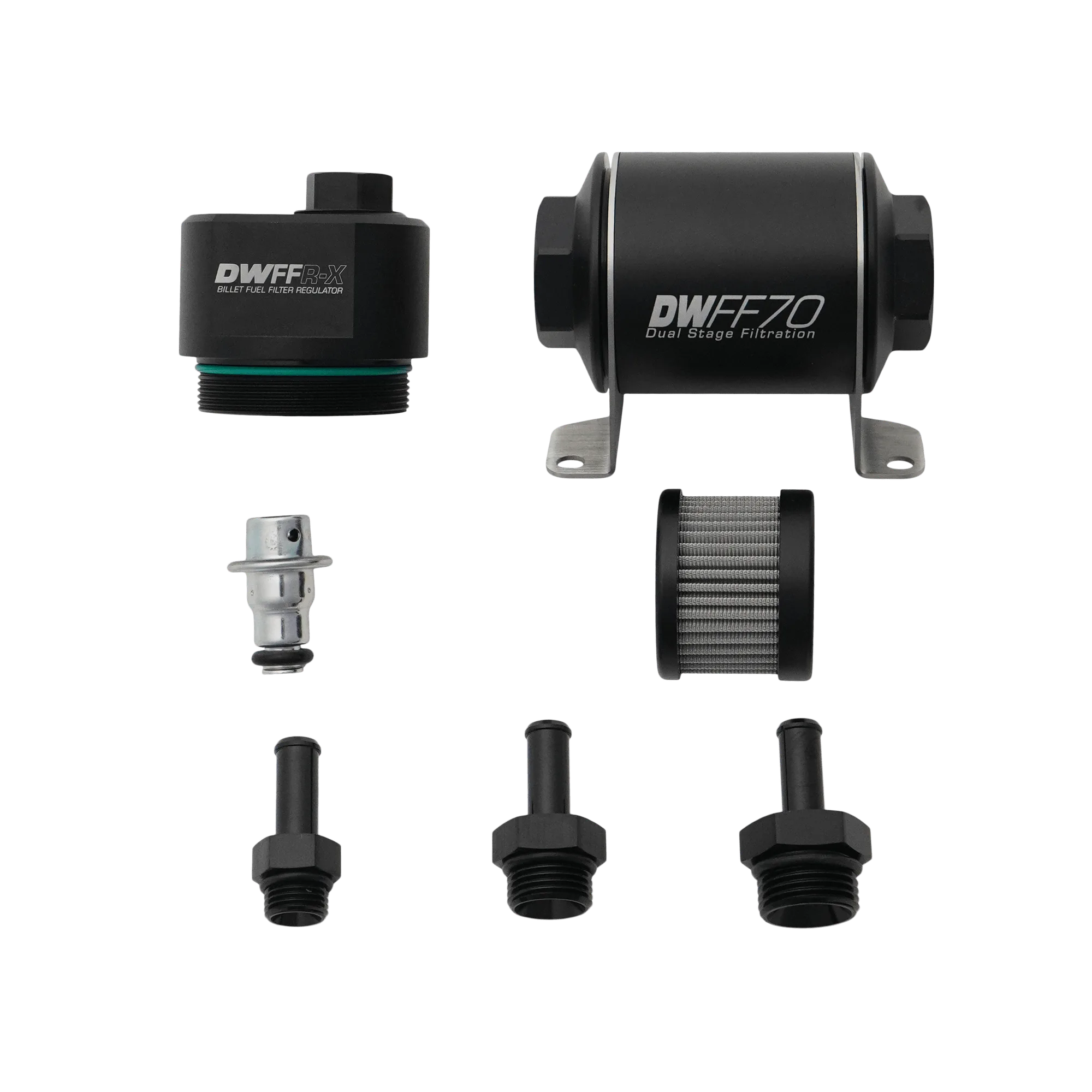
70mm Billet Fuel Filter Regulator 10 Micron with 3/8in Fittings
-
160mm Billet Fuel Filter Regulator 10 Micron: 160mm billet aluminum housing with 10-micron filtration element. Longer body provides more room for hose routing and improves heat dissipation.
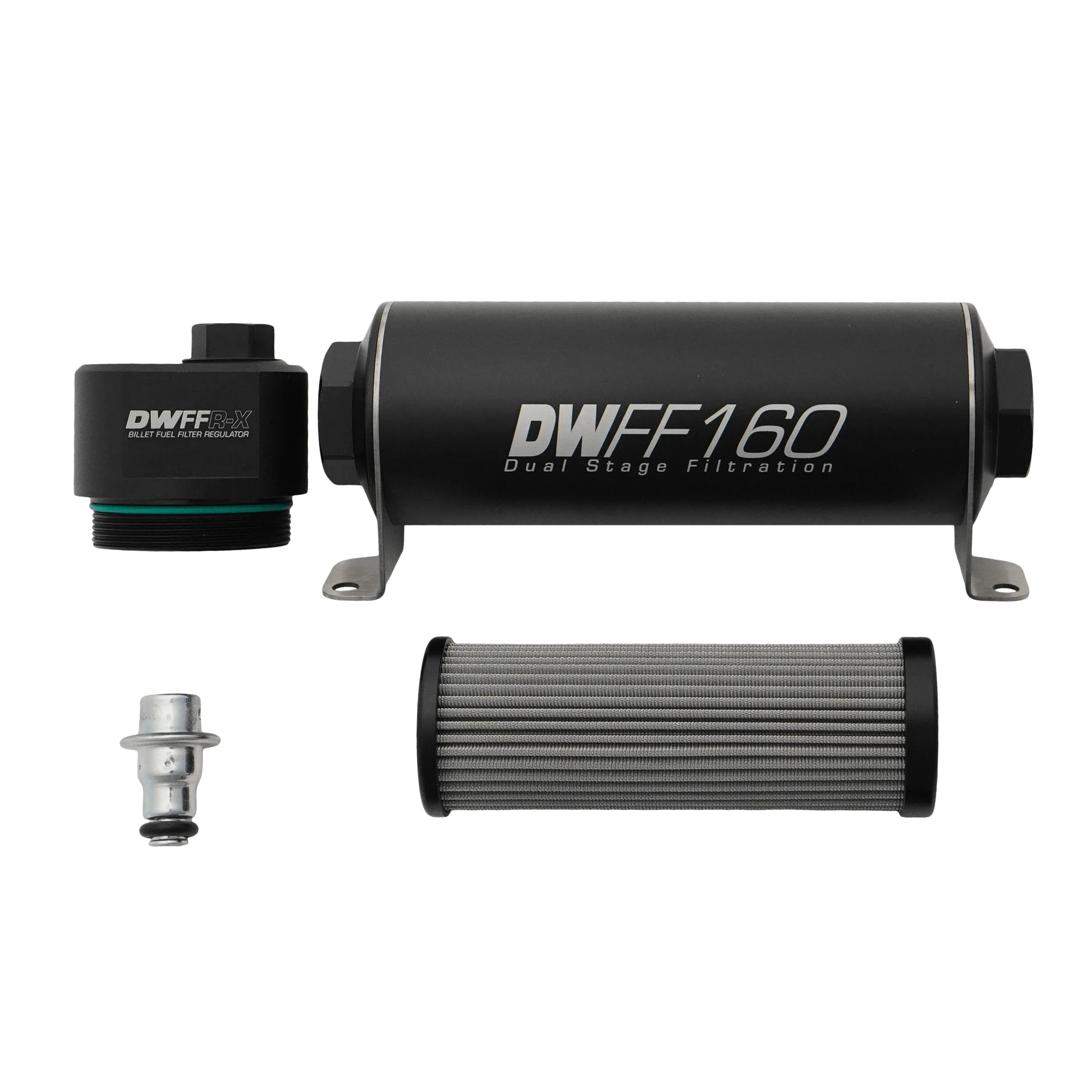
160mm Billet Fuel Filter Regulator 10 Micron