Quick answer
Install French limestone tile in a courtyard by preparing a stable base, planning a staggered layout, and sealing the stone after installation. Use a sample first to confirm the color and texture work in your space.
Why French limestone works for courtyards
French limestone brings a quiet, natural character to outdoor floors. Its tan, unglazed finish blends with both modern and traditional courtyard designs. The stone's natural variation means no two tiles look identical, which adds visual interest without feeling busy.
Because limestone is a porous natural stone, it requires proper sealing and maintenance to resist stains and weathering in an outdoor setting. This guide covers the key steps to ensure a long-lasting installation.
Choosing the right format for your courtyard
Zia Tile offers French limestone in several formats. The 12 x varying lengths option creates a staggered, organic layout that suits irregular courtyard shapes. The French Cobblestone is a larger tile that works for more open spaces where you want fewer grout lines. Both are available as samples so you can assess the look and feel before committing to a full order.
Step-by-step installation guide
- Prepare the base: Excavate to at least 6 inches and fill with compacted gravel or crushed stone. Add a 1-inch layer of coarse sand or stone dust to create a level, stable bed. Slope the base away from any structures for drainage. Check the base for level and slope before laying any tile. Uneven base leads to cracked tiles or water pooling.
- Dry-lay the tile layout: Lay out the tiles without mortar first to plan the pattern. For the 12 x varying lengths, stagger the joints by at least 6 inches. For French Cobblestone, center the largest tiles in high-traffic areas. Mark any cuts needed. Always dry-lay first. It reveals layout issues and avoids wasting material on cuts that don't fit.
- Set the tiles in mortar: Mix a polymer-modified thin-set mortar suitable for natural stone. Apply mortar to the base with a 1/2-inch notched trowel. Press each tile firmly into place, using a rubber mallet to level. Work in small sections to prevent the mortar from skinning over. Use a level and straightedge frequently. A slight dip or bump now will be obvious once the mortar cures.
- Grout the joints: Wait 24-48 hours for the mortar to cure. Use a sanded grout for joints wider than 1/8 inch. Push grout into the joints and wipe excess with a damp sponge. Let the grout firm up before final cleaning to avoid smearing. Test grout color on a spare tile or sample first. Grout can stain porous limestone if not wiped promptly.
- Seal the stone: Apply a penetrating sealer designed for natural stone. Follow the manufacturer's drying times (usually 24 hours). Apply a second coat for outdoor areas. Reapply sealer every 1-2 years depending on weather exposure. Sealing is not optional for outdoor limestone. It prevents stains from dirt, oil, and moisture that can permanently discolor the stone.
French limestone products for your courtyard
-
French Limestone 12 x Varying Lengths: 12-inch width with varying lengths for a staggered layout This format creates a natural, flowing pattern that hides minor layout imperfections and works well in irregular courtyard shapes.
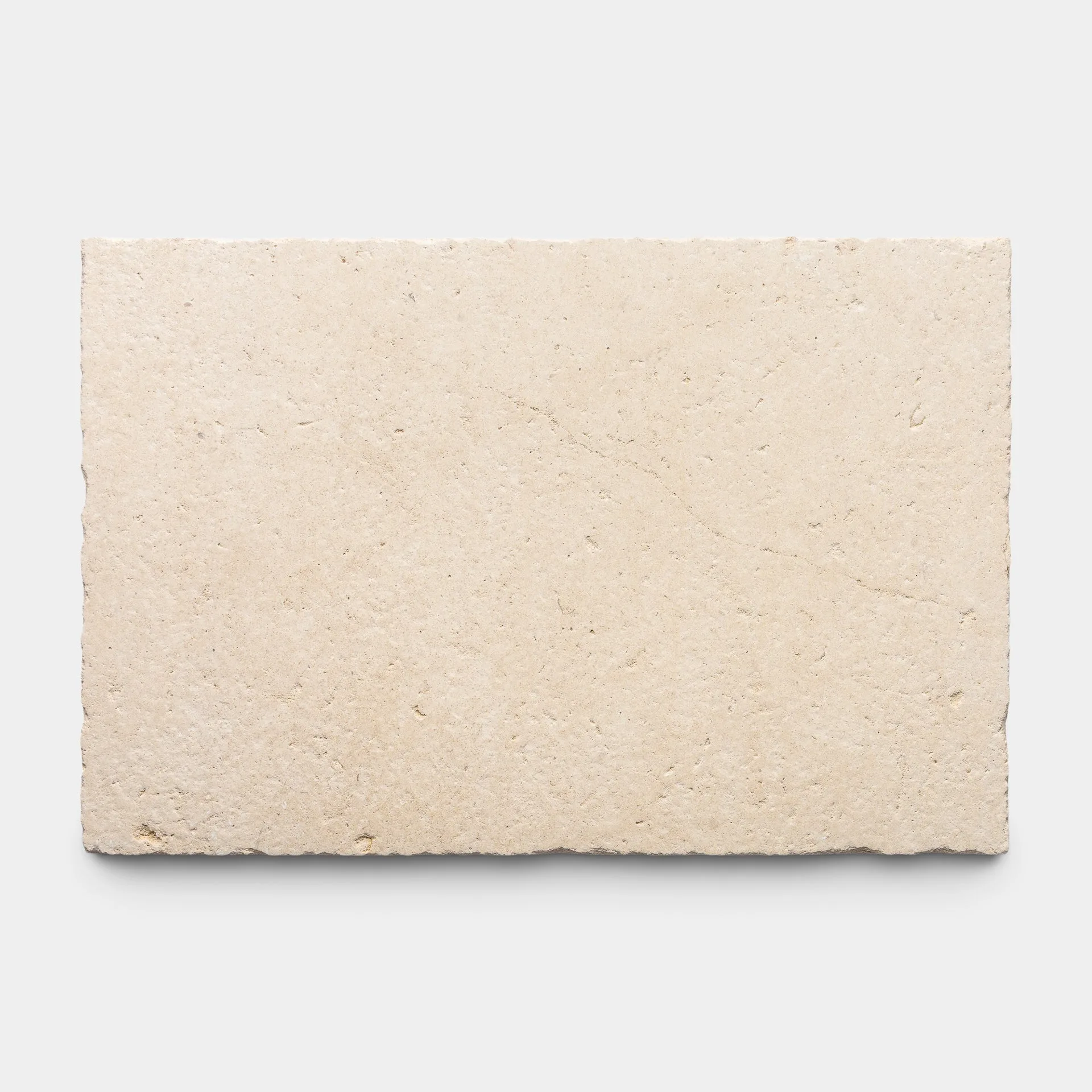
French Limestone 12 x Varying Lengths
-
French Cobblestone: Large limestone tile with a cobblestone character The larger format reduces grout lines, making it a good choice for open courtyards where you want a cleaner, more continuous stone surface.
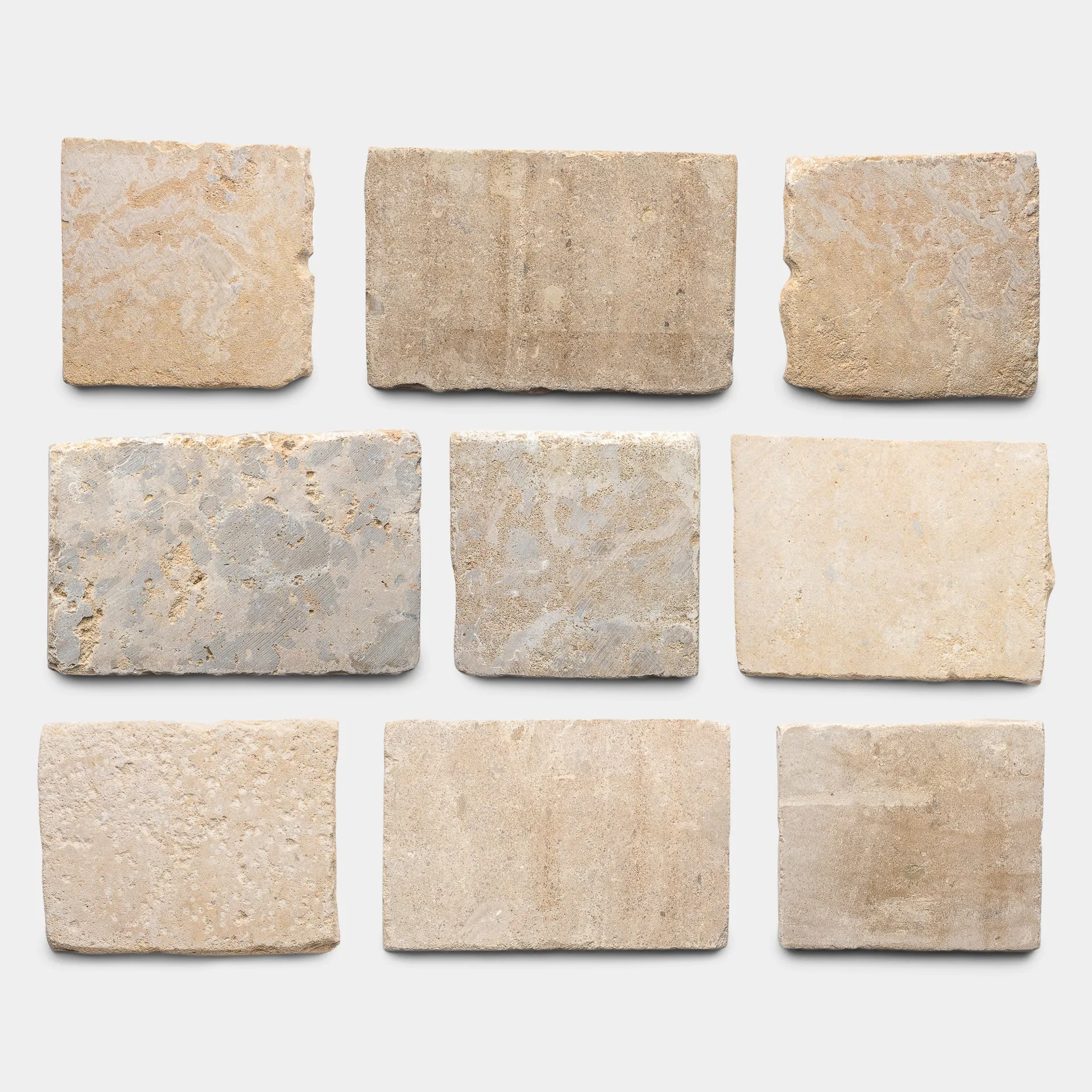
French Cobblestone