Quick Answer
Installing reverse-flow silicone radiator hoses on your FK8 Civic Type R is a straightforward upgrade that improves heat dissipation. Follow these steps to replace the OEM rubber hoses without causing leaks or damaging the new silicone parts.
Why Upgrade to Reverse-Flow Silicone Hoses?
The FK8 Civic Type R runs hot from the factory, especially under track use. OEM rubber hoses soften over time and can swell under high heat, reducing coolant flow. Reverse-flow silicone hoses are designed to align the radiator's thermal gradient more effectively, helping dissipate heat even in demanding conditions. They also handle underhood temperatures up to 100°F higher than standard rubber, making them a durable long-term upgrade.
One trade-off: silicone hoses are less forgiving of overtightened clamps. Use constant-tension or spring-style clamps rather than worm-gear clamps to avoid cutting into the silicone. Also, the reverse-flow design is specific to the FK8's cooling layout, so double-check that the hose kit is meant for your chassis.
Installation Steps
- Drain the Coolant: Place a drain pan under the radiator petcock and open it. Remove the radiator cap to allow full drainage. Dispose of old coolant properly. Cold engine only—hot coolant can cause burns.
- Remove OEM Hoses: Loosen the hose clamps using a screwdriver or socket. Twist each hose gently to break the seal before pulling it off. Inspect the hose barbs for corrosion or damage. Use a pick tool to loosen stuck hoses—never pull by the radiator neck.
- Transfer Clamps to New Hoses: Slide the new constant-tension clamps onto the silicone hoses before installation. Position them just past the bead on the barb fitting. Do not tighten yet. Overtightening at this stage can distort the hose and cause leaks later.
- Install Reverse-Flow Hoses: Match the hose orientation to the reverse-flow markings (usually an arrow or label). Push each hose fully onto the barb until it seats against the flange. Ensure no twists or kinks. A silicone-safe lubricant (water or silicone grease) helps the hose slide on without tearing.
- Tighten Clamps Evenly: Position each clamp 3–5 mm from the end of the hose. Tighten to just snug—silicone compresses easily. Over-tightening causes extrusion and leaks. Use a torque wrench if available: aim for 2–3 Nm (18–26 in-lb).
- Refill and Bleed the Cooling System: Refill with the correct coolant mixture (typically 50/50 ethylene glycol and distilled water). Run the engine with the heater on full hot and the radiator cap off until the thermostat opens and bubbles stop. Check for leaks at every connection after the first heat cycle; re-tighten if needed.
Product Facts
-
Super-Cooler, Reverse-Flow, Silicone Radiator Hoses for the FK8 Civic Type R: Polyester-reinforced silicone construction can handle up to 100°F higher underhood temps than OEM rubber hoses. This means the hoses won't degrade or swell as quickly in high-heat conditions, maintaining consistent coolant flow over time.
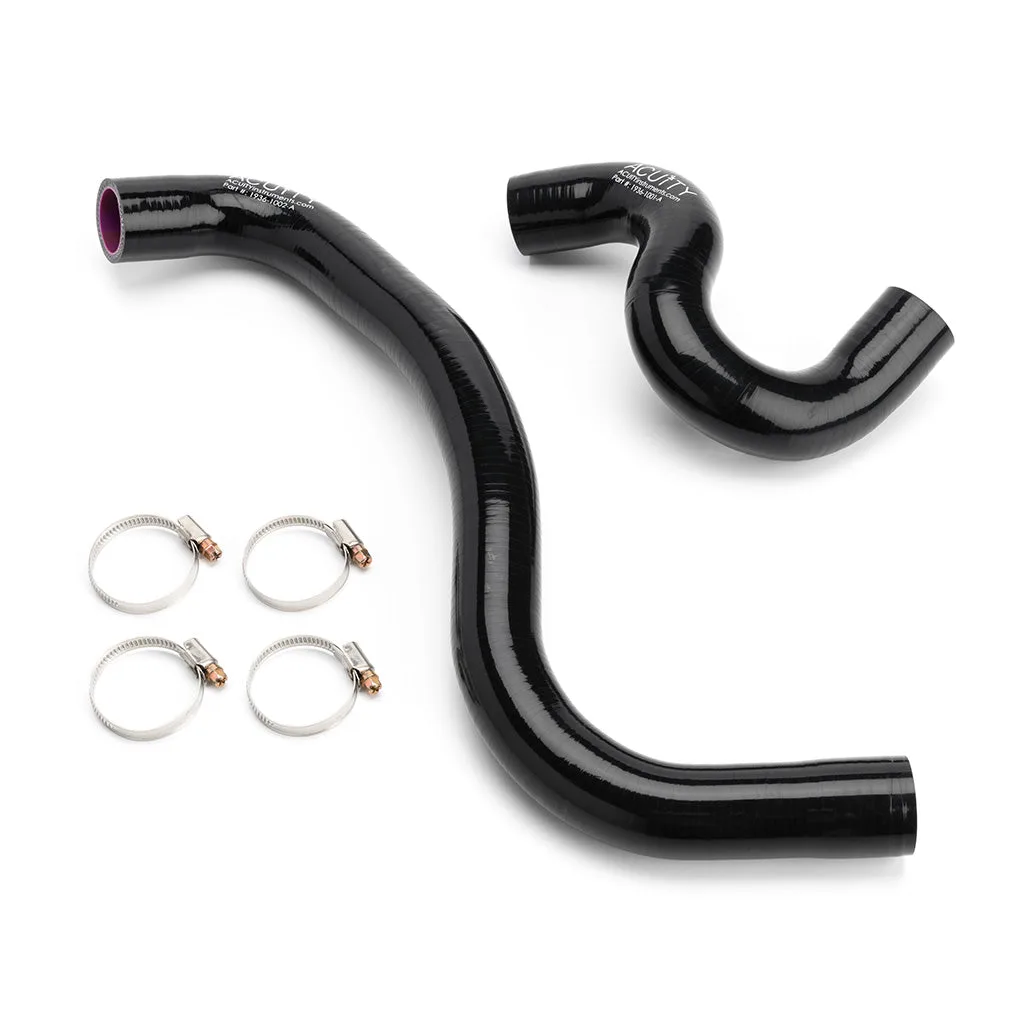
Super-Cooler, Reverse-Flow, Silicone Radiator Hoses for the FK8 Civic Type R
-
Super-Cooler, Reverse-Flow, Silicone Radiator Hoses for the FK8 Civic Type R: Reverse-flow design aligns radiator thermal gradient more ideally to help dissipate more heat in demanding conditions. It helps the radiator shed heat more efficiently, which can lower water temps by up to an additional 4.5°F on cars already equipped with other cooling upgrades.