What the Insulated Canvas Outfitter Jacket Is Built For
The Insulated Canvas Outfitter Jacket is the cold-weather version of Filson’s original Canvas Outfitter Jacket, a design the catalog describes as a customer favorite for protection against brush, thorns, and flying woodchips. That original utility carries over here, with a tightly woven canvas shell lined in warm flannel and quick-dry polyester insulation in the body. If you need a cold weather work jacket that can handle rough outdoor tasks without feeling like a dedicated mountaineering shell, this is the layer to consider.
The jacket is not a fully waterproof rain shell, and the supplied information does not include a waterproof rating. It is also not a lightweight packable piece. Instead, it is a sturdy canvas outer layer with insulation and a flannel lining, intended for cold days when you are moving between tasks, not for extreme wet weather or high-output aerobic activity. Understanding that distinction is the first step in deciding whether it fits your winter work.
Key Construction Details That Affect Warmth and Layering
-
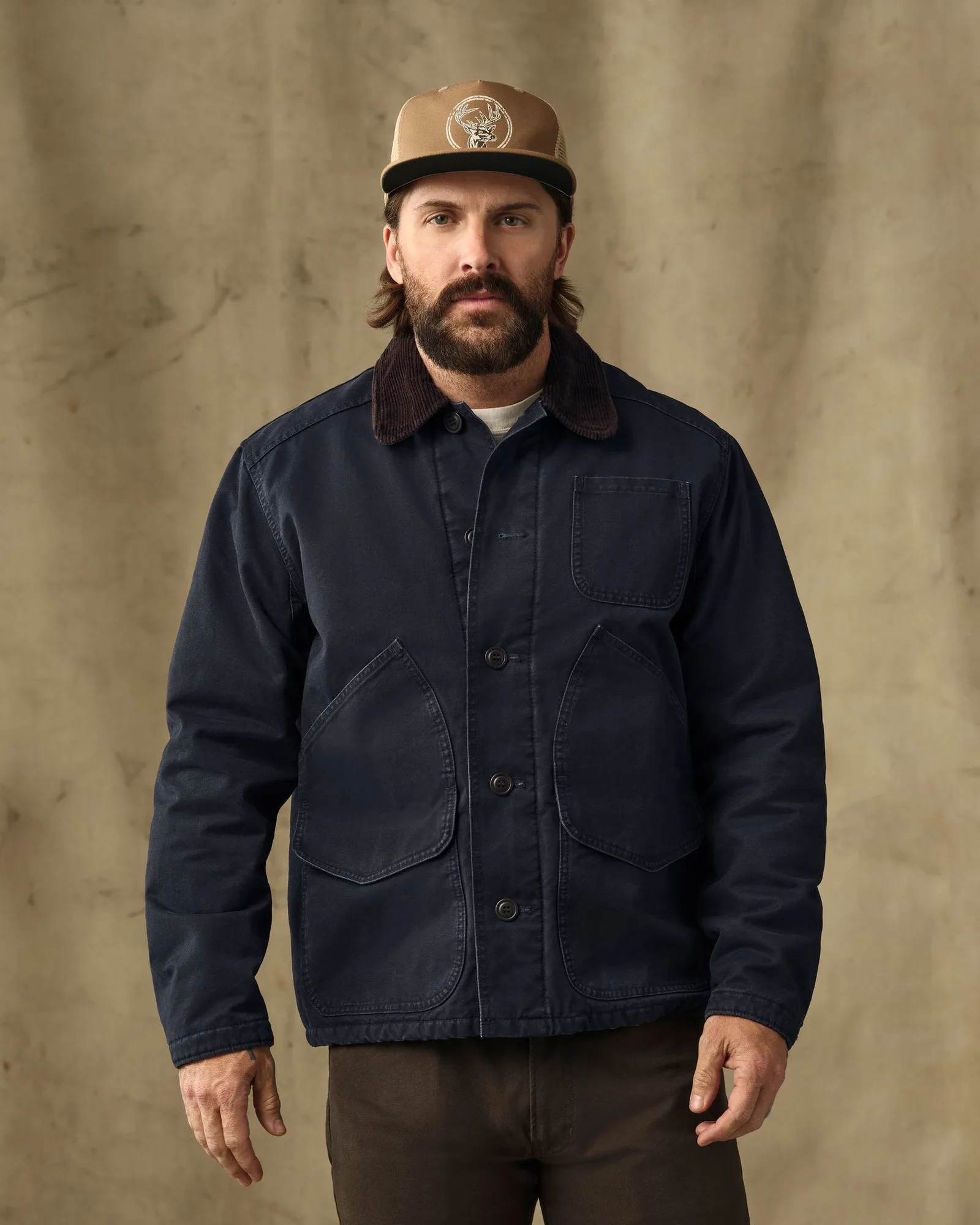
Insulated Canvas Outfitter Jacket: The tightly woven canvas is lined with warm flannel and quick-dry polyester insulation in the body. This combination gives the jacket its cold-weather warmth without relying on down or synthetic loft that can clump when damp. The flannel adds next-to-skin comfort, while the polyester insulation is designed to dry quickly if you work up a sweat.
Insulated Canvas Outfitter Jacket
-
Insulated Canvas Outfitter Jacket: Polyester sleeve linings slide easily over layers, and the corduroy collar delivers warmth when turned up against cold wind. Sleeve linings that glide mean you can wear a midlayer underneath without the jacket bunching at the elbows. The corduroy collar is a small but useful detail when you need extra neck warmth on windy days.
-
Insulated Canvas Outfitter Jacket: The hand pockets double as flaps for the cargo pockets, a design taken from our vintage field coats. This vintage-inspired pocket arrangement gives you secure storage for small tools or gloves, and the flap design helps keep debris out of the cargo pockets.
-
Insulated Canvas Outfitter Jacket: Buttons secure the front closure and adjustable cuffs. Button closures are easy to repair and less likely to snag than zippers, while adjustable cuffs let you seal out cold air or loosen them when you need ventilation.
How to Layer Under the Insulated Canvas Outfitter Jacket
Because the jacket already has flannel lining and body insulation, you do not need a heavy base layer underneath. Start with a lightweight or midweight long-sleeve shirt, then add a thin fleece or wool sweater if temperatures drop. The polyester sleeve linings are designed to slide over layers, so you can add a midlayer without feeling restricted. Avoid bulky hoodies or thick knits that can compress the insulation and reduce warmth.
For active cold-weather work, such as splitting wood or clearing brush, you may find that a single base layer plus the jacket is enough once you get moving. The button front allows you to open the jacket quickly if you overheat, and the adjustable cuffs let you vent your wrists. If you plan to wear the jacket over a heavy sweater, consider sizing up—but note that the supplied information does not include a size chart or fit notes, so check the return policy before ordering.
Sizing and Fit: What to Check Before You Buy
The Insulated Canvas Outfitter Jacket is available in Dark Navy, Dark Olive, and Peat, with sizes ranging from XS to 3XL, though not every color is offered in every size. The supplied information does not include measurements, a size chart, or specific fit guidance (such as whether the jacket runs true to size or roomy). That means you should treat sizing as a decision that requires more information than this article can provide.
- Check available size and color combinations: Dark Navy comes in XS, M, L, XL, and 2XL. Dark Olive comes in XS, L, XL, 2XL, and 3XL. Peat comes in XS and L. If you need a specific color and size, confirm availability before you commit.
- Consider your layering plan: If you intend to wear the jacket over a thick sweater or multiple layers, you may want a roomier fit. If you will wear it over a base layer only, a closer fit may be fine. Without a size chart, use the return policy as your safety net.
- Note what the records do not confirm: The supplied information does not include a temperature rating, waterproof rating, or care instructions. Do not assume the jacket is waterproof or machine-washable without checking the product page or contacting the brand.
How This Jacket Compares to Other Cold-Weather Options
Compared with a dedicated rain shell, the Insulated Canvas Outfitter Jacket trades waterproofness for durability and warmth. The canvas shell is designed to resist brush and thorns, which makes it a better choice for tasks like clearing trails or working around wood, where a lightweight nylon shell might tear. Compared with a puffy down jacket, it is heavier and less packable, but the canvas and flannel construction is less likely to snag on branches and more likely to survive abrasion.
If you already own a Filson Tin Cloth Insulated Vest or a Mackinaw Wool Jacket, the Outfitter Jacket can serve as your outer layer on the coldest, roughest days. It is not a substitute for a waterproof layer in sustained rain, and it is not a lightweight piece for high-output activities where breathability is the priority. Think of it as a durable, insulated work jacket for cold, dry conditions.
Care and Longevity: What the Supplied Information Covers
The supplied product record does not include care instructions, so this guide cannot tell you how to wash or treat the jacket. Filson’s product page or customer service should be your source for cleaning and re-proofing guidance. What the record does show is a construction designed for durability: tightly woven canvas, button closures, and reinforced pocket details. With proper care, those materials are intended to hold up to years of outdoor work, but any specific care steps—such as whether to machine wash or spot clean—are not confirmed here.