Quick answer
For light scratches, swirl marks, and water spots that haven’t broken through the clear coat, reach for InSynchro Scratch & Swirl Remover and work it by hand with a soft foam applicator. If your fingernail catches the scratch or the defect is deep, stop and choose a compound or professional repair instead.
Why light defects respond to a hand polish
Swirl marks and light scratches are usually shallow clear-coat damage. A hand polish with diminishing abrasives can smooth those peaks without removing excessive material. InSynchro’s adaptive micro-abrasives are designed to break down as you work, so you get correction and gloss in one step rather than needing a separate finishing polish.
This is also where the polish vs. compound question matters. Compounds cut faster and are best for deeper defects or machine use; a one-step polish like InSynchro is the safer starting point when you’re working by hand and want to preserve clear coat.
When hand polishing is the wrong tool
If the scratch is deep enough to catch a fingernail, or if you can see primer or bare metal, hand polishing won’t fix it. Those defects need touch-up paint or a body shop. Similarly, large areas of heavy oxidation or severe swirling may require a machine polisher and a more aggressive compound to see real improvement.
Work in the shade on a cool panel, and stop if the paint starts to feel hot or looks dull after several passes. InSynchro is formulated for light to medium defects; pushing it beyond that risks wasting product and effort without correcting the damage.
Diagnose your defect before you polish
- Symptom: fine spider-web scratches in circles: These are typical swirl marks caused by washing or drying with contaminated towels. They sit in the clear coat and usually respond well to a hand polish. Apply a small amount of InSynchro Scratch & Swirl Remover to a foam applicator and work in straight lines over a 1×1-foot section, then buff off with a clean microfiber towel. If the swirls fade after two passes, stop and protect the paint with wax or sealant.
- Symptom: isolated light scratch that doesn’t catch a fingernail: This is a surface scratch in the clear coat. Use a foam applicator and moderate pressure, working across the scratch rather than along it. Check your progress after each pass with a bright light. InSynchro’s diminishing abrasives let you repeat safely without jumping to a harsh compound. If the scratch remains after three focused passes, it may be too deep for a hand polish—stop and consider touch-up paint.
- Symptom: scratch catches your fingernail or shows a different color: This indicates damage through the clear coat or color layer. Hand polishing with any product will not fix it and can make the edges look worse. Clean the area and apply touch-up paint or consult a professional. Do not polish a scratch that catches your nail; choose touch-up or professional repair instead.
- Symptom: water spots that don’t wash off: Mineral deposits can etch slightly into the clear coat. A hand polish with InSynchro can remove light etching. Use a fresh applicator, work the product until it turns clear, and buff off promptly. For stubborn spots, a second pass may help, but avoid overworking one spot. If spots remain after two passes, they may be etched too deep for a hand polish—stop and seek professional advice.
Product facts
-
InSynchro Scratch & Swirl Remover: One-stop formula corrects light to medium scratches, swirls, water spots, and other paint defects while restoring clarity, gloss, and depth. You can address several common cosmetic issues in a single hand-polishing step instead of buying multiple products.
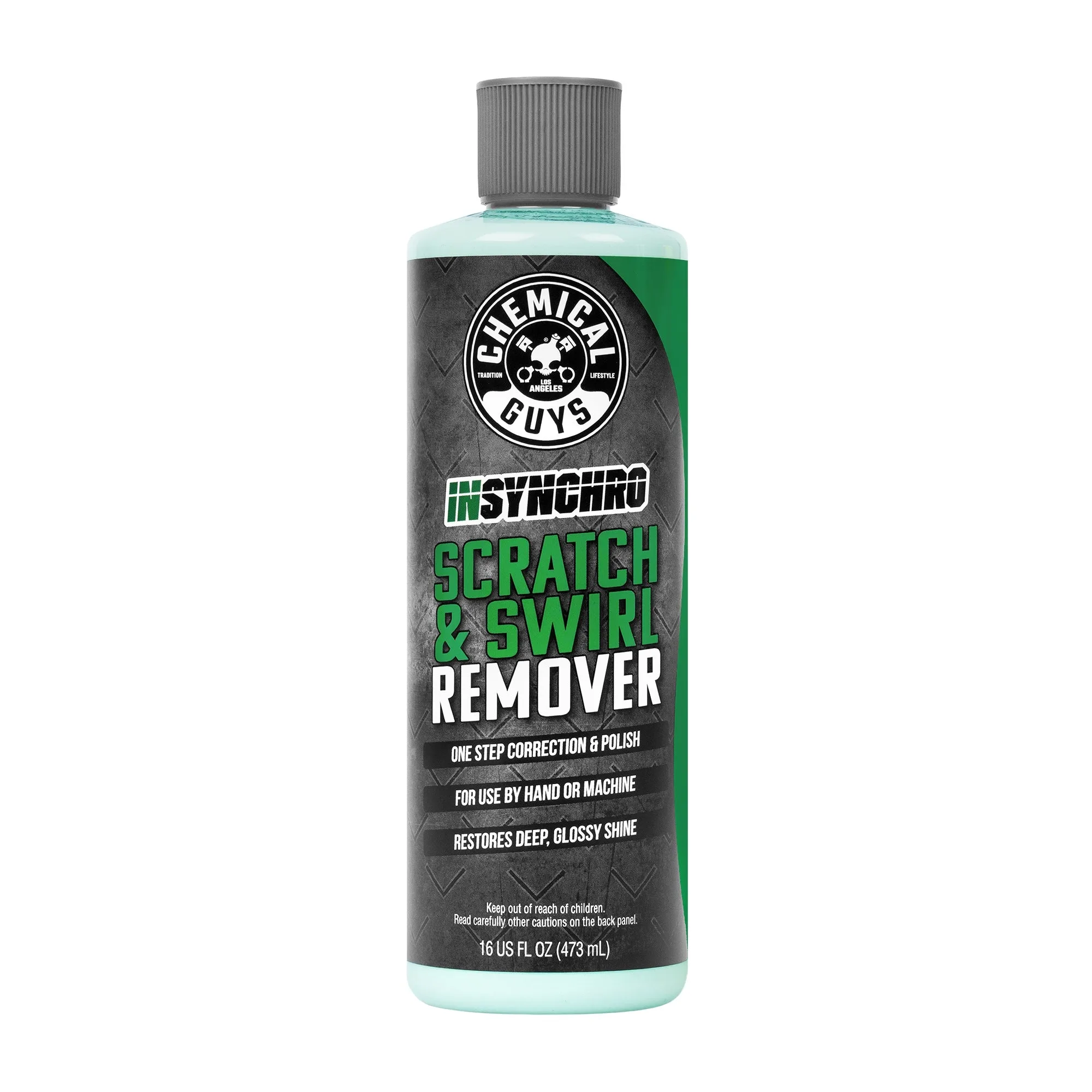
InSynchro Scratch & Swirl Remover
-
InSynchro Scratch & Swirl Remover: Adaptive micro-abrasives diminish in size as you work, delivering correction and a glossy finish in one easy-to-use product. This reduces the risk of over-cutting by hand and saves the extra step of a separate finishing polish.