Quick answer
Stop offering the pendant directly. Instead, wear it yourself for a few days, keep it visible and available, and let your child discover it on their own terms. If they still refuse after two weeks of low-pressure exposure, the issue may be the pendant's shape, texture, or clasp rather than the habit itself. Try a different style or talk to your child's occupational therapist before pushing further.
You bought a chew pendant, showed it to your child, and watched them toss it aside like a wet sock. If your child won't use a chew pendant, you're not alone. Many kids reject oral sensory tools at first, and that rejection rarely means the tool is wrong for them. It usually means the introduction was too direct, too fast, or aimed at the wrong moment.
The trick is to treat the pendant like a background object, not a prescription. In this guide, you'll learn how to read the refusal, adjust your approach, and know when to switch to a different product or ask for professional input.
Why kids refuse chew pendants
Children rarely reject a chew pendant because they don't need oral input. More often, the pendant feels unfamiliar, the texture is wrong, or it arrived during a calm moment when they didn't feel the need to chew. A child who chews their sleeves during math class may have no interest in a pendant at bedtime. The tool has to match the moment.
Pressure also backfires. If you say 'chew this, it will help you,' you turn a sensory tool into a demand. Many kids, especially those with sensory processing differences, resist anything that feels like an instruction. The pendant becomes another thing to comply with rather than a resource they control.
- Watch when your child actually chews on non-food items—that's your window to introduce the pendant.
- Avoid saying 'this will calm you down.' Let the pendant speak for itself.
Step 1: Wear it yourself first
Before you offer the pendant to your child, wear it around the house for a few days. Let them see you fidget with it, chew on it if you're comfortable, and treat it as an ordinary object. This is called modelling, and it removes the pressure of a direct offer. Your child gets to observe without being asked to participate.
If you're using a necklace like the Princess & the Pea Necklace, the colourful silicone beads make it look like jewellery rather than a medical device. That visual cue matters. A pendant that looks like a fun accessory is far less threatening than one that looks like a therapy tool.
- Wear the pendant during calm, neutral activities like reading or watching TV.
- Don't announce it. Just let it be part of your outfit.
Step 2: Leave it within reach, not in hand
After a few days of wearing it, leave the pendant on a table or couch cushion near where your child plays. Don't hand it to them. If they pick it up, great. If they ignore it, that's fine too. The goal is to shift the pendant from 'something Mom wants me to use' to 'something that just exists here.'
You can also try wearing it loosely around your neck while sitting close to your child during a story or a favourite show. If they reach for it, let them explore. If they chew on it, don't celebrate or comment. Neutrality keeps the interaction low-stakes.
- Rotate the pendant's location every few days so it doesn't become invisible background clutter.
- If your child has a favourite colour, choose that option when you order.
Step 3: Match the pendant to the chewing style
Not all chew pendants feel the same in the mouth. Some kids need a firm, smooth surface; others prefer a softer, textured shape. If your child bites down hard, a pendant with a thicker profile may hold up better. If they prefer to gnaw on the edges, a flatter shape might work. The Dino Pendant, for example, has a distinct shape that some kids find easier to hold in the back molars than a round bead.
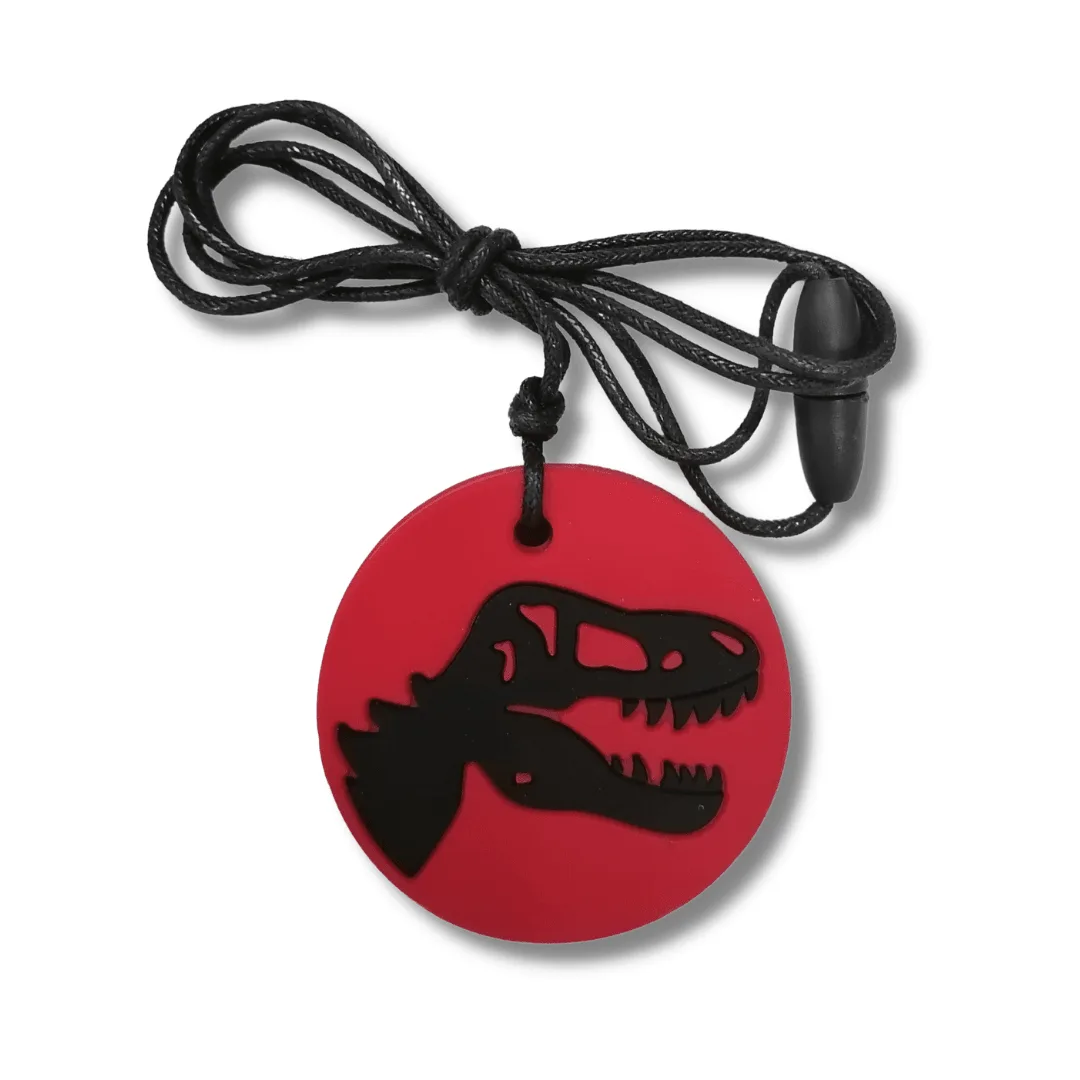
Dino Pendant
Pay attention to how your child chews on other items. Do they favour shirt collars, pencil tops, or their own fingers? That tells you whether they're seeking deep pressure or light oral stimulation. A pendant that matches that sensation is more likely to be accepted.
- Offer two different shapes at once and let your child choose.
- If they reject both, wait a week before trying again.
Step 4: Use the pendant during high-need moments only
Once your child has shown any interest, bring the pendant out during a moment when they're already seeking oral input—like during a car ride, a transition, or a screen-time wind-down. Don't offer it during a meltdown; at that point, the thinking brain is offline and the pendant will likely become a projectile.
The Rainbow Pendant is designed with a safety clasp that separates easily when gently pulled, which means you don't have to worry about a tug-of-war if your child grabs and yanks. That safety feature also makes it easier to introduce because you're not constantly saying 'be careful.'
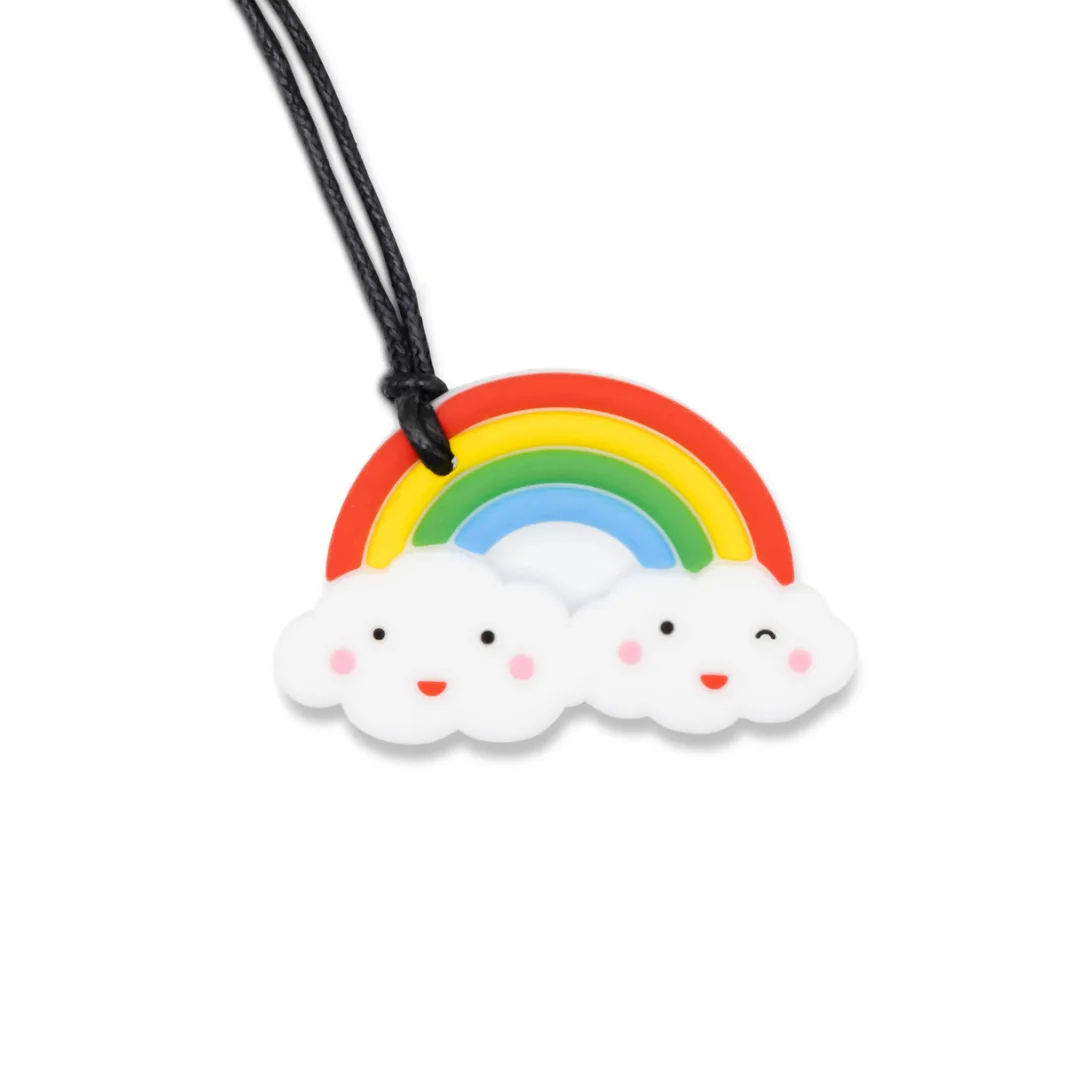
Rainbow Pendant
- Keep the pendant in a dedicated spot so it's easy to grab when the moment is right.
- If your child throws the pendant, put it away without comment and try again another day.
When to stop and choose another option
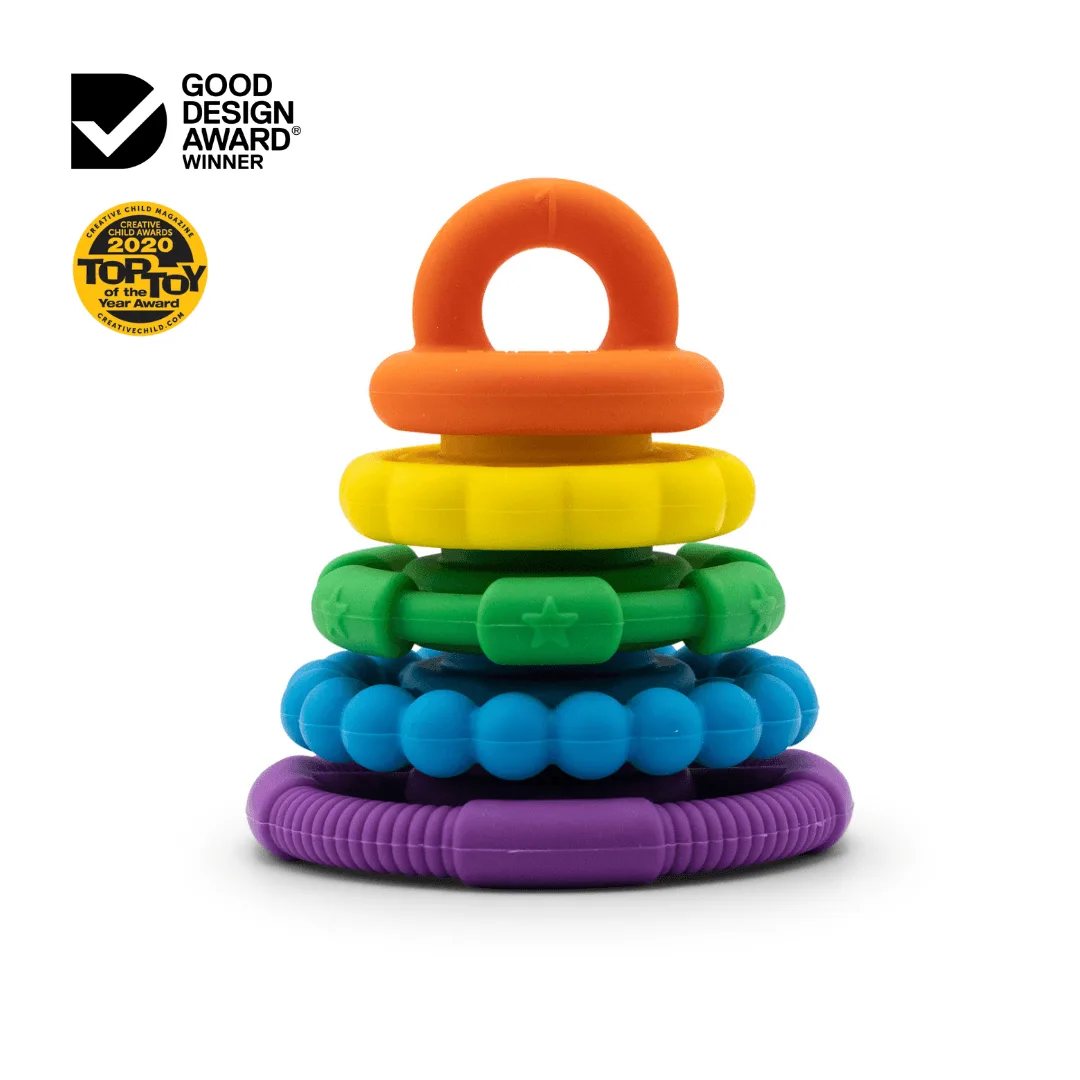
If your child consistently refuses the pendant for more than two weeks despite low-pressure exposure, stop. Continuing to offer it can create a negative association that's hard to undo. At that point, consider whether a different oral sensory tool—like a teether or a chewy tube—might be a better fit. The Rainbow Stacker and Teether Toy, for instance, offers a different shape and texture that some kids prefer over a necklace.
Also pay attention to the clasp. Some children are sensitive to things around their neck. If your child pulls at the necklace or complains about the fit, a pendant may not be the right format. A handheld sensory tool or a chewy bracelet could meet the same need without the neck sensation.
- If refusal continues, ask your child's occupational therapist for a sensory profile review.
- Never force a pendant into your child's mouth or around their neck.
Diagnosis: why your child won't use the chew pendant
- Symptom: Your child ignores the pendant completely.: They look at it, maybe touch it once, and never put it in their mouth. This usually means the pendant hasn't been linked to a moment of need. They don't yet know what it's for or when to use it. Wear it yourself for a few days and leave it in their play space without comment. Reassess in one week.
- Symptom: Your child chews on it once, then throws it.: The texture or shape may be wrong. A single chew tells you they're willing, but the sensation didn't meet their need. They might prefer a firmer, softer, or differently shaped pendant. Try a different style, like a Dino Pendant or Rainbow Pendant, and offer it only during high-need moments.
- Symptom: Your child refuses anything around their neck.: They pull at the necklace, complain about the fit, or become distressed when it's placed over their head. This is a sign that the necklace format itself is the barrier, not the chewing. Switch to a handheld sensory tool or a teether. A pendant is not the right fit for every child.
Product details that matter for reluctant kids
- Princess & the Pea Necklace: Comprised of silicone beads of different colours, this necklace doubles as a mobile sensory tool. Each bead is made from food-grade silicone, safe for kids to chew on and redirect their attention from chewing fingers, nails, hair, pencils etc. The bead format offers multiple chewing points and a jewellery-like look that can feel less clinical, which helps with kids who resist anything that seems like a therapy tool.
- Rainbow Pendant: Features a BPA-free, 100% non-toxic food-grade silicone pendant on a black necklace with a custom-designed safety clasp that separates easily when gently pulled. The safety clasp reduces the risk of neck strain if a child tugs or pulls, making it a safer choice for kids who are rough with accessories or anxious about things around their neck.
- Dino Pendant: The silicone Dino Pendant is available in a range of favourite colours and is recommended by Occupational Therapists as a tool your child can use independently to develop effective control. The dinosaur shape gives kids a clear grip and a fun identity, which can make the pendant feel like a toy or accessory rather than a sensory intervention.
Introducing a chew pendant works best when you remove the pressure and let your child lead. Wear it yourself, leave it within reach, and match the shape to their chewing style. If refusal continues after two weeks of gentle exposure, stop and consider a different oral sensory tool or ask your child's occupational therapist for guidance. The right tool is the one your child actually uses.