Why iodine drops myths spread so easily
Iodine sits in an awkward spot: it is a nutrient many people have heard of but few can describe precisely. That gap invites confident-sounding claims about daily iodine intake, liquid iodine supplements, and iodine drops dosage. Some claims are reasonable; others outrun the evidence.
This article checks a handful of common iodine drops myths against what the supplied NutraChamps Iodine Drops record actually says. Where the record is silent, that is a limit on what this article can confirm, not proof that a feature is missing or that a claim is false.
Myths worth checking before you buy
Each myth below is paired with what the available product information supports and what it leaves to the label or a professional.
- Myth: everyone needs an iodine supplement: The record says iodine is not produced by the body and that a supplement is essential for many people who do not get enough in their diet. That is not the same as saying everyone needs one. Whether you fall into that group is a question for your diet and your clinician, not a blog post.
- Myth: more daily iodine intake is always better: The record does not supply a dose, an upper limit, or a safety threshold. It describes a couple of flavorless drops each day, but that is product copy, not a personal prescription. Treat any specific milligram figure you see elsewhere as unverified until it matches your label or your clinician's advice.
- Myth: liquid iodine supplements are automatically better absorbed: The record confirms a liquid drop format and flavorless drops. It does not compare absorption against tablets or make any bioavailability claim. The format may suit people who dislike swallowing pills, but that is a preference point, not a proven superiority claim.
- Myth: iodine drops dosage is the same for everyone: No universal dose appears in the supplied record. The label on your bottle is the document that sets the serving, and a professional can help you interpret it against your diet and health history.
- Myth: a supplement fixes deficiency symptoms on its own: The record mentions that iodine deficiencies can lead to exhaustion, weight gain, dry skin, and other issues that can be prevented. Those symptoms overlap with many other causes. A supplement is not a diagnosis or a treatment plan, and self-treating fatigue or skin changes with iodine can delay finding the real cause.
What the NutraChamps Iodine Drops record confirms
-
Iodine Drops: Iodine is not produced by the body, so a supplement is essential for many people who do not get enough in their diet. This is the record's core rationale, and it is narrower than a blanket claim that everyone needs drops.
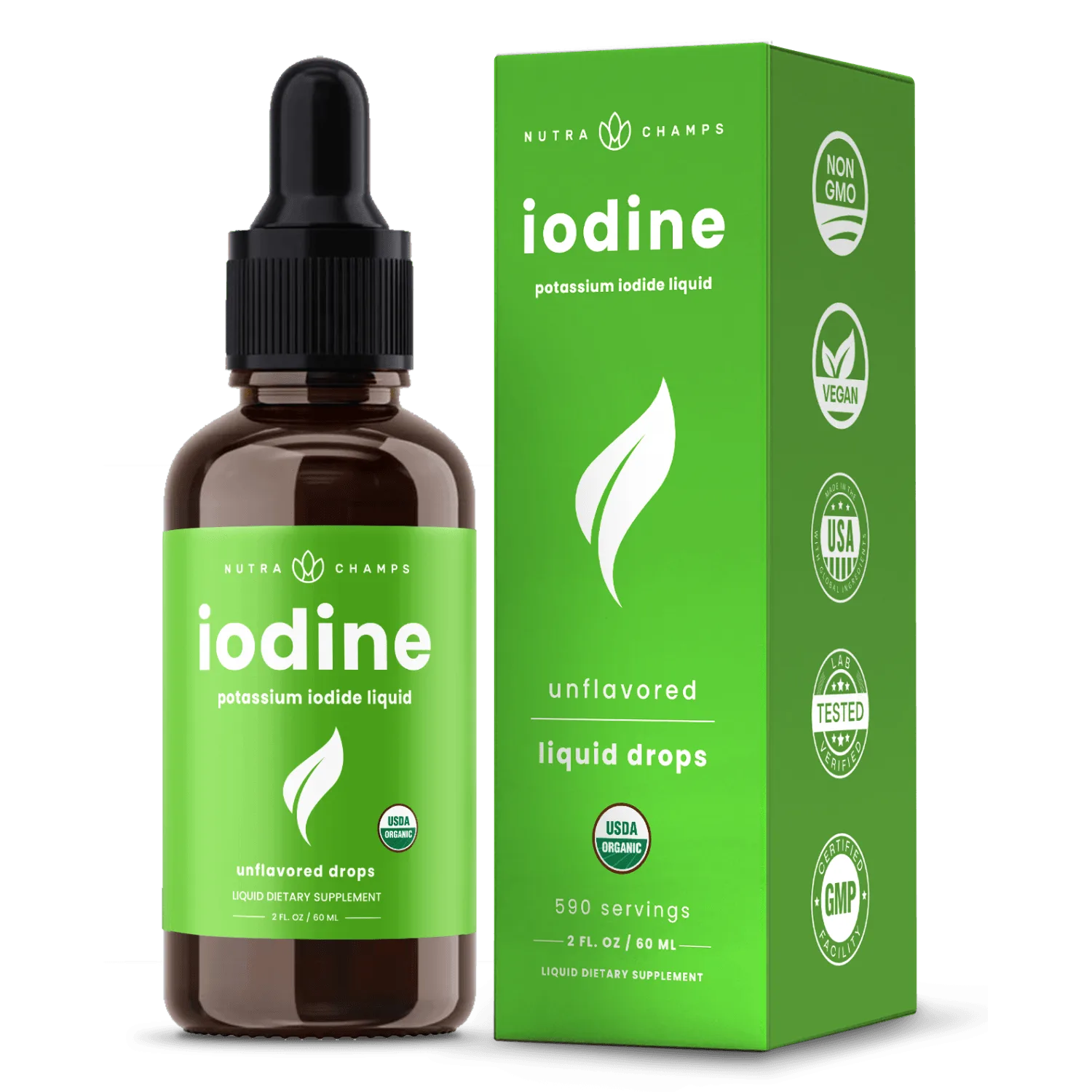
Iodine Drops
-
Iodine Drops: The product is described as a couple of flavorless drops each day. That describes the format and a general routine, not a personal daily iodine intake target or a clinical dose.
-
Iodine Drops: Made in USA with global ingredients in a GMP facility; gluten-free, vegan, and lab tested. These are the quality and dietary-fit details the record actually provides, which is more useful than absorption hype.
Where the record stops: dosage and safety
The supplied information does not include preparation instructions, a milligram amount, an upper limit, or interactions with medications or thyroid conditions. It also does not include care or safety evidence. That absence matters: it means this article cannot tell you how many drops to take, whether the drops are appropriate for a specific health condition, or how they interact with anything else you take.
If you are pregnant, breastfeeding, managing a thyroid condition, or taking medication, those are exactly the situations where a clinician's input should come before a supplement. The label and the professional conversation are the two sources that can fill the gap the record leaves.
A practical way to evaluate any iodine drops claim
Use these checks in order. They work for this product and for competing liquid iodine supplements.
- Find the serving on your own label: The bottle in your hand is the authoritative source for how many drops make a serving. Do not substitute a number from an article, a forum, or a retailer's marketing copy.
- Separate format claims from efficacy claims: Flavorless drops and a liquid format are confirmed. Claims about curing fatigue, reversing weight gain, or outperforming tablets are not supported by the supplied record.
- Check the quality markers that are actually listed: Made in USA with global ingredients, GMP facility, gluten-free, vegan, and lab tested are the supplied markers. Treat other certifications as unconfirmed unless you see them on the package.
- Ask a professional when your situation is not routine: Pregnancy, breastfeeding, thyroid disease, medication use, and unexplained symptoms are reasons to get individualized advice rather than rely on a general article.
The honest bottom line on iodine drops myths
NutraChamps Iodine Drops fit a specific, modest use case: a flavorless liquid option for people who have reason to supplement iodine and prefer drops to tablets. The record supports the format, the dietary markers, and the general idea that some people do not get enough iodine from diet alone.
It does not support a universal daily iodine intake number, a one-size-fits-all iodine drops dosage, or claims that drops outperform other formats. If you need a specific dose or have a health condition, the label and a qualified professional are the right next step, not another myth-busting article.