Quick Answer
For most research and astrophotography applications, the IRDK14 offers the best balance of aperture, cost, and portability, while the IRDK20 delivers significantly more light-gathering and resolution when budget and logistics allow.
Key Differences at a Glance
The IRDK14 and IRDK20 share the same Dall-Kirkham optical design, but they differ in aperture, focal length, and speed. The IRDK14 has a 14-inch aperture with a focal length of 2,563 mm (f/7.2), while the IRDK20 offers a 20-inch aperture and a focal length of 3,454 mm (f/6.8). The larger aperture of the IRDK20 collects roughly twice as much light as the IRDK14, which is critical for faint infrared targets.
The faster focal ratio of the IRDK20 (f/6.8 vs f/7.2) means shorter exposure times for a given field of view—an advantage when imaging faint sources. However, the IRDK20 is physically larger, heavier, and more expensive, which may require a more substantial mount and observatory space.
Trade-Offs to Consider
Choosing between the IRDK14 and IRDK20 is not just about aperture. The IRDK20's larger size and weight can be a significant logistical challenge, especially if you need to transport it to remote observing sites. Shipping for both models is quoted and billed separately, and lead times are estimated—so plan ahead.
The IRDK14, while smaller, still delivers excellent on-axis performance and is easier to integrate into an existing setup. It is also more budget-friendly, making it a practical choice for many research programs.
Decision Matrix: IRDK14 vs IRDK20
- Aperture and light collection: The IRDK20's 20-inch aperture collects about twice as much light as the IRDK14's 14-inch aperture, making it better for faint infrared targets. If your targets are extremely faint, the IRDK20 is the clear choice.
- Focal ratio and exposure time: The IRDK20's f/6.8 is faster than the IRDK14's f/7.2, meaning shorter exposures for the same signal-to-noise ratio. Faster imaging can save valuable observing time, but the difference is modest.
- Cost and logistics: The IRDK20 is significantly more expensive (USD 27,900 vs USD 15,910) and requires special shipping arrangements and a larger mount. Consider your budget and whether you can handle the logistics of a larger instrument.
Product Facts
-
IRDK20 (Infrared Optimized): The IRDK20 is a 20-inch infrared optimized optical tube with a Dall-Kirkham design, focal length of 3,454 mm (f/6.8), and mirror coatings optimized for infrared wavelengths. The larger aperture and faster focal ratio make it ideal for collecting faint infrared light and reducing exposure times, but it requires a substantial mount and more space.
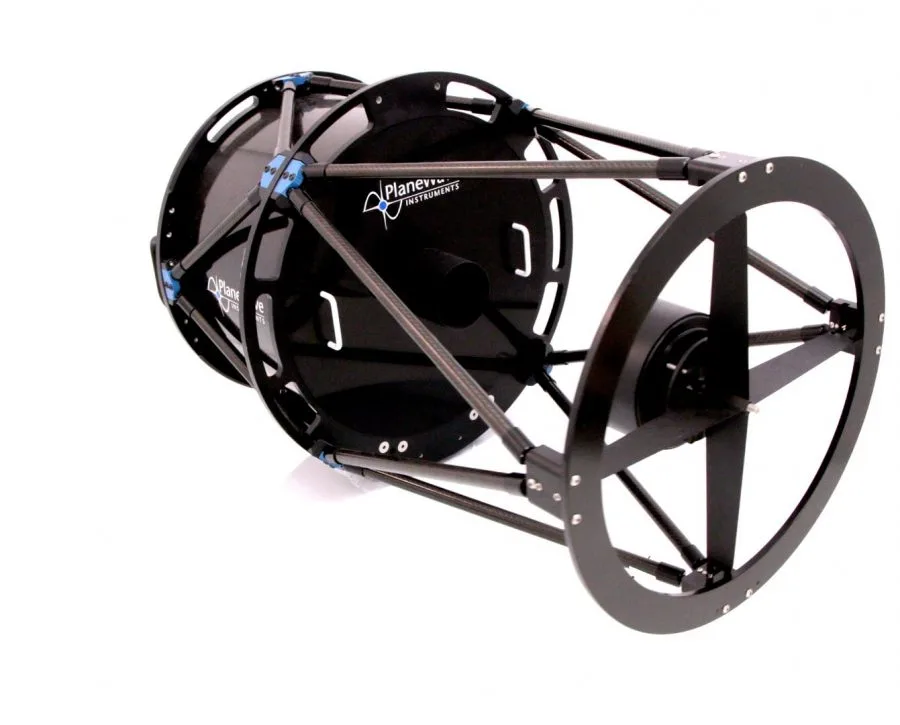
IRDK20 (Infrared Optimized)
-
IRDK14 (Infrared Optimized): The IRDK14 is a 14-inch infrared optimized optical tube with a Dall-Kirkham design, focal length of 2,563 mm (f/7.2), and mirror coatings optimized for infrared wavelengths. It offers a more manageable size and lower cost while still delivering excellent on-axis performance for research and astrophotography.
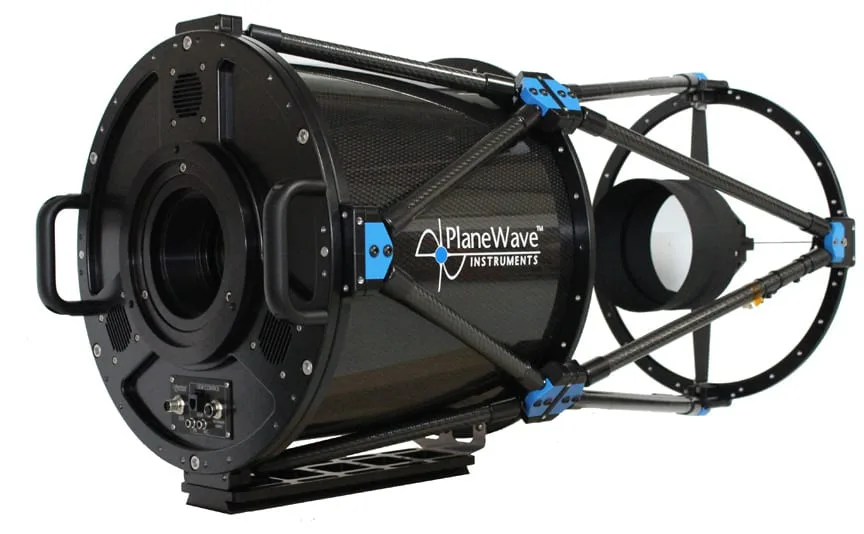
IRDK14 (Infrared Optimized)
Which One Fits You?
Best For
- Researchers needing maximum light-gathering for faint infrared objects
- Observatories with permanent setups and budget for a premium instrument
Not For
- Beginners or portable setups where weight and cost are major concerns
- Those who need a quick, low-logistics solution—consider the IRDK14 instead