Quick Answer
For custom embroidery patterns, choose an iron-on transfer pen with a fine tip to create delicate, precise lines that are easy to cover with stitches. The Fine Tip Iron-On Transfer Pens from Sublime Stitching are a reliable choice for detailed designs.
Why Tip Size Matters for Embroidery Transfers
The tip size of an iron-on transfer pen determines the precision of your pattern lines. Standard pens often produce thick, blurry lines that can be difficult to follow or cover with small stitches. A fine tip allows you to draw intricate details and ensures that the transferred lines remain visible but delicate, making them easier to hide under your stitching.
When you are working on a custom design with fine lines or small lettering, a fine tip iron-on transfer pen is essential. It gives you control and reduces the risk of smudging or bleeding, which is especially important when transferring PDF printout patterns or your own original sketches.
Understanding Iron-On Transfer Pens vs. Other Tools
Iron-on transfer pens are a popular choice because they allow you to draw your design directly onto paper, then transfer it to fabric with heat. Unlike tracing tools that require a lightbox or transfer paper, iron-on pens are straightforward and portable. However, they do require a heat source and a flat, heat-safe surface.
Compared to water-soluble markers, iron-on transfers are permanent until washed, which can be an advantage for long-term projects but a drawback if you need to make adjustments. Consider the permanence of the ink and your project's needs when choosing between tools.
Decision Rules for Choosing an Iron-On Transfer Pen
- For intricate designs: Choose a fine tip iron-on transfer pen to ensure precise, thin lines that are easy to cover with small stitches. Test the pen on scrap fabric to confirm line width before starting your project.
- For bold or simple patterns: A standard tip pen may be sufficient, but be aware that thick lines can be harder to cover and may show through light-colored threads. If you prefer a fine line even for simple designs, a fine tip pen is still a safer choice.
- For working with PDF printouts: Use a fine tip iron-on transfer pen to trace the pattern directly onto paper, then iron it onto fabric for a crisp transfer. Ensure the paper is thin enough for the ink to transfer fully; test with a small corner first.
Featured Product
-
Fine Tip Iron-On Transfer Pens: The Fine Tip Iron-On Transfer Pens are designed for embroidery artists, creating delicate, visible pattern lines that are easily covered by the tiniest stitches. This means you can transfer intricate custom designs with precision, and the lines won't show through or distract from your finished stitching.
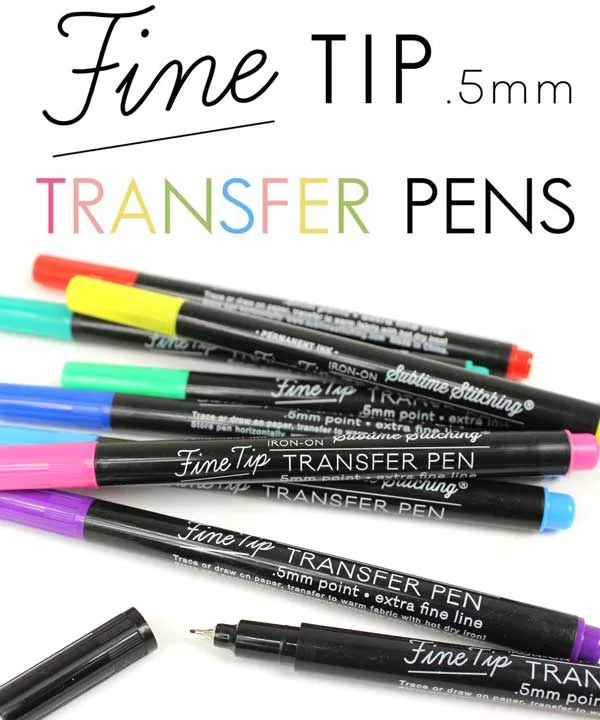
Fine Tip Iron-On Transfer Pens
Who Should Use Iron-On Transfer Pens?
Best for
- Embroiderers who want to transfer their own original designs or custom patterns with precision
- Crafters who need a portable and easy-to-use transfer method without specialized equipment
Not for
- Those who need to make frequent adjustments during stitching, as the transfer is permanent
- Projects on very delicate fabrics that cannot withstand heat from an iron