Quick answer
Choose an ironing board that matches your storage space, your standing height, and the weight of the fabrics you iron most. Prioritize a stable frame and a heat-resistant top over extra features you will rarely use.
Why board height matters more than board length
A board that sits too low forces you to stoop, which makes ironing tiring even for small loads. Measure the distance from the floor to your elbow when your arm hangs relaxed; the board surface should sit roughly at that height or slightly below.
Length matters for shirts and tablecloths, but most households can handle a standard board if the height is right. If you iron mostly small items, a shorter board saves floor space without hurting comfort.
Stability features worth paying for
Look for a frame with locking legs and non-slip feet. A board that shifts while you press is a safety risk, especially with a hot iron resting on the end.
A sturdy iron rest and a top that does not sag under pressure are more useful than a built-in sleeve board you may never unfold. Check the maximum load if the manufacturer lists one; if it is not listed, treat that as a sign to inspect the frame in person or choose a simpler model.
When a toy ironing board is the better buy
If you are shopping for a child who wants to copy laundry day, a full-size board is unnecessary and unsafe. A wooden toy board lets children play alongside you without the heat risk.
The Ironing Board from New Classic Toys is a wooden play set that invites imitation and storytelling. It suits doll clothes or pretend laundry, not real pressing. Keep real irons and hot surfaces out of reach during play.
Decision rules for choosing an ironing board
- Measure your standing elbow height first: Set your board so the surface sits at or just below elbow height when your arm hangs relaxed. If the board has fixed legs, check that height before buying; if it is adjustable, confirm the range covers your measurement. Write down the target height and take it to the store.
- Match board length to your largest regular item: For shirts and trousers, a standard-length board is enough. For tablecloths or curtains, choose a longer board or plan to work in sections. If floor space is tight, a shorter board with a good iron rest is a better trade than a long board you cannot open fully.
- Check the frame before the cover: Look for locking legs, non-slip feet, and a frame that does not wobble when you press down. Covers and pads are replaceable; a weak frame is not. If the load limit is not stated, ask the seller or choose a model with a simpler, visibly rigid frame. Test stability by pressing firmly on the board in the store.
- Decide between real and play use: Buy a full-size board only if you will iron real garments with heat. For a child who wants to imitate laundry day, choose a wooden toy board and keep real irons out of reach.
Product facts
-
Ironing board: Wooden toy ironing board from New Classic Toys, designed for play ironing with doll clothes or pretend laundry. It gives young children a safe way to join laundry day without a real iron or hot surface.
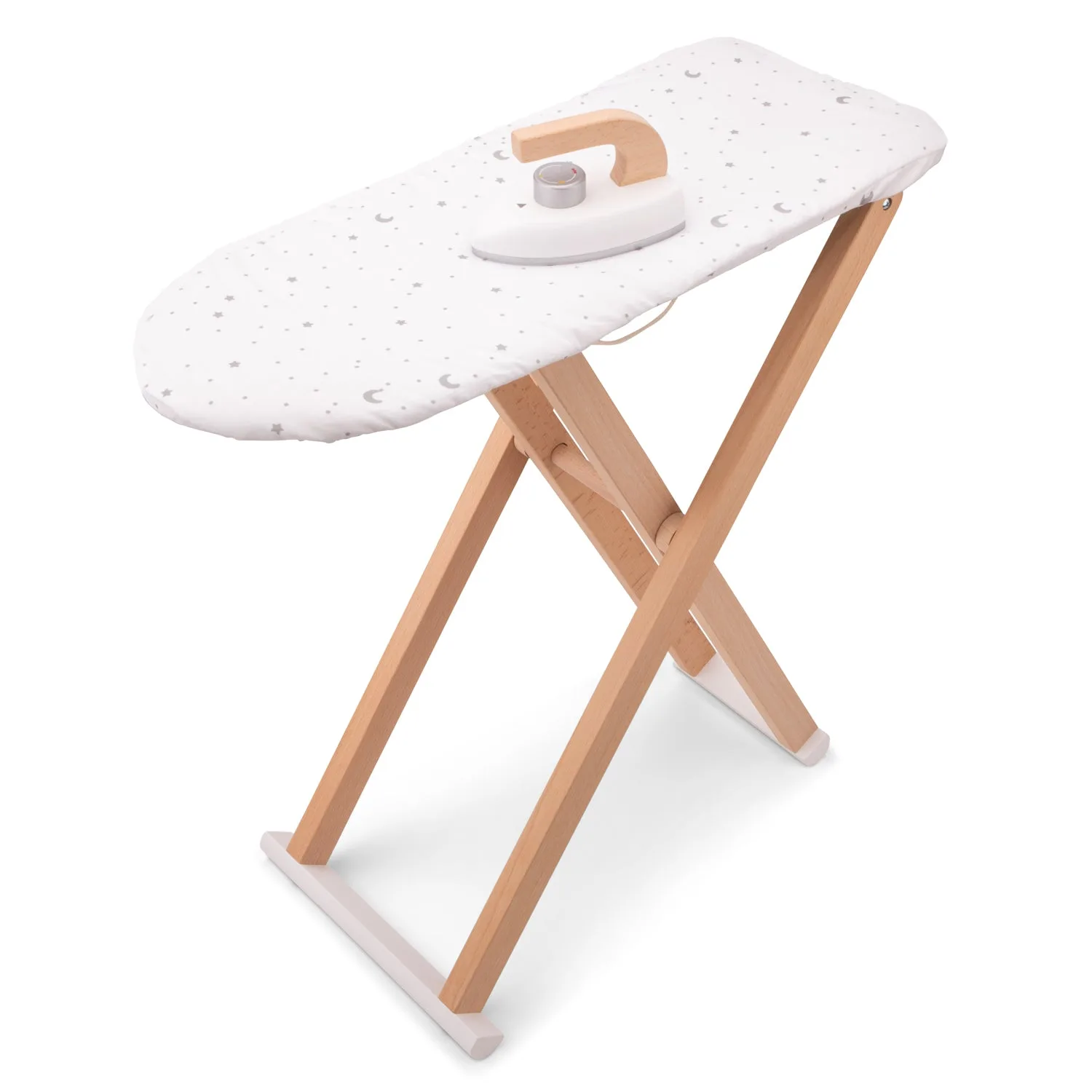
Ironing board
Who should buy which board
Best for
- Adults who iron shirts, trousers, or tablecloths regularly and need a stable, height-appropriate surface
- Families who want a child-safe wooden toy ironing board for pretend play alongside laundry day
Not for
- Anyone who needs a board that folds completely flat into a narrow gap without checking the folded dimensions
- Children who will be left unsupervised with a real iron or hot surface